All posts by tribalmysticstories, lazylittlefrog.com

Author, Artist, Arts Curator, Climate Activist, Anti - Violence against Women, and Entrepreneur

A voyage through hell: An asylum seeker’s epic journey


A voyage through hell: One asylum seeker’s epic journey from Eritrea to a new life in Europe.

Zekarias2

Zekarias Kebraeb was 17 when he fled Eritrea to escape conscription. Now he has written an extraordinary book describing his epic journey to Europe. In this extract, featured in the Independent on Saturday, December 6th, he describes the most perilous episode of all.

After illegally crossing the border to Sudan, Zekarias Kebraeb stayed in Khartoum for six months. He then crossed the Sahara Desert to Libya, a two-week journey, without food, on which he nearly died of thirst. Finally reaching Tripoli, he and two friends he had made on the journey – Awed and Aki – found a people smuggler to help them to cross the Mediterranean during the night. In the passage below, he relives the desperate crossing, day by day…

8 October 2002

The rain gets lighter as we clamber down to the shore, though the wind whistles around our ears and tears at the sparse foliage that clings to the rocks. We can hear the sound of our panting and the roar of the sea. The pale moonlight is reflected on the waves; there’s an elongated shape, a dark protrusion, on the shore – a rowing boat, lying upside down on the stones.

I’ve never seen a boat like this before. It looks like a coffin. But it can’t be our boat – it’s far too small. The others have seen the boat too and run up to it. “What’s this?” they all ask at once. “What are we supposed to do with it? We might as well swim.”

“Shut your mouths,” growls one of the smugglers and waves a torch over the boat, revealing gaps in the black tar paint. “Just how dumb are you?”

“This boat will take you to the big boat out there on the water!” calls Jasin, the Libyan colonel who organised our passage, and points out to sea with his right arm. Perhaps 200 metres offshore, a fishing vessel is bobbing in the water, circled by nocturnal seagulls.

Feverishly, my gaze sweeps back and forth between the fishing boat and the rowing boat on the shore. I feel queasy – now it’s getting serious. White foam washes over my feet, the wind ruffles my hair and Awed is standing next to me with hunched shoulders. She has wrapped a blue scarf around her head and crossed her arms firmly over her chest.

She must be freezing. She isn’t looking at me but out across the water.

“When will we get to Italy?” she asks suddenly.

“I don’t know, tomorrow evening, maybe,” I reply. I’m agitated and extremely impatient. A few of us go to lift up the boat and turn it over. It’s heavy, saturated with water and stinks of seaweed and rot. And while the waves keep surging forward relentlessly, we push the boat into the water. It’s cold! I stumble back abruptly.

“Women and children first,” yells Jasin.

The boat rocks and sways as the first few people clasp each other’s hands and get in. When it’s full, two strong men take the oars and row out towards the big boat. Aki, Awed and I are on the last boatload to the fishing vessel. The loading process has taken more than two hours; it must be after midnight. I stagger and have to hold on to something. I grab the railings and land hard against the side of the boat. That’s what happens when you lose the ground beneath your feet.

Zekarias
A long way from home: Zekarias Kebraeb has just a few photos of his life in Eritrea (Phil Moore)

9 October 2002

Ragged, dark grey clouds rage across the night sky. Stars appear and then disappear again. Banks of fog drift over the water and seagulls fly up screeching when our captain fires up the engine, which splutters and dies down, causing him to rage. The captain is gaunt, with a piercing gaze. Wearing boots, he has a violent temper; and before we’ve even departed, he’s already lashing out kicks to left and right. People duck out-of-the-way and soon so much water has sloshed on board that we’re completely soaked through.

The boat isn’t big – perhaps seven metres long. Painted blue and white, its sides rise maybe half a metre above the water. There’s a mast and a shelter for the helmsman. I sit on the planks right up against the stern with my friends. Our legs are pulled right in and we’re pressed in, bodies against bodies, almost as tight as on the pick-up truck in the desert. We sit back-to-back so we can hold each other tight, wheeze together, freeze together. Because it’s cold, icy cold.

The engine starts and the boat sets out on the open sea, into the night. The wind lashes water in my face. I look back to where the narrow, rocky shoreline is growing smaller and smaller. From now on, everything will be different: new and wonderful. I’ve overcome borders, hunger and thirst, the fear of death and the shame of being nothing – all that’s behind me. If it weren’t so strange, I would laugh. But there’s a new border in this place where solid ground gives way to water, probably the most daunting of my whole journey. I can’t walk or fly over the sea, and if I fall out of the boat, I’ll have exactly 120 seconds before I drown… I’ve never been this close to the paradise at the other end of the world, but I’ve never been so far away either.

Worried about patrol boats, our captain has turned off the navigation lights. He steers with a compass, heading unwaveringly north. Sleeping is out of the question – it’s too wet. The sky and sea are opaque and black, and we lose all sense of time. I don’t know if we’ve been travelling for two hours or four hours.

The boat is tossed back and forth and I sink into a trance-like state. I recite numbers in my head like litanies: those thrown overboard, drowned, killed by thirst, battered to death or lost. Since 1988, 14,921 immigrants have lost their lives crossing the sea to Europe.

I cling on tightly with my whole body. My freedom is the only thing I have left to live for. I cross my arms over my chest. Or is it fear that shackles me and wraps me up like a parcel? I can’t think any more – only hear, see, smell, feel. I listen to the storm and hear the captain. “Bail out!” he roars. He struggles to bring the boat about, steering across the waves. Mechanically, we start to tip and pour buckets of water over the railings, even though more water keeps sloshing in moments later to replace it.

My mother, I think to myself, would interpret a storm like this as a punishment from God. But why – what did we do wrong?

Aki, Awed and I hold hands again. I can’t imagine us surviving this hell. What is drowning like? Slow or quick? How long does it take until your lungs fill with water? Does it hurt? I hold on tight.

There’s nothing to see except water and mist – no horizon, we’re trapped in a cloud of fog. A continuous grey desert stretching out endlessly – it’s a miracle, but we’re alive. Laid out like sardines, slumped over and against each other, with nothing to eat or drink.

Hunger gnaws uneasily in my stomach. It’s an almost liberating feeling, but only for an instant: I’m alive. Even though my eyes are stinging from salt water, even though my skin is wrinkled and swollen, I’m alive. I try to stand up but don’t manage it, crumpling like an empty sack. Aki and Awed pull each other up, sway and also collapse back down. We hear snatches of barked orders telling us to stay sat down, got it? “Anyone who dares to stand up will be thrown overboard!”

There’s nothing to eat. My friends look for bread in their bags but don’t find anything except damp crumbs. I run my tongue along my salty lips, open my mouth and try to catch raindrops on my outstretched tongue. Salty. I form the water into a thick mixture with my spittle. It’s disgusting – I feel sick. Before I can make it to the railings, a pool of purplish-brown vomit spews on to the planks in front of me, mixing with green brine and seeping between us in trickles. I’m not the only one: almost everyone threw up during the night, either silently or retching noisily. The wind even flung some people’s sour vomit back in their faces. We’re in nature’s hands and can no more escape our filth than we can escape the sea.

The fog has vanished. The sea is endless, there’s nothing but water in the heavens and on the earth. No time, no space – everything flows and undulates. The white foam on the crest of the waves is the only thing our gaze can fix on, for one brief moment at a time. Our fellow refugees pull copies of the Bible and the Koran out of plastic bags and read them silently. Suddenly, a woman throws her Bible to me.

“Read it!” she calls. It doesn’t sound like a request. With numb fingers, I flick through the pages, looking, while drops of water soften the thin pages. “Go on, go on!” she shouts. “What should I read, exactly?” I try to smile. “I’m not a priest, you know.” I can barely feel my body and I’m supposed to read to console the others – as though that will help. I don’t want to, but I begin anyway.

“Saint Paul’s voyage to Rome.” Fitting. “A storm at sea and a shipwreck in the Mediterranean near the island of Malta.” My voice is a sigh against the storm. I shout until I go hoarse, vying with the seagulls who are shrieking as they circle the masts. The unnatural rattle of the engine sets the rhythm as I continue reading: “… After long abstinence Paul stood forth in the midst of them, and said, Sirs…” The wind flings the words back in my face.
http://www.independent.co.uk/arts-entertainment/books/features/a-voyage-through-hell-one-asylum-seekers-epic-journey-from-eritrea-to-a-new-life-in-europe-9904548.html

Was this where art began?


Homo erectus engraving could re-write human history, and might show art began 400,000 years earlier than we knew.

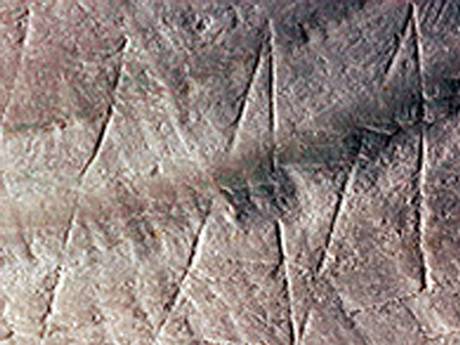
A zig-zag, drawn on a shell, could re-write our entire understanding of human origins and art. The pattern, drawn by a homo erectus as long as 540,000 years ago and found recently by an Australian researcher, could change all understandings of our early ancestors.

engravingsmall
The artwork

The engraving is at least 300,000 years older than other markings thought to be the oldest made by humans or Neanderthals. The pattern looks like previous finds, but the oldest known of those dates from 100,000 years ago.

“It rewrites human history,” said Dr Stephen Munro, from Australian National University, who identified the shell and published the research in Nature this week. “This is the first time we have found evidence for Homo erectus behaving this way,” he said.

The age of the rock, and the place it was found, discount earlier theories that the engravings had done by our later ancestors, Neanderthals, or by human beings.

http://www.independent.co.uk/news/science/homo-erectus-engraving-could-rewrite-human-history-and-might-show-art-began-400000-years-earlier-than-we-knew-9903557.html

The Python Crossing


flat,550x550,075,f
Squatter Pigeon, Endangered species, QLD, Australia. Picture Ralph Anthony

One of the blessings of our home is we live amongst the Queensland wildlife. Three months ago I counted three Squatter pigeons in the low branches of the Brazilian Cherry, a hardy evergreen fruit tree outside our house in Bellbowrie. We have several rows of the trees to give shade and provide privacy. The pigeons were a new addition to the varied birdlife on our property. Two of these birds were small parcels of light brown, white and grey feathers. The third bird had black, white and grey feathers. They had dainty little, pale, pink feet which seemed odd for their size. I thought these three may have been a family. I was not sure. The birds were extremely shy, and they took their walks in my garden when they thought no-one was home. I watched them from the large windows of our old semi-modern Queenslander.  Most of their time was spent in the thick growth of the Brazilian Cherry trees, in the back part of our property. Occasionally, when returning home from work or the shop, the pigeons were at the front of the property. They would try to run as fast as their little feet carried them, across the driveway, before they lifted into the Wattle trees on the driveway. I preferred to stop metres away to let them cross the driveway gently on foot, but sometimes if I did not see them first, and disturbed them, they would run for a few metres and fly into the low branches. Their feet never seemed to be much use.

FullSizeRender-2
Today, a feathered mess in the bush. Picture: Chris Harris.

Three weeks ago, on a Tuesday evening about 6:45pm, I saw a blue station wagon stopped in the middle of the road with its high beam on. The car was on our street, near my gate, and a middle-aged caucasian woman waved at me. I thought she had car-trouble and I slowed. As I approached, I also noticed ‘him’ crossing the road casually. Using its beautifully patterned full body length in a sleepy manner, the young male python slowly took up a third of the width of the road as its slithering trunk headed towards the nearby catchment.

“Hi!” the woman in the blue car called out and waved.

“Hi”, I said.

“I am letting him pass; he is one of the good guys”, the woman said, smiling. I nodded.

I knew the snake was crossing into the catchment to get to the main river. This pocket of land was full of wild life and un-farmed land. We let a two-metre Eastern Brown off into these woods and it had disappeared in seconds. The place was part of the Brisbane City Council’s declared gateway for wildlife. Sometimes it felt like having a small wild-life sanctuary in our front yard.

The woman in the blue car and I both waited in our cars, engines running, while we let the snake cross. When the snake had passed, I drove to my night class, turning up 15 minutes late. I made a joke about stopping at the ‘Python Crossing”.

After my class, I returned home and warned my family, we had another specie addition to the wild life. I wanted everyone to be extra careful with our chickens. We all had been through and scarred from The Duck War. Every night since the python crossed, the chickens were counted and locked in their pen safely.

This morning I noticed, two chicken eggs had gone missing from the nest I discovered the last week. Click Here. The slithering one that crossed the road three weeks ago, became my Number One suspect. But I did not want to alarm anyone in my family. I made a mental note to do some investigative work later.

After my day in the office, five hours ago, I returned home and parked the car. I walked around my gardens as I usually do after work. Everything looked good. Rain from the storm that wrecked Brisbane City homes a few days ago, had put some life back into my dying garden beds. The flowers and vegetables thrived. The poinciana tree was majestic with her red crown of flowers. All my frangipani trees were blooming in various shades of colour and the lawn started to green again. I crossed our front yard into a small section of the property, under the Brazilian Cherry trees where the pigeons lived. I had a few orchids and ferns in the tree branches and I was slowly creating a sitting place inside the treed spot by planting. I watered the rock orchid. My eyes caught two small, short, beautiful, black and white feathers lying in awkward positions. The feathers stood out amongst the dead ground cover. I took the next step and stopped. More feathers. Alarmed, I looked down and checked every inch of leaves and dead branches around my feet. My eyes went back to the pile of feathers, all shapes and sizes, scattered, yet familiar. In seconds, I recognised them. My heart sank. Most of the delicate light grey down feathers were caught in the small tree branches where moss, and the pale green lichen called Usnea grew. Some grey feathers hung off my golden-yellow orchid stems at the low branches. I felt sick and very teary at the same time. The bird must have put up a good fight to throw its feathers this far.

Tomorrow I hope, I will see two pigeons. The young python won’t be crossing to the river tonight. It knows, there is more food.


The Giant Birdsnest


Unknown-1

A few days ago, I posted a story about our chickens and their laying habits.  My son found this interesting couch or bed, and it seemed an appropriate piece to post for my Cool Stuff for the week. Cool Stuff is a piece of furniture or design or even artwork that I feel is very interesting and I share it with the readers of this blog. This ‘nest’ is really a playful piece of furniture created Merav (Salush) Eitan and Gaston Zahr,  OGE CreativeGroup. You have to jump into it to enjoy it.

The Giant Birdsnest aka “Giant Birdsnest for creating new ideas” was conceived and created as a prototype for new and inspiring socializing space: a fusion of furniture and playground: A comfortable informal and sensual soft space.

The wooden nest is filled with highly comfortable egg-shaped sitting poofs which allow ergonomic sitting positions and various configurations for informal meetings and social exchange.

Unknown

The nest comes in various sizes, from a small and intimate nest for one, to 2-3 people up to a 4.50 m diameter big version which can host up to 16 people at once – the soft space is perfect, comfortable and inspiring place for resting, browsing the web, reading, relaxing, loving, talking, briefing, discussing (…)

Its powerful, yet simple concept and intriguing character needs no explanation or user manual: Ready to be used, ready for playing or working in.

Simply jump in and enjoy.

http://www.giantbirdsnest.com

Aussie men join in to fight the women’s fight


According to a Sydney Morning Herald article published in March on International Women’s Day, one woman dies every week from domestic violence in Australia in 2014. In NSW, 24 women were killed last year in domestic-related incidents. Of all homicides in NSW, 42 per cent are domestic. One woman is hospitalised every three hours across the country.

Access Economics has estimated about 1.6 million Australian women have experienced domestic violence in some form.

That’s just the official toll. Less than half the abuse is reported.

As NSW Police Commissioner Andrew Scipione says: “These are mothers, your daughters, your sisters, wives, girlfriends, these are the people who work at the desk next to you at work. These are real people and they are horrifying numbers.”

Behind the veneer of social respectability across all demographics, women are suffering from physical, psychological, manipulative and controlling behaviour by culprits. It emanates from a mindset that blames the victim and tolerates disrespect for those who are of another gender, background, lifestyle or simply powerless.

Children are being assaulted, traumatised and used as weapons.

Change will require challenging the culture of saying nothing.

For so long the fear of social ostracism or economic desolation prompted women in particular not to report their dire situations. Witnesses felt it was a private matter or feared retribution.

There must be must be more protection of whistleblowers who lift the veil of secrecy.

True, more women today are economically independent and most know there are services out there to help if partners become abusive. Some take the risk of speaking out and refuse to be demeaned. But fewer still make the flight to safety or use the support of courts and the police to remain in their own homes.

Most live in fear of being tracked down by their abuser. Men have to help us fight this fight.

One such group is the White Ribbon. Last week, November 25th was the White Ribbon Day in Australia. White Ribbon is Australia’s only national, male led Campaign to end men’s violence against women. Already, there are over 150,000 people in and supporting the cause of White Ribbon Australia.

Vision
All women live in safety, free from all forms of men’s violence.

Mission
Making women’s safety a man’s issue too.

The campaign works through primary prevention initiatives involving awareness raising and education, and programs with youth, schools, workplaces and across the broader community.

Globally, White Ribbon is the world’s largest male-led movement to end men’s violence against women. Originating in Canada in 1991, White Ribbon is now active in more than 60 countries.

White Ribbon began in Australia in 2003 as part of UNIFEM (now UN Women), formally becoming a Foundation in 2007.

White Ribbon Australia observes the International Day of the Elimination of Violence against Women, also known as White Ribbon Day, annually on November 25. White Ribbon Day signals the start of the 16 Days of Activism to Stop Violence against Women, which ends on Human Rights Day (December 10).

However the campaign runs all year and is evident across the community through, for example, advertising and marketing campaigns such as Uncover Secrets, social media, community events

To support White Ribbon Australia, visit: http://www.whiteribbon.org.au/what-is-white-ribbon

A reading from Chris Abani


Chris_Abani
Chris Abani Credit:Centrum

I am a great admirer of Chris Abani’s work. I found from the archives of the Port Townsend Writers’ Conference,  a reading by Chris Abani from three of his books and I wanted to share it here. The link to the podcast is at the bottom of Abani’s introduction.

For those who do not know, Chris Abani is a novelist, poet, essayist, screenwriter and playwright. Born in Nigeria to an Igbo father and English mother, he grew up in Afikpo, Nigeria, received a BA in English from Imo State University, Nigeria, an MA in English, Gender and Culture from Birkbeck College, University of London and a PhD in Literature and Creative Writing from the University of Southern California. He has resided in the United States since 2001.

Awards

He is the recipient of the PEN USA Freedom-to-Write Award, the Prince Claus Award, a Lannan Literary Fellowship, a California Book Award, a Hurston/Wright Legacy Award, a PEN Beyond the Margins Award, the PEN Hemingway Book Prize and a Guggenheim Award.

Some of Abani’s fiction includes The Secret History of Las Vegas (Penguin 2014), Song For Night *(Akashic, 2007), *The Virgin of Flames (Penguin, 2007), Becoming Abigail (Akashic, 2006), GraceLand (FSG, 2004), and Masters of the Board (Delta, 1985).

His poetry collections are Sanctificum (Copper Canyon Press, 2010), There Are No Names for Red (Red Hen Press, 2010), Feed Me The Sun – Collected Long Poems *(Peepal Tree Press, 2010) *Hands Washing Water (Copper Canyon, 2006), Dog Woman (Red Hen, 2004),Daphne’s Lot (Red Hen, 2003) and *Kalakuta Republic *(Saqi, 2001).

His latest publication is, The Face. A Cartography of the Void (September 2014).

http://centrum.org/2014/04/podcast-chris-abani-reading-from-the-2009-port-townsend-writers-conference/

The mystery of the missing eggs


Photo_70915200-562A-A56C-5FB2-19BEAC05D51D
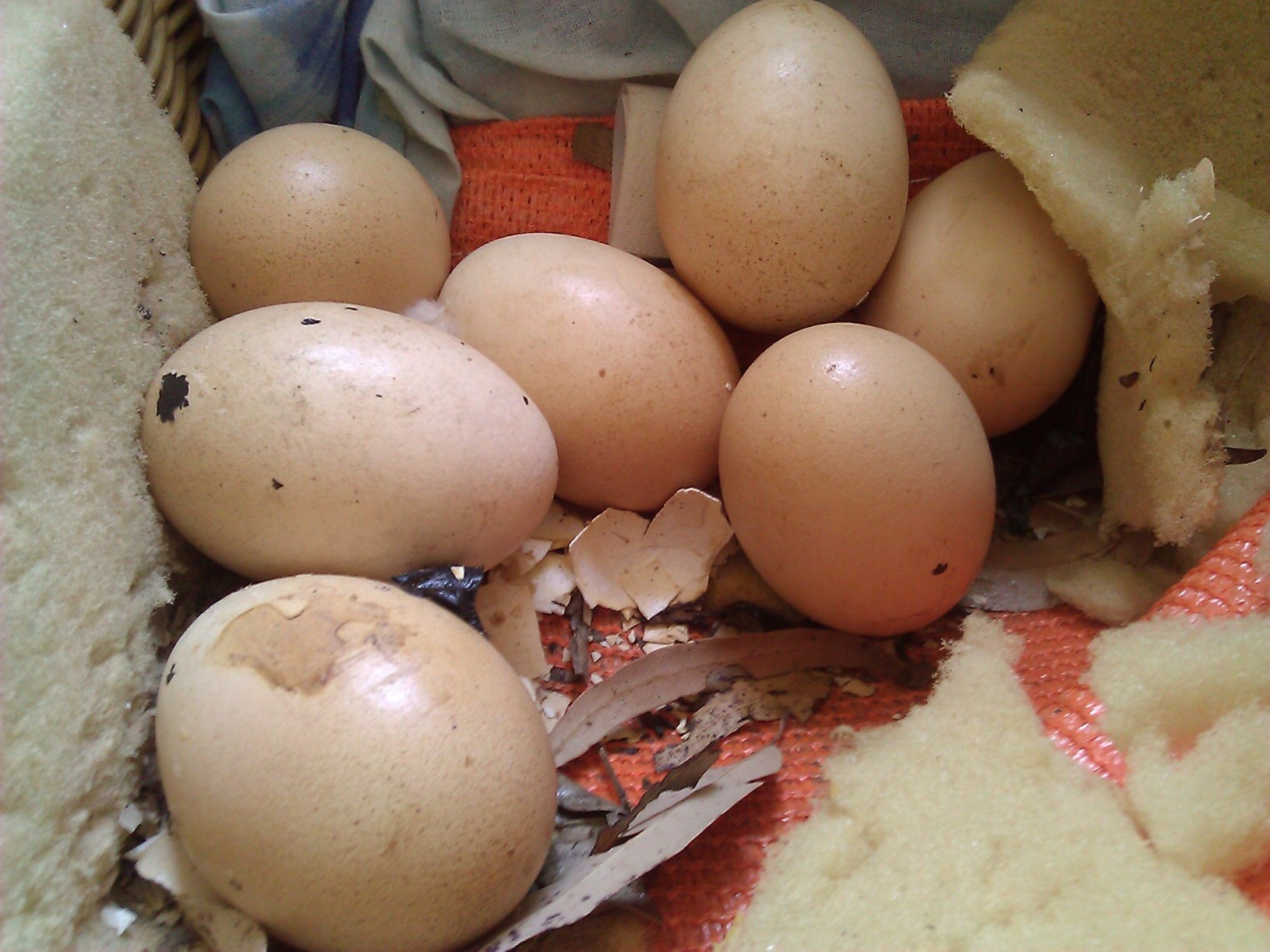
Two had been cracked. I took two and tried to check them, and these are some of the hidden eggs from our chooks.

Our five hens have not laid their regular number five-six eggs per day for the past two months. Business has slowed. Usually, my son collected any extras and sold these to my work colleagues for $6 per dozen. We bought the chickens from our local produce store to have our own free range eggs. The egg supply was timed right to the hour for several months.

The ‘chook pen’  as we call it in Australia, was completed with all chicken-amenities, the food, water and laying nests. Each day, we let the chooks out to wander freely on the 2.5 acres with other wild life. Each evening the chickens, six hens and a rooster, made their own way back to the pen. We kept the pen fully surrounded with fish-net and, with the door shut at night to keep out snakes,  wild cats and foxes.

Two months ago, one of the hens died. She became extremely tired and sleepy one Sunday; our local vet’s surgery was closed so I took the hen inside our house. I wrapped her in a towel and kept her warm and hand-fed her. I could see from her reaction, or lack of it that eating and drinking were too much of an effort for her. I monitored her behaviour, which was mostly heavy breathing, throughout the night.

About 7am the next day, while nursing the chook, she gave her strongest performance. She kicked and she tried to stand up and open her eyes, only to fall back and die in my hands. I cried. Then, while I watched while my son bury the hen, I realised, my own efforts had not amounted to anything and I still did not understand what the hen died of. It was heart-breaking.

Since the death of one hen, the rest of the hens stopped laying. Over the weeks, I told my work colleagues we did not have any spare free range eggs. The orders were piling up and this news did not go down well with the egg customers. They loved the eggs because they said,  our chickens laid larger and more delicious eggs then the shop eggs.

I had also thought the chickens had stopped laying  because they were mourning the dead chicken. After a few weeks, our family resigned to the fact that we would only get two eggs each day if we were lucky. This number decreased to –  two eggs every other day. A week ago my 16-year-old son found one egg in his tool box. Amongst the hammer, screw drivers and spanner with oiled nuts and bolts, the egg was near an old Honda classic motorbike my son had been restoring.  We all had a good laugh about this egg discovery. We looked around the yard, but did not find any more eggs.

Photo_D2818B5D-457B-B346-3F6D-B1FFD444AB45
The unsuspected nesting place, the inside corner of the couch. We pass this couch several times each day but no-one knew the eggs were laid there.

Today, as I was cleaning the house and moving re-cycled garbage to the car port, I made another discovery. Almost a dozen eggs were piled in a corner of an old cane couch we left in the car port. We walk pass this couch every day, to get to the front door of the house. No-one had ever thought of checking here. The mystery of the missing eggs was solved, but what do I do with these eggs? I don’t know how old they are?  I had initially thought when I discovered these eggs that the hens must be wanting to hatch the eggs into babies – but how do we know for sure what the ‘chooks’ are thinking?

All writers need a Wattpad Moment


I attended a talk at our local library last Saturday in Kenmore, near Brisbane City, Australia. I was with six others from our Creative Writing group. We had all been reading and writing fiercely, and were excited about learning to E-Publish.

As it turned out, the Kenmore Library talk, given by the Queensland Writers Centre was valuable and inspired all of us. Although we were all ‘pumped’ by the talk, some members were not too comfortable with self-promotion and general socialising on the internet and E-publishing.  Some of course (all total of three of us) raced home and signed up with Wattpad to begin writing our stories.

I was working through my drafts and trying to choose what I would like to write or publish on Wattpad. I also looked up general information on Wattpad and read other stories written by various writers. It is too early for me to know whether this step would assist me with my plans to publish some of my work but I will share more later.

Amongst all the information I read and saw, I came across this short video – which made me laugh. This video is not only about what a writer does in Wattpad. This is what we all do in Wattpad or WordPress or even other social networks – we are eager to get some response, feedback or praise when general advice is ‘write for yourself’, or ‘don’t expect’ anything or ‘believe in what you are doing’….. after all, writers are human.

Study: Penguins personalities may help them cope with climate change


141008140933-large
Little penguins’ personalities may help them cope with climate change. Credit: John F. Cockrem, PhD

As the global climate continues to change, the ability of many animal species to adapt is being put to the test. Bird populations may be at particular risk. According to the Audubon Society, nearly half of all North American bird species are severely threatened by shifts in climate. The threat reaches beyond North America and could have similar effects on global bird populations.

John Cockrem of the Institute of Veterinary, Animal and Biomedial Sciences at Massey University in New Zealand suggests that a bird’s individual personality may be among the factors that could improve its chances of successfully coping with environmental stressors. He studied differences in the level of the stress hormone corticosterone that native little penguins (Eudyptula minor) secreted when exposed to stressful stimulus.
“There is considerable individual variation in corticosterone responses, and a stimulus that initiates a large response in one bird may initiate a small response in another bird,” Cockrem wrote. “Corticosterone responses and behavioural responses to environmental stimuli are together determined by individual characteristics called personality. Birds with low corticosterone responses and proactive personalities are likely to be more successful (have greater fitness) in constant or predictable conditions, whilst birds with reactive personalities and high corticosterone responses will be more successful in changing or unpredictable conditions.”
These findings may help in predicting the adaptability of bird species as they face a new normal.

http://www.sciencedaily.com/releases/2014/10/141008140933.htm

Gifted young Aussie sportsman died today


238B0D8D00000578-2850230-Century_Phillip_Hughes_was_dearly_loved_Cricket_Australia_CEO_Ja-5_1417079475675
Phillip Hughes died on Thursday afternoon, two days after he received a brutal bouncer to the head during the Sheffield Shield clash at the Sydney Cricket Ground. He was set to turn 26-years-old on Sunday. Credit:Reuters

A shocking and sad news arrived this evening. Gifted sportsman, Phillip Hughes died this afternoon after being hit in the head with a bouncer ball during a match played on Tuesday afternoon on Sydney Cricket Ground. He was admitted to St Vincent Hospital after being struck in the head, underwent an emergency surgery, and placed in induced coma. He never regained consciousness and died peacefully this afternoon.

What a gifted and humble sportsman. Hughes, was turning 26 this Sunday.  Phillip Hughes could play both rugby and cricket very well and he chose cricket. He was the first and youngest Australian to score a century in his debut international game.

http://www.dailymail.co.uk/news/article-2850230/Phillip-Hughes-sean-abbott-dead-25-two-days-struck-head-ball-shattered-teammates-console-Australian-cricket-darkest-day.html#v-3912176475001