All posts by tribalmysticstories, lazylittlefrog.com

Author, Artist, Arts Curator, Climate Activist, Anti - Violence against Women, and Entrepreneur

A multi-award winner short film: Home Sweet Home


This is the story of a house which escapes from its suburban foundations and sets off on an epic journey.

A short movie by Pierre Clenet, Alejandro Diaz, Romain Mazevet and Stéphane Paccolat, made in Supinfocom Arles during our last year in 2013. Original music by Valentin Lafort.
// Synopsis //

The Spirits Deeply Buried Within Us


Sorcery in Papua New Guinea

I grew up in Papua New Guinea, and the people of my country are fearful of sorcery. Although my family members were devout christians (Kauckesa, Tamang, my grandfather was a teacher and clergyman for the Lutheran Church) there are other traditional beliefs and practices that culturally and spiritually linked our people to the nature and the environment. These beliefs and customs have helped us survive for many years. Sanguma (sorcery) was not one of these beliefs.

In my own life, I have seen and written some stories, recalling incidents and events that have been directly associated with sorcery and the beliefs of our people. I know of many killings that were alleged to be sorcery related. I have seen family members wasted to their last days, and buried because they refuse modern medicine. They suffered immensely, but believed witchcraft and sorcery was causing their illness for some reason or punishment and their ailment was incurable.

On the other hand, a different kind of societal treachery occurs in a community fearful of the occult, where the accused is judged and attacked or killed. No courts. No help. Often the community or village would stand back, hands held up with reluctance, letting the crime take place.

My grandfather used to call it Satan’s work. Evil striking on a whim, and prayer was the only thing to offer in efforts to rescue or heal. It has never been clear to me – I have felt each one of us have spirits deep within us. These spirits are so powerful and they create the characters and the people within ourselves. We choose the spirit, the one or the ones that become us. What clearly stands out in the sorcery violence is, the accused are mostly women and children. I wonder, is sorcery merely offering another avenue for blood-thirsty, violent men in PNG?

Rampant Fear

Sanguma and the fear of it, is rampant in Papua New Guinea. Education makes little difference. The deep-seated, hysterical terror of sorcery and its consequences is unfathomable, to the extent that it is so easy for anyone to pick up an axe, knife, or spear to hurt the next person based purely on the suspicion. An uncle can kill a nephew. A husband can kill a wife or daughter. Anyone could be a witch. Our culture allows violence and our culture allows the beliefs to exist because we allow it to.

A friend, Almah Tararia shared an article which led me to a website. http://www.stopsorceryviolence.org 

“Stop Sorcery Violence” wants to highlight the work of local women and men bravely taking a stand against sorcery and witchcraft accusations, providing assistance to victims and survivors and advocating for a positive change.

I wanted to share one of the organisation’s success stories tonight. Please be warned, you may not like what you see or read on the website.  Some of the stories are horrific.

simbu-kid-978x500

 A boy is accused

A nine-year-old boy from Simbu Province is happy in his new home after surviving terrible torture because of sanguma accusations.
In July this year Peter was admitted to the Kundiawa hospital with severe cuts to his head and body,  and with the loss of blood, there was a slim chance of survival. Peter’s own uncle attacked the boy with an axe after accusing him of practising sanguma (being a witch).

When taken to Kundiawa Hospital, quick action by the doctors, miraculously pieced Peter’s body back together, even some of the severely damaged tissues.

In over two months, Peter made a remarkable recovery. It was not what the doctors had expected. He regained most of his movements and ability as a normal person.

Then, came the daunting questions, now that he had survived, where would Peter go? The boy’s parents were both dead. His own home and extended family were not safe for Peter to return to. No relatives had visited him in hospital, and the option of him returning back to his village was too dangerous.

Several members of the Catholic Church: Archbishop Douglas Young, Bishop Don Lippert, Father Philip Gibbs and Father Jan Jaworski worked on finding a place where Peter could go and be with other children, to continue his education and develop a normal life. The public responded very positively, and after identifying some places in the Highlands, he was relocated to a safe place to start a new life. Peter was one of the lucky ones.

Sanguma Accusations

Regarding Sanguma accusations and their related violence, women and children are the targeted victims.  For each woman or child that has been saved, another is tortured, banned from her family and village or murdered.  There are many people standing up against sorcery related violence. Many are working hard to prevent violence and assist victims. Human Rights Defenders, the Catholic Church, Community-Based Organisations, International NGOs and some  government bodies including police are realising the extent of the this specific kind of violence and have started to develop strategies to save lives. For the PNG people, every person is encouraged to take a personal action by joining the fight to stop the violence.

Home

Australia’s $200 million climate pledge falls short of its true debt


http://theconversation.com/au (Dec 11, 2014)

QUESTION TIME
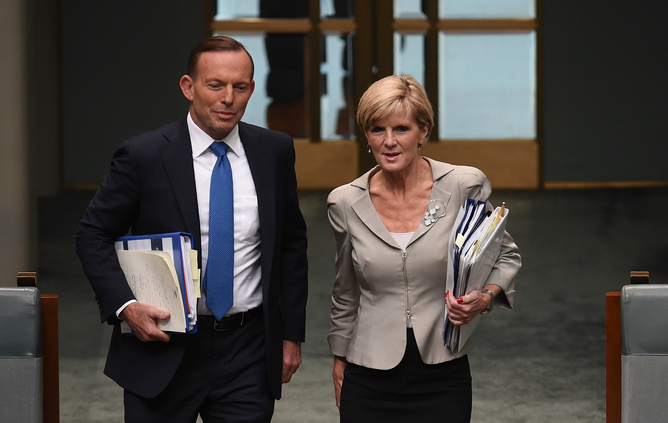
Tony Abbott and Julie Bishop are bidding to repair the government’s tarnished reputation on climate – but have they pledged enough? AAP Image/Lukas Coch

At the United Nations Lima climate summit, Australia’s foreign minister Julie Bishop has pledged A$200 million over four years to the Green Climate Fund, which seeks to raise US$100 billion (A$120 billion) per year by 2020 to help developing countries deal with climate change.

The announcement is good PR and plays readily into the narrative that the Abbott government will “reboot” and “re-engage” with voters in 2015. It also directs attention to the cabinet’s “star performer” Julie Bishop, and provides an alternative framing to Australia’s embarrassing isolation on climate action.

Scratch beneath the surface, however, and an alternative picture emerges. Put simply, the size of Australia’s contribution to the fund does not suggest that the government accepts the moral argument of “climate debt”, or that it is willing to put its neighbours’ well-being ahead of its own short-term political gain.

Climate debt is financially complex but morally simple. It is the idea that rich countries should pay reparations to poor countries for damage suffered as a result of climate change. Justin Lin, former chief economist at the World Bank, summed up the moral argument succinctly back in 2009:

“Developing countries, which have historically contributed little to global warming, are now, ironically, faced with 75 to 80 percent of the potential damage from it. They need help to cope with climate change, as they are preoccupied with existing challenges such as reducing poverty and hunger and providing access to energy and water.
The share of responsibility for fossil fuel-derived greenhouse emissions since 1750 can also be broken down by country. James Hansen, former director of the NASA Goddard Institute for Space Studies, provided estimates in an open letter to Australia’s former Prime Minister Kevin Rudd. Hansen estimated that the historical carbon debt of the United States was 27.5% of the total.

Australia has much lower cumulative emissions (1.5%) but is the worst greenhouse emitter per capita among major western nations. Using this figure, groups like the Climate Institute have suggested that A$350 million is the minimum fair contribution to climate financing that Australia should make.

Read more here:

http://theconversation.com/australias-200-million-climate-pledge-falls-short-of-its-true-debt-35318

Documentary: Leaky Boats


Together, We Are Stronger!


The song titled “Oceania – a Hymn for the Pacific”,  features Pacific island artists. Set in a series of images from across the Pacific islands region, the song was a fitting symbol of the growing recognition of the need for collaborative partnerships and journeying together on “one vaka” – one canoe.


https://www.sprep.org/biodiversity-ecosystems-management/sprep-side-event-highlights-collaboration-and-coordination-for-conservation-at-the-world-parks-congress

Pushing Up Daisies


images

Chapter One: Casting Shadows continued

Viola flung the rest of her stale drink into the garden and carelessly dropped her glass on the day table. She turned and watched the remaining yoke of the sun slide away and as quickly, the darkness enveloped her. The evening breeze caressed her, nudging her silk cream blouse under her full breasts. Her navy linen pants hung loosely about her short fat legs. It felt weird but nice. No-one has touched her for so long. She made no attempt to rejoin her guests inside. The time had crawled to 6:30pm, when the automated sprinklers were due to start spitting. She paced the verandah to check if the entire irrigation system had come on to water her beloved garden. Her mind went back to events earlier.

Nora had asked her if she was all right – the stupid girl. Viola felt anger rising in her like bile, but swallowed it, only responding with “good”. For years, she had been telling her friend about how ‘he’ had treated her. Nora knew. Just like she had, Viola gritted her teeth and told Nora everything was good.

To Viola, “good” was a great word. When people ask how she was, she would reply on a reflex, “good”. According to Viola, the word good was so vague and final that anyone who asked could not ask any other questions. They left her alone. The word ‘good’, Viola thought, had protected her all these years. Kept her safe from the pity and concern that exhausted her so. Viola hesitated, as she paused and put the lights back on. They instantly flooded the lush bushes enclosing two carports and her guests’ extra two cars parked next to her black BMW and his silver Nissan 280Z. He would catch the $150 cab ride home tonight. She felt glad, she was not picking him up from Brisbane airport.

Over the years, she had kept all her feelings deep inside her, in the smallest pocket of her heart, layered with obligations and responsibilities as the daughter, mother and wife. But tonight, she was going to tell him everything when he came home. She would tell him she has had enough. She began thinking of her plan. Letting the scenario play out, she strolled back to the front of the house. Viola noticed at the end of the verandah that the sprinkler at her rose garden, nearest to her neighbours was off. Without thinking, she stepped bare feet onto the dying lawn and walked straight across towards the dark shadows to turn the sprinkler on. The light switch was near the tennis courts.

To read part one, see my earlier post and for more – visit my Wattpad:

http://www.wattpad.com/myworks/27925992-pushing-up-daisies


Becoming a Stranger


In the mirror this morning, the stranger looked back at me . It took her one week to take my body. Her hair, smile and the colour of her eyes were familiar. It was the shape of her face that was different, disfigured and daunting, creating her new identity and making her who she was. This woman looked 20 years older. Saggy eye bags, and burning and bulging red patches on her forehead from the illness that had engulfed her body and giving her the extra years on her face.

I stepped away from the mirror, afraid. I took my bag, car keys and left the house. It was 6am.

I got in and took the wheels of the Honda, staring at my swollen, bluish red fingers trying to bend over the steering and grip tight. It was painful. The auto-steering had a mind of its own and often spun back. My joints were not co-operating. Discomfort and unco-operative joints was something I had envisaged later in life, not today. I did not want to look at the rear vision mirror as I reversed. I did not want to face the stranger again.  I forced myself to ignore the pain and itch in my deteriorating body. The fever stood tall. I was glad my feet could work at the pedals better than my fingers. This, gave me some comfort and reassured me, I could still drive in my condition. I needed to get to the doctor quickly. The medication my Gp had prescribed seemed to have failed and my health worsen in the past three days. Last night, I thought I would die with the high temperatures of summer, fighting against the rising temperature of my body.

After ten minutes of driving, I had to slow down because the saggy tired eyes wanted so badly to sleep. I stayed on low gears and concentrated until I arrived at the shops. I parked and took a cab into the city to see the doctor. The cab driver looked at me suspiciously. His eyes went from the large red patches on my arm and elbows to my neck and forehead. I wondered what went through his mind. I was too sick to care.

“Can you take me to Wickham Terrace?”

“Yes”. He forced a smile and I tried one, knowing, my smile would have been ugly.

I stepped into the cab and when I gave him the doctor’s address at Wickham Terrace in Brisbane City, he muttered something and drove off. It must have been the face of the stranger from the mirror that got to him. Usually, the cab drivers liked to have a conversation with me during the course of my cab-journeys.

I shut my eyes and slept until the cab stopped. I paid the driver and made my way to the specialist doctor. Everyone at the foot of the lift stared. Could it be that bad? I wondered. This tower houses many doctors. I was sure, I was not the first weirdo to appear on the scene. Several floors upstairs, I saw an opened door and asked the receptionist if I could stay; I had come one hour early to see my doctor.  Secretly, I also needed the cool air-conditioning. My skin was burning like fire although it was only 7:15am and the air was cool. The receptionist smiled kindly and said it was OK. I sat down on the comfortable chairs and closed my eyes, relieved. My mind drifted to my girlfriend Marina. Yesterday, Marina heard my voice on the phone and came to get me.

“You don’t sound good, but you have to come with me”.

“OK” I gave in.

When she had arrived at my house, she was shocked at how I looked. I told her that I had been ill, but it seemed to have gone longer than usual. She told me there was more to it and it was best to swim in the ocean. She believed salt water was the cure. So, we packed our change, some food I left the sick-bed I had been in for a few days. We drove an hour away to Bribie Island.I had joked to Marina that once I completely surrender my whole body to the disease, perhaps it would leave me alone. I would get better.  The swelling started on my back and everyday, it the symptoms had moved up and over my head. Yesterday, after day six, the burning swells starting coming down on my forehead and neck.

The saltwater was amazing. It was good to feel the force of the waves hitting against me and the salt stinging me. The healing was working. I soon forgot how sick I was as I played with the waves and swam like a fish again. 

After our swim, we ate crab, fresh cucumber and drank hot tea with lemon and honey. Then, we spotted two black cockatoos and Marina, who is half Chinese and Papua New Guinean told me it was a good omen. She insisted we drive to a news agency and buy lottery tickets, so we did. At the same time, the Specialist doctor had called me back and said I could come in this morning instead of January 15. It was a good omen.

A knock on the surgery door forced me to open my eyes. My doctor’s receptionist had arrived. She popped her head in next door.

“The lady is not mine, she is yours”, the first receptionist said.

“Oh”, responded in hesitation.

I laughed and said, I had an appointment with the skin allergist.

Soon, she ushered me into the surgery and the allergist arrived. Two patients went in for fifteen minute consultation each and then he called for me. The allergist looked me over and asked me if I was alright.

“No”, I said. He would not know the difference between the stranger and I because this doctor had never seen me before.

He gave me a chair and I quickly told him what was happening to my body and showed him the lumps. I was tempted to show him a pre-hives picture of me and say: “Doctor, this is me”. He asked all the questions and guided me through the history of my hives’ problem. After a 45 minute consultation, he decided my issue was not an allergy as previously diagnosed and the medication given was incorrect. He told me he had never seen such a severe case before but all the symptoms pointed to a viral infection of the immune system – not an allergy. I was surprised. He made a joke about the disease not being something else and specifically said it was not contagious. I then joked if it was puripuri, which was witchcraft. The doctor rolled his eyes. As it turned out, doc had spent his early medical training Madang Hospital, Papua New Guinea.

I asked the doctor if he could cure me, something like giving me an injection because I was sick of being sick and there had to be something to fix me instantly. He laughed.

After examination, he said there was one thing that could knock this “thing” over, but I had to follow a stringent routine with the medication he was to prescribe. I waited for him to write everything out and I repeated his instructions back to him. I needed to get better.

I missed a week’s pay. That was what I paid for the specialist. I took the lift to the ground floor to have breakfast as instructed, and take my first prescribed magic pill. My cousin arrived with her ten-year-old and three-year-old daughters. The girls ran up the footpath to me, giggling, excited and ready to give their aunty a big hug but as they came up to me, they both stopped and looked at me like I was a stranger. It was only then, I realised, how bad I must look. Children are not good at hiding their feelings, I already knew I had become a stranger within my own body. My cousin rang her partner and described me as “unrecognisable”. She bought her daughters chocolate and cream and I spent the next ten minutes trying to convince them; the doctor had said my condition was not contagious.

“I am not contagious. I am your aunty”. They gave each other looks.

There were no hugs and kisses when they dropped me off,  just wave-goodbyes. My older son had earlier said: “Mum, I love you, but I am not going to touch you, you look gross”. (He was joking). His brother, on the other hand kept hugging me and telling me, “I’m scared mum and I don’t want to look at you”.

It has been 12 hours and the magic pill has started working. I feel a lot better. I took a walk to my greenhouse and spoke with the birds. The swelling is going down and I hope in the next few days, the pill will help me get rid of the stranger.


Film: Forgotten Bird of Paradise


West Papua Freedom

The first of December was the day West Papua got its Independence from the Dutch Colony, only to be occupied 12 months later by the Indonesian Army. The struggle for West Papua’s freedom to protect their people, culture and land, continues to this date. Two years ago, British filmmaker Dominic Brown travelled without the knowledge or authority of the Indonesian authorities in order to film Forgotten Bird of Paradise. The documentary (26.5mins) has received acclaim, providing a rare and moving insight into the forgotten struggle for independence that has gripped West Papua for over 50 years. It includes never before seen footage of OPM rebel fighters at their stronghold deep in the Papuan jungle, as well as interviews with human rights victims of the Indonesian regime.

Yusak Pakage Amnesty International ‘prisoner of conscience’

Most startling of all is an interview conducted with Yusak Pakage, a high-profile West Papuan political prisoners recognised by Amnesty International as a ‘prisoner of conscience’. He is currently serving a ten-year prison sentence for peacefully raising the West Papuan flag during a ceremony in 2004. The interview was recorded in secret by Brown during a hospital visit where Pakage was receiving treatment for torture.

The documentary also provides an insight into recent developments on the international arena including the launch of the International Parliamentarians for West Papua. This has seen a number of influential politicians from around the world come together to coordinate international action against the ongoing occupation, and bring about the means whereby the West Papuan people will eventually gain their long-lost right to self-determination.
Frequently breathtaking and thought-provoking, Forgotten Bird of Paradise provides a remarkable insight into a world where ancient traditions and cultures live on into the modern age. Above all it shows the inspiring resilience of a people who have suffered so much under Indonesian occupation, but whose determination for freedom burns stronger now than at any time in history. Finally their cries are starting to be heard.
__
Produced, directed & filmed by Dominic Brown

Pushing Up Daisies


Friends in creative writing group and I have decided to do a writing challenge within the Wattpad Challenge. The Wattpad challenge requires 2000 words per day to reach 50,000 words. We are writing 200-500 words per day. I hope to post as much as I write so I may miss some days, and post more words other days. This challenge would keep the creative juices flowing and keep us in practice until we resume our workshop next year. It is all in good fun and who knows, a good story or two may come out of it. I have decided to write fiction. I plucked my protagonist, Viola Gregg from one of my old stories and gave her a new life. Let’s see how she survives. I am making her story up as I go, so this story is completely unplanned. You can visit Wattpad for the rest of the story, as I write it. Here, I share with you, part of the opening chapter I posted a few days ago. Please feel free to comment here or on Wattpad and remember, these are drafts.

Pushing Up Daisies

images

Chapter 1 Casting Shadows

Fiction JKLeahy

Viola rested her gin and tonic on the long wooden ledge. The 90z thick rock glass was placed exactly where the blue paint had stripped off, leaving a naked, grainy, and dull patterning. She noticed, dusk had dawned on her. The ice cubes clinked the glass before the clear liquor and ice stilled. The slice of lemon looked tired and hunched over the ice-cubes. Viola had had enough. The scent of cut lime hovered between the mess behind her and her glass. As she withdrew her cold and wet right hand from the drink, and placed it against herself, warming it in her other hand, she caught a moving blurred white car. The car was driving away from her street towards Moggill Rd. Viola did not know where the car came from. She did not hear it. Her eyes fleeted across the acreage properties and returned to the mess on the glass table near her, on her verandah. There were empty chips, nuts and cheese packets with some half eaten dips. Empty bottles and wine glasses stood discarded. Ants had gathered. Soon, the possums would appear boisterously to help themselves at her Mount Crosby home.

The drinks had started out here, on the verandah at midday today and had stretched the hours, her guests’ behaviors’ and her patience. She was ready for her guests to leave two hours ago. Too drunk and too stupid to notice, her friend Nora Gritty did not pick up Viola’s hints that the party was over. Nora loved parties. To think Nora had the nerve to invite herself and her friends, then not bother to leave after drinking all the alcohol but now Nora is talking about stripping and jumping into the pool. Viola had excused herself, and left the room.

“Where are you going?” Nora noticed her walk outside.

“I need some air”, that was all Viola said.

Viola did not care about the alcohol. She wanted time. Time to herself, and time to think before he got here. Today was the day. Everything had been set. She watched the sweat run off her glass and instantly stained the old timber. Most of the chilled run-off soaked into the timber grains. Her own sweat made her feel clammy.

“What’s happened with your make-up?” Nora had asked her earlier.

“I am not wearing any”.

“What’s wrong?”

“Nothing, I’m good”, Viola lied.

On the verandah, a feeling of despair came over her as darkness loomed and shadows peaked. She wanted to ask the guests to leave but she could not. Nora told Viola, she had kept to herself for too long. Viola felt trapped. She leaned into the ledge and looked over the lawn to the neighbours. In the background, her guests giggled and laughed; she could hear someone switching the lights on, throwing her own shadow forward to join the tall dark house on the lawn. Viola looked at the deserted road, knowing she could not turn back. The giggles and laughter became louder and Viola knew these were performances, fickle and simulated to get her attention, and this angered her. Her thoughts went to what she had planned for her husband and a slight chill ran through her. Viola wished she could dissolve into the grains of the old timber ledge and disappear with the water.

Over the verandah, her eyes, matching the brownie-green of the dying manicured lawn followed the edging of the garden to the leafy bottle tree. By now, the last week of Autumn, the tree should be flowering. It had been three years since she planted the semi-grown tree in 2011, just before the Queensland floods. Now, instead of being completely covered with its fiery, gorgeous red grandeur of flowering, like everything else, the bottle tree did not flower, but kept its deep dark green leaves. The sinking orange sun dusted the dark green leaves. As a slight breeze brushed the day away, the tinged leaves rustled into a dance drawing Viola’s eyes further to her extended creation, a garden bed of crusted rusty bark. Inlaid into this crusted bed neatly, and now flowering, were her pretty large white roses. These light delicate blossoms were blackened by the harsh, dense, lurking shadow. From the rose bed, Viola peeled her eyes away and looked up. She felt cold and she shivered as she gazed into the looming house that casted this thick dark shadow to her. The house was at least 50 metres away, but the shadow of the tall house bounced over the flat brownie-green lawn, visually, and almost touching her own shadow, linking her to her mysterious neighbours. She has not seen a single soul emerge from that house since the neighbours moved in six months ago.

Check here for JKLeahy Pushing Up Daisies updates:

http://www.wattpad.com/86132034-pushing-up-daisies-casting-shadows?utm_source=email-uploaded_story&ref_id=41515979

Crocodile scarification: An ancient Chambri Initiation


Crocodile scarification is an ancient initiation practised by the Chambri tribe of Papua New Guinea.

591002-b7a7b3b6-2111-11e4-9066-0beb7f687196
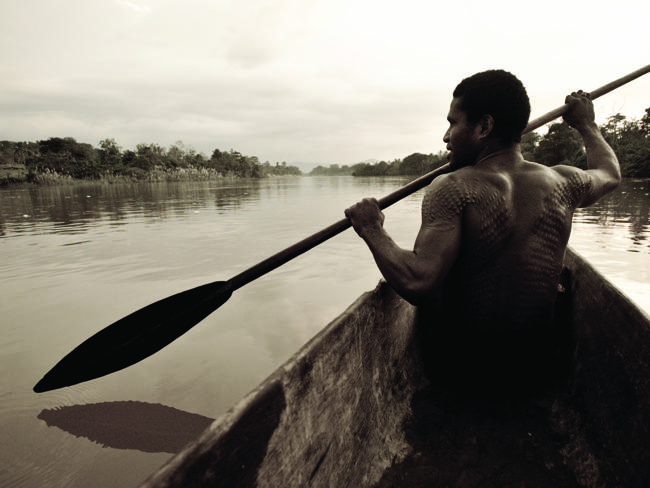
The Chambri tribe believe they evolved from the mighty crocodile. Source: Supplied

DEEP within the jungle of Papua New Guinea (PNG), there is an ancient initiation tradition that turns boys not into men, but into crocodiles. The men of the Chambri tribe in the East Sepik province of PNG practise crocodile scarification, an initiation for boys entering manhood during which their skin is cut and scarred to represent the scales of a crocodile.

The Significance of the Crocodile

The crocodile is a significant spiritual and symbolic animal in PNG, and the Chambri tribe believes it descends from the powerful predator. The ancient myth tells the story of how crocodiles migrated from the Sepik River onto land to eventually become humans.

563191-03e737bc-2115-11e4-9066-0beb7f687196
In Papua New Guinea it is thought men evolved from crocodiles. Picture: Nina L. Chang.

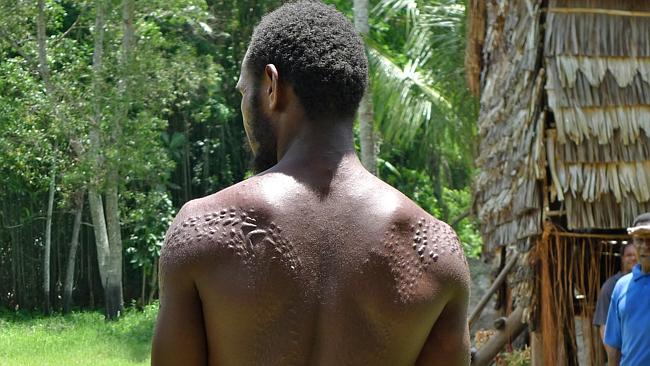
In recognition of this ancestral connection, the young men of the tribe are inflicted with hundreds of deep cuts in cascading patterns down their backs, arms, chest and buttocks to give their skin the look and feel of a crocodile’s body.

The Scarring Procedure

The intensely painful scarring procedure involves discipline, focus and dedication. The young initiate first joins his uncle in a spirit house, where he is held down while tribal leaders make hundreds of slices roughly, two centimetres long, into the boy’s skin with a bamboo sliver.

There is no pain relief other than the chewing of the leaf of a medicinal plant, as the young boy must show enough strength to prove he is a man. The Chambri people believe that by suffering immense pain at a young age, they will be better equipped to withstand pain later in their lives.

Croc-3(pp_w570_h379)
Photo: David Kirkland

Once the cuts have been made, the boy lies near a fire where smoke is blown into the wounds and clay and tree oil pushed into the cuts to sculpt the scars so that they remain raised when healed.
Then the initiates are adorned in an ornate headdress and jewellery at a big tribal ceremony, where the boys officially become not men, but crocodiles.

http://www.news.com.au/travel/world-travel/crocodile-scarification-is-an-ancient-initiation-practised-by-the-chambri-tribe-of-papua-new-guinea/story-e6frfqai-1227021565106?utm_source=outbrain&utm_medium=cpc&utm_campaign=travel