Tropical cyclone Nathan, off Australia’s Queensland coast, and tropical cyclone Pam, near Vanuatu. Image: Australian Bureau of Meteorology/Japan Meteorological Agency
Tonight Vanuatu is preparing for one of its worst storm predicted to hit the island later tonight. I hope that the people of Vanuatu will be safe as Pam travels through and completes her course. So far, Pam has destructed parts of several other small Pacific islands as she travelled down south.
The Guardian reported, the capital of Vanuatu went into lockdown as the “once-in-a-lifetime” storm bore down on the South Pacific island nation, threatening up to a quarter of a million people in its path.
Tropical cyclone Pam, a category five storm with predicted wind gusts of more than 280km/h at its core, was on track to hit the capital, Port Vila, at about 11pm Friday night, local time.
Evacuations across the country followed warnings of a life-threatening weather event bringing storm surges, torrential rain, flash flooding and landslides.
The United Nations agency UNICEF, which along with aid agencies was on the ground with personnel and emergency supplies, warned about 260,000 people were in the potential disaster zone.
Port Vila was in lockdown by 7pm local time, with sources in the area describing “panic” setting in among those who filled 12 evacuation centres, while hotels crammed with guests booked in to shelter for the night ordered them into underground bunkers.
This is a draft opening of a short story I am working on. I have not decided where the plot is going. I have a few options and will post more later.
Betty picked up contents of their mailbox. It was only 4pm and she was extremely tired having entered her third trimester last week. Her mother was overseas, and still unhappy at Betty’s choice to keep the baby.
In her Mother’s eyes, Betty was the faltered child, not pursuing the right career or man, having wasted her mother’s precious money and now having a baby at 23 before she had her own income. Her choice to follow arts while keeping her casual job as a Cole’s cashier was beneath her mother’s expectations. Her mother wanted a Law, Business or Accounting Degree – not Arts!
“She thinks just because she herself married a rich man, that I have to do the same, Betty complained to her aunt.
On the other hand, Betty mentioned to her aunt, her younger sister Mina, 22 was exceeding their mother’s expectation with a University degree in business and now engaged to a young engineer from a wealthy family.
Betty has been out of work for three months and already she feared her mother was right – that she needed to find some money quickly. Her mother refused to spare a cent from her own millions.
“Betty must earn it herself, she must work for it”, her mother told her aunt. The house they lived in on the hills in Brookfield belonged to her mother’s multi-millionaire lover. He gifted it to her, after his second divorce was final.
As Betty shuffled white envelopes, bills and junk mail, the young mother-to be wondered how she would pay her bills this month. Amongst the pile she noticed a small yellow aged envelope, stamped and posted in Brisbane. The envelope was addressed to her. Betty examined the back but there was no return address. She looked at the stamp again. She could not think of anyone in Brisbane that would send her a letter, most of her friends contacted her on Facebook or emailed her. The enveloped was marked Monday, January 15, 2013, just two days ago.
The Llareta is a flowering plant as much as 2,000 years old.
I am about to celebrate one of my big birthdays and today was a mix bag of events. It started with a premature but a lovely morning tea birthday party from fellow staff. We ate ice-cream cake. Weird, but ok. The morning tea was followed by a reprimand from my ordinary boss, he was throwing a tantrum that is not worth mentioning. Then, I caught up with special friends from PNG during the course of X-rays and scans and medical tests leading to my doctor at 2pm, telling me, I must have surgery. I decided to return to work after the doctor’s visit and take a deep breath and keep going until the end of the day.
I have left that day and I decided that I will forget everything ordinary that happened. I only want to remember the extraordinary things and prepare a huge party for my birthday next week. And speaking of ageing, you may know, I enjoy art, reading and writing when I am not outdoors. I have been working on some art projects and looking at art. I found an interesting story about an artist who documented old things from around the world in the last ten years. I am not posting this because I am getting old, it just happened to be something I unexpectedly discovered and somehow, it made sense to link it to age. Aged things always interest me and it was part of my purpose in completing a Masters programme in Museum Studies. Rachel Sussman is a contemporary artist based in Brooklyn. Her photographs and writing have been featured in Smithsonian in The New York Times, Wall Street Journal, The Guardian, and NPR’s Picture Show. Her book The Oldest Living Things In The World sells for $1500 per copy.
From ABC Environment
8 things in nature so old you’ll feel young
THERE IS SOMETHING about extreme age that fills us with awe.
It’s hard not to feel it, when standing in the presence of a huge eucalypt that has raised its branches to the sun since long before European settlement. Or when watching the silent majestic form of an immense whale, which has outlived several generations of humans, glide through the dark blue.
Sometimes it takes a little more intellectual investment to find that awe, like when staring at a grey-green patch of lichen that grows just one centimetre every century and which has weathered the harsh climate of Southern Greenland for more than 3,000 years.
“In thinking about the natural sublime and awe and that sort of thing, a lot of it is tied to scale and to time,” says Rachel Sussman, a New York-based contemporary artist who has spent 10 years researching and photographing some of our planet’s oldest living entities.
Sussman has taken an extraordinary series of photographic portraits, published in her book The Oldest Living Things In The World.
I was recently asked by my younger son Chris to read with him some Australian poetry. Chris wrote a critique for two of the poems for his Year 12 English studies. Chris and I found Critically Acclaimed Gwen Harwood’s words and her life fascinating so I wanted to share her story. Gwen Harwood also grew up in our neighbourhood in Brisbane’s western suburbs. Below is part of Chris’s critique.
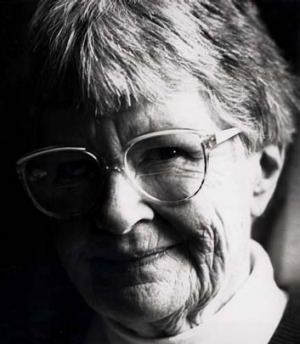
Sydney Morning Herald image: Gwen Harwood
Gwen Harwood was born in 1942 and grew up in Taringa, in Western Suburbs Brisbane. She went to Brisbane Girls Grammar School and All Saint High. Harwood had studied music and completed a Diploma to teach music but found herself in a typist job at the War Damage Commission. Although early in her life she had developed an interest in literature, philosophy and music, she was limited to what the society enabled her to do in her career. She would later be described in our time as brilliant but was understated.
Harwood’s father taught her music and her grandmother introduced her to poetry. For years, Harwood could not publish her work under her own name because she was a woman. The society, male editors mostly, thought a woman should not be a writer or get published. As a woman poet in a largely male dominated place, Harwood used Pseudonyms to be allowed or belong to the publishing world. A local Brisbane publisher, Minjiin first published her poem in 1944. From 1960s, Harwood started to publish more of her writings in journals and books. Her discreet life in the literary world reflected the place expected of a woman during that time (from 1940s). Poems such as the Suburban Sonnet reflected Harwood’s strong views about how the society’s view of women was.
Generally in a sonnet, the poem is about a beautiful woman in love. In this case, Harwood depicts a woman in a chaotic household in contrast to the traditional rule of a sonnet.
Drawing from her own experiences, she wrote poems that question the status of women and the right to be whatever a woman aspired to be. She portrayed the suburbia woman to boring and ordinary. In the Suburban Sonnet, Harwood showed the restricted society she and other women belonged to by challenging the norm of the social and cultural ideologies on suburban women, especially mothers.
The dead mouse could be interpreted as her dream of teaching music being dead. In her society, a woman’s artistic ambitions may as well be dead, because her society expected her to do things in certain ways. “The Stale bread” could refer to a woman’s domestic life, which she saw as boring. Harwood was accepted as belonging to the male dominated publishing world only after she made a startling publication. 1961, The Bulletin accepted a sonnet from Walter Lehmann, and after it was published it was brought to the editor Donald Horne that the initial of each line formed the phrase “Fuck All Editors”.
The Suburban Sonnet : Boxing Day (Gwen Harwood)
She practices fugue, though it can matter
to no one now if she plays well or not.
Beside her on the floor two children chatter,
then scream and fight. She hushes them. A pot
boils over. As she rushes to the stove
too late, a wave of nausea overpowers subject and counter subject
drain out with soapy water as she scours
the crusted milk. Her veins ache.
Once she played for Rubinstein, who yawned. The children caper round a sprung mousetrap where a mouse lies dead.
To celebrate us, the women of the world today (March 8th), I share words of a great poet, Maya Angelou. I would like to pay tribute to the phenomenal women (pictured below) that raised me, and whose blood flow in my vein.
From left to right, Mama De-ec, Tinang and Mama (Freda). My aunt, grandma and mum. Guess who is in the bilum…
Phenomenal Woman
Pretty women wonder where my secret lies.
I’m not cute or built to suit a fashion model’s size
But when I start to tell them,
They think I’m telling lies.
I say,
It’s in the reach of my arms
The span of my hips,
The stride of my step,
The curl of my lips.
I’m a woman
Phenomenally.
Phenomenal woman,
That’s me.
I walk into a room
Just as cool as you please,
And to a man,
The fellows stand or
Fall down on their knees.
Then they swarm around me,
A hive of honey bees.
I say,
It’s the fire in my eyes,
And the flash of my teeth,
The swing in my waist,
And the joy in my feet.
I’m a woman
Phenomenally.
Phenomenal woman,
That’s me.
Men themselves have wondered
What they see in me.
They try so much
But they can’t touch
My inner mystery.
When I try to show them
They say they still can’t see.
I say,
It’s in the arch of my back,
The sun of my smile,
The ride of my breasts,
The grace of my style.
I’m a woman
Phenomenally.
Phenomenal woman,
That’s me.
Now you understand
Just why my head’s not bowed.
I don’t shout or jump about
Or have to talk real loud.
When you see me passing
It ought to make you proud.
I say,
It’s in the click of my heels,
The bend of my hair,
the palm of my hand,
The need of my care,
‘Cause I’m a woman
Phenomenally.
Phenomenal woman,
That’s me. Maya Angelou
3D facial reconstruction of a young male dated -2500 years from “iberic” period (Spain). The skull was pierced with an iron nail as part of a ceremonial practice. The views were done working on a 2mm cut CTscan, Zbrush, Cinema4D and VrayforC4D. Due to the amount of hair strands each frame had a 45mn render time on a Mac Pro 12 cores with 24GB Ram in HD 1080p format. (This Vimeo video is only in 720p).
Reconstruction done for the MAC Ullastret/Catalonia/Spain (Archeological Museum of Catalonia).
To mark this year’s International Women’s Day, (March 8th), Indigenous TV (NITV) has put together a list of 20 trailblazing Indigenous women who have changed Australia. I was delighted to find this article and pictures on the SBS News site.
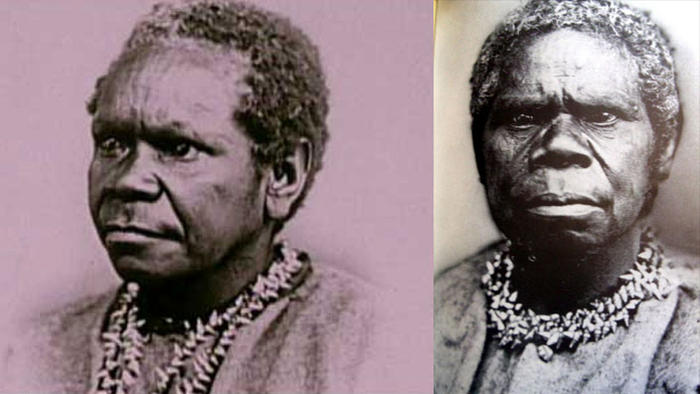
Truganini, last of Tasmania’s tribal inhabitants, 1812 – 1876 on (right) and Bessy Clark.
Truganini was a defiant, strong and enduring individual even to her last breath. She is a symbol of the survival of the Tasmanian Aboriginals and her life epitomises the story of European invasion.
As a young girl, she was taught her culture but when Aboriginal life was disrupted by European invasion this changed her forever. Despite witnessing the most horrific crimes against humanity, Truganini believed the only way to fight against white invaders was to learn their ways in order to gain empathy.
To read about the 19 other amazing women, please click below: SBS News
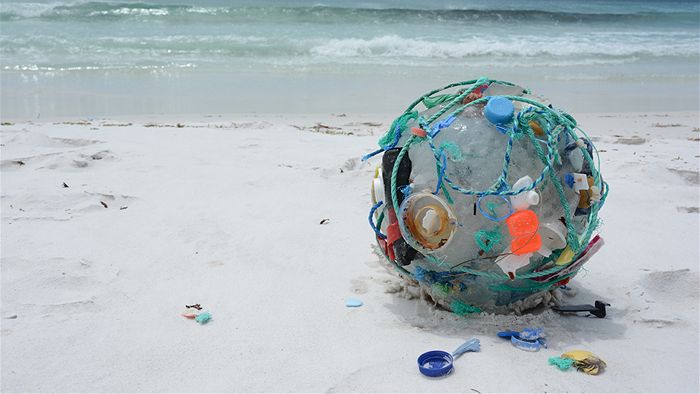
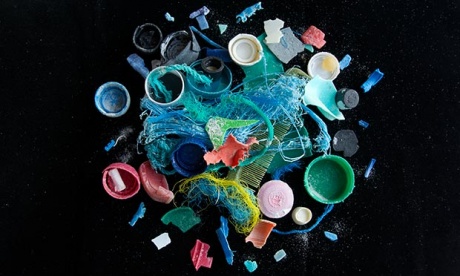
On an isolated stretch of Western Australian beach, artist Tim Pearn creates works from washed-up plastic waste collected over the course of a year on Albany’s Goode beach. The resulting artworks, both beautiful and disturbing, are on show during the Great Southern festival, part of the 2015 Perth festival.
The Great Southern conjures images of pristine coastline and unspoilt beaches. The Western Australian artist is challenging this picture by sculpting with artificial materials found on an Albany beach.40 beach walks. 40 bags of plastic rubbish. That’s all it took for Pearn to collect enough material for his exhibition, On the Beach.
Tim Pearn art
Featuring sculpture, photography and video work, the display uses plastics collected from Goode Beach to create eerily beautiful images of artificial materials in the natural environment.
“I lived on Goode Beach for over a year and started to notice little, tiny specs of plastic and started collecting it. I was amazed how every time I walked down the beach I could pick up a small bag,” says Mr Pearn.
Speaking to the ABC Great Southern Morning show, the artist was struck by the sheer volume of waste he encountered on his regular walks.
“I started picking up stuff to throw away and it just kept coming and kept coming. I started to think ‘What could I do with this?’ and I was amazed that it never stopped really”.
Mr Pearn hopes that his exhibition will draw attention the problem of plastic pollutants.
“It really is a provocative exhibition. I think we’re being very irresponsible in how we use plastic. It’s very useful material if it’s used properly, but we’re really having an awful impact on the environment,” he said.
“The impact of plastic waste is affecting us severely in the Great Southern like everywhere else.” No place left untouched
Dr Jennifer Lavers knows more about ocean plastics than the average beach goer. A marine biologist at the Institute for Marine and Antarctic Studies, Hobart, she has spent considerable time researching the impact of plastic pollutants on marine birds in the Great Southern.
Dr Lavers says the problem cannot be understated.
“It’s absolutely everywhere. Nowhere is immune. From the top of the world to the bottom, from the Antarctic to the Arctic, plastic is absolutely everywhere.”
Dr Lavers studies the health of marine birds, including local mutton birds, to paint a picture of the health of the ocean.
“Seabirds are really reliable indicators to gather the data that we need of what’s happening,” she said.
Ocean plastics feature heavily in her research.
“It’s the main component of what I work on,” said Dr Lavers, who considers the pollutants one of the biggest threats to the environment.
Her research has demonstrated the biological impact of plastic pollutants ingested by ocean birds.
“Once ingested, more toxins such as mercury and arsenic can be found in the bird tissues.”
“The ability of plastic to act as a vector for pollutants is accepted.”
Ocean plastics in humans?
If plastic pollutants are being ingested by marine life, could this be impacting humans higher up on the food chain?
“That’s the million dollar question. That has not yet been proven, but there are various lines of evidence that are moving in that direction,” said Dr Lavers.
“Whilst no one has made a direct link, other independent lines of evidence are quite strong and suggest that we should be worried,” she said.
On the Beach is showing the Western Australian Museum, Albany until March 7, as a part of the Great Southern Festival 2015.
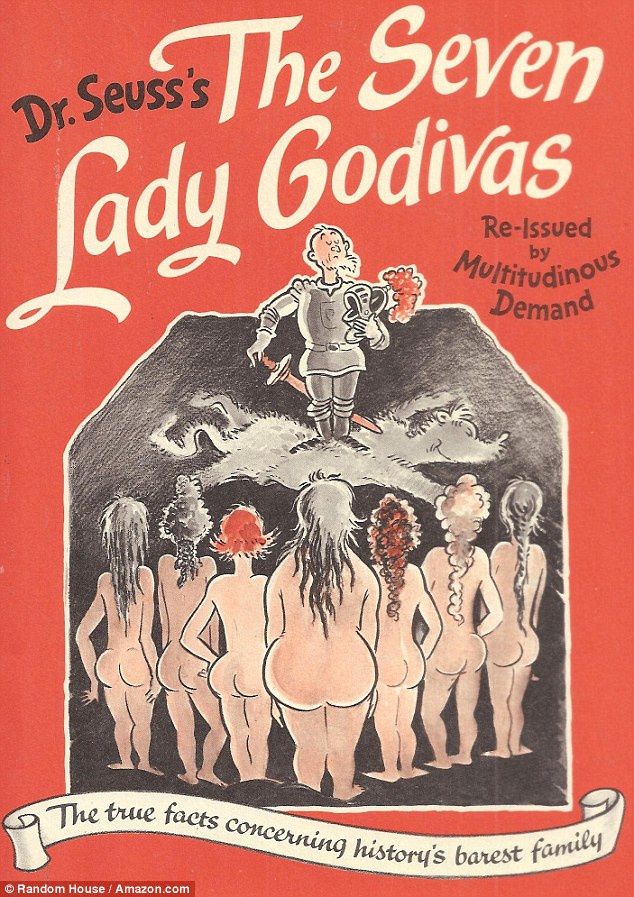
The story of how Dr Seuss wrote a little-known adult book about seven medieval sisters who never wore clothes. The book was a flop.
Not the usual: Dr Seuss penned this saucy book in 1939 – but it never gained much popularity despite featuring pages of cartoon nudity
I love Dr Seuss’s Children’s books and found this story very funny. In fact my 19-year-old who grew up on Dr Seuss children’s stories and learnt a lot of his first words from the rhymes was quick to point out, he knew about the Seven Lady Godivas when I shared my discovery today.
As a writer, I think that sometimes you have to try writing in more than one genre before you know where your strength lies. It was how Dr Seuss did it – trying his writing and drawing talents at adult cartoons before he discovered his true calling was in children’s books. I often see writers going from general genres to adult/erotic books but not the opposite as Dr Seuss who celebrated his birthday yesterday did. He wrote the failed exhibitionist tome in 1939.
In this Daily Mirror article Seuss, also known as Theodor Geisel only sold 2500 copies of The Seven Lady Godiva. He wrote that he was in fact telling ‘a beautiful story of love, honor and scientific achievement’. His best-known characters are famous for their clothes. But the Cat in the Hat and the Fox in Socks have little in common with the stars of another The Seven Lady Godiva.
The gang of naked sisters who star in The Seven Lady Godivas: The True Facts Concerning History’s Barest Family, are famous for wearing no clothes at all.
Publishing the book was allegedly a condition for Random House, Seuss’s new publisher, when he jumped ship to them. However, it seems few agreed with his own high opinion of the bawdy tale. While 10,000 copies were printed, only 2,500 were ever bought.
He later accepted that the book was no good. According to The Atlantic, he said: ‘I attempted to draw the sexiest babes I could, but they came out looking absurd.
The famed author’s birthday, March 3rd is now celebrated as a national reading festival. The Dr Seuss’s children’s books were the favourites of both my two boys when they were growing up.
One of Seuss’s better known characters, the Cat in the Hat





 Tribalmystic Stories