Pacific Islanders draw a line on coal – and climate change


On October 14, I posted a story about 30 Pacific Climate Warriors heading to Newcastle, Australia on Friday October 17 to stage a blockade on Australia coal exporters. The warriors were joined by many Australians on the shores on Newcastle to protest.
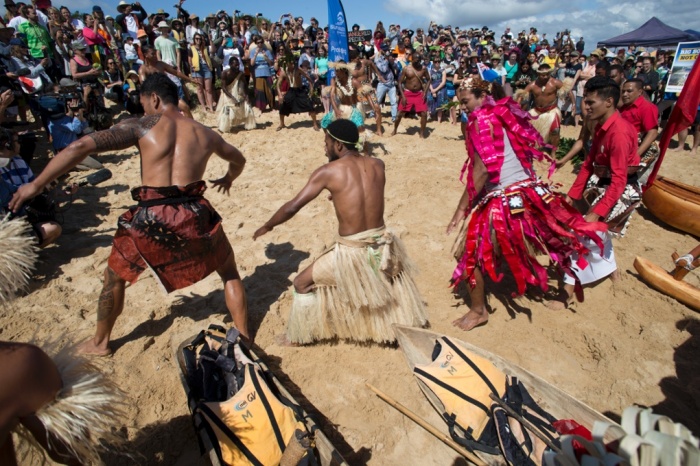
3bf38034-d46f-47db-bb8c-7010c15ffc78-1020x680
In a true Pacific Island spirit the warriors prepare to launch their vessels with traditional Polynesian war dances. Photograph: Mike Bowers/Guardian

Written and from the point of view of one of the protestors and fellow Papua New Guinean, Arianne Kassman, this is an update on what took place last Friday.  Arianne wrote this story for Reuters, Thurs, 23, Oct 2014.

20f024f9-61aa-4823-8499-89ec2017ba09-1020x612
Author Arianne Kassman. Photograph: Mike Bowers/Guardian

Over 700 islands, more than 800 languages and cultures and some 1500 bird species – Papua New Guinea’s diversity is without a doubt unique and the country is home to some of the world’s most beautiful flora and fauna.

Land is one of the most valuable assets in PNG. More than 90 percent of the land is customary land and owned by the people.

I was born and raised in the capital city of Papua New Guinea, Port Moresby. I was brought up in a strong Christian family and my traditions and my culture were also a part of my upbringing. I also learned the importance of different cultural obligations I had to my people and the land.

Today, all of this continues to be threatened by climate change. Rising sea levels, coastal flooding and king tides are all too common along the coast and for many of the islands.

This month, I travelled to Australia together with my 30 brothers and sisters from the Pacific to bring a message to Australia that decisions being made are having serious consequences on my home.

Even though it is one of our closest neighbours, Australia’s continued commitment to expanding the fossil fuel industry is destroying my home. Australia is the world’s second largest coal exporter – with plans to triple those exports in the coming years.

38bdc04b-9a64-476e-b3db-36feb24cc36c-1020x680
Protestors try to block the Rhine as police try to clear a path. Photograph: Mike Bowers/Guardian

It is also one of the world’s largest gas exporters, with plans underway to make Australia the largest exporter in the world. These are plans that are distant from me, but ones that are felt by me and my people.

For Pacific Island communities the connection to the land, and to the sea, is paramount. The land plays a central role in our culture. But now, as sea levels rise, storms increase, and droughts hit, we are losing that connection. The sea, which used to play a central, calming role, in our community has now become a force to be feared.

For the Cartaret Islands this loss couldn’t be felt more. Their entire connection to their land has been lost. And that is the fate being faced by communities all across the Pacific. Just recently king tides hit Tuvalu, Kiribati and the Marshall Islands.

When a king tide hits in those countries there is nowhere to go – the land is literally flooded. These are nations that have already been given a death sentence, told by scientists that within decades their entire land will be under water, that the only connection they will have to their land, and their culture, will be a passport.

This is what the fossil fuel industry is doing to us. Through their reckless plans to massively expand the mining of coal and gas they are trying to lock us into a future of disaster, one of rising sea levels, floods, storms and the destruction of livelihoods and places we call home. It is a future of destruction based on a shallow desire for greater profits.

This year, however, we have decided to no longer let this future be dictated for us. For years we have tried to negotiate with global leaders to halt emissions and stop climate change. But it has fallen on deaf ears.

604-1
Traditionally dressed representatives from South Pacific nations push their canoes into the water as they prepare to participate in a protest aimed at ships leaving the Newcastle coal port, located north of Sydney, on October 17, 2014. REUTERS/David Gray

That’s why I joined 30 Pacific Climate Warriors who travelled to Australia, leading a peaceful blockade of the Newcastle Coal Port on October 17. We are calling out the industry for their plans to drown our Islands. And we were joined by thousands of other Australians – those who joined us in Newcastle, or the others who led peaceful occupations of the headquarters of the fossil fuel industry in the week that followed.

We are refusing to drown; we are fighting for our islands, and for a safe climate for all of us. We’re creating a line not in the sand but in the port with traditional canoes that we have built, which no coal ships shall pass.

It is not too late. We can save the Pacific. We must save the Pacific and we must stand up, not only for the Pacific, but for all those around the world impacted by climate change. But to do so we need to stand up to the industry that is willfully destroying our home. We need to stop these destructive plans in their track.

I came to Australia not because I wanted to, but because I had to do whatever it takes to preserve my culture, my traditions, my home, the birth place of my heritage and my identity. I am proud to join the 30 Pacific Climate Warriors, and the hundreds of Australians who are standing up in support.

This is the action we need to take to save our islands. This is the action we need to take to keep our islands above water.

…………………………………………

(refer to link below for my previous post on the same subject)

Pacific Climate Warriors to blockade Australia coal export

Other pictures, video and story: The Guardian
http://www.theguardian.com/australia-news/gallery/2014/oct/17/pacific-climate-warriors-blockade-newcastle-coal-port-in-pictures

http://www.theguardian.com/australia-news/video/2014/oct/10/pacific-protesters-in-australia-to-block-newcastle-coal-exports-video

The 2014 Afrovibes Festival


Celebrating the end to Apartheid in South Africa 20 years on 

13 Oct to 8 Nov

http://youtu.be/J0_UV_i4QPk

The City of Birmingham, United Kingdom, welcomed the festival this week from October 21 to this Saturday, October 28.

This year’s festival bringing the very best of contemporary South African theatre, music, dance, film and culture to the UK
marks 20 years since the ending of apartheid and the building of the new South Africa. 

Afrovibes brings to UK, ten productions at 17 venues in 13 cities of England, Scotland & Wales. Afrovibes is a European focused  presentation of contemporary performing arts from South Africa. The festival scouts for and programmes topical African performing arts productions. These productions promote the exchange of knowledge and practice between European and African artists and theatre makers. 

History of Afrovibes

Since the festival began in 1999, Afrovibes has developed into a multidisciplinary arts festival which takes place in both the UK and the Netherlands. It connects arts and culture from South Africa with European audiences, bringing talented emerging and established African artists and their work to European venues.

Founded in the Netherlands, the festival is now a valued addition to arts provision in the UK, having been always supported by Arts Council England.

The first UK edition of Afrovibes (London, Birmingham, Manchester) took place in 2010. The second, much larger festival was in 2012, and was presented in Cardiff, Nottingham, Liverpool, Lancaster and Hereford as well as the three original cities. In 2014. Newcastle, Swansea, Bracknell, Edinburgh and Glasgow will now be added to the list.

Artistic Direction

The Artistic Director of the Afrovibes festival is the South African director / actor James Ngcobo, who has recently taken on the role of Artistic Director at the Market Theatre. Ngcobo is also an award-winning stage, television and film actor both in South Africa and internationally. He was previously Associate Director of The Market Theatre and Creative Director of Sibojama.

http://www.afrovibesuk.com/

Touchable Memories


“Touchable Memories” is a short film about blindness. The film was made by Marco Aslan. Director Marco Aslan lost his sight 12 years ago. He works as director of photography without seeing. In this film, he and others who have lost their sights share their stories about how they “see” a photo. It is a moving film about something many of us take for granted – being able to see.


http://www.marcoaslan.com


A beauty from the highlands of PNG


2014-10-18-23-26-04_01Roe
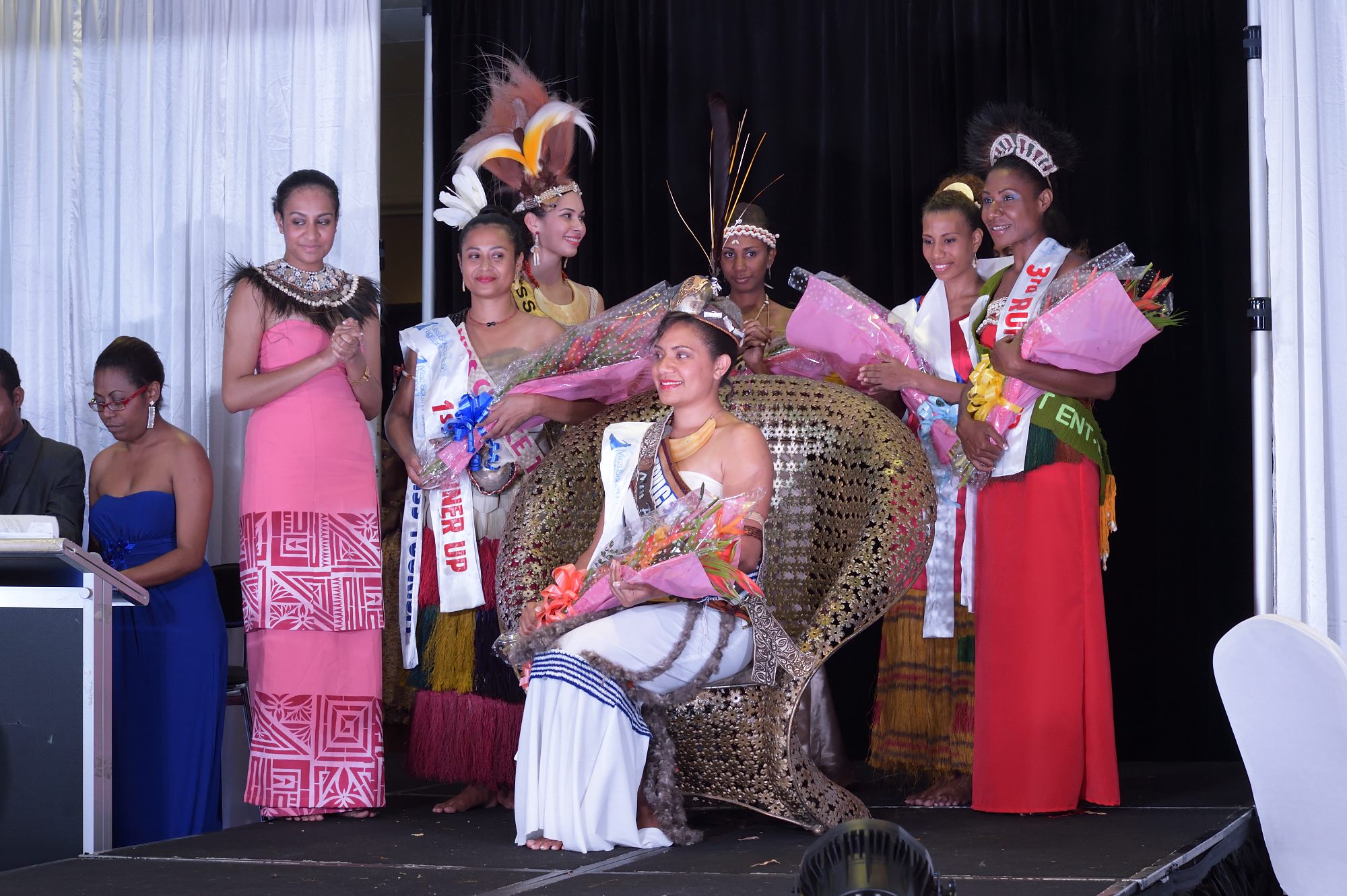
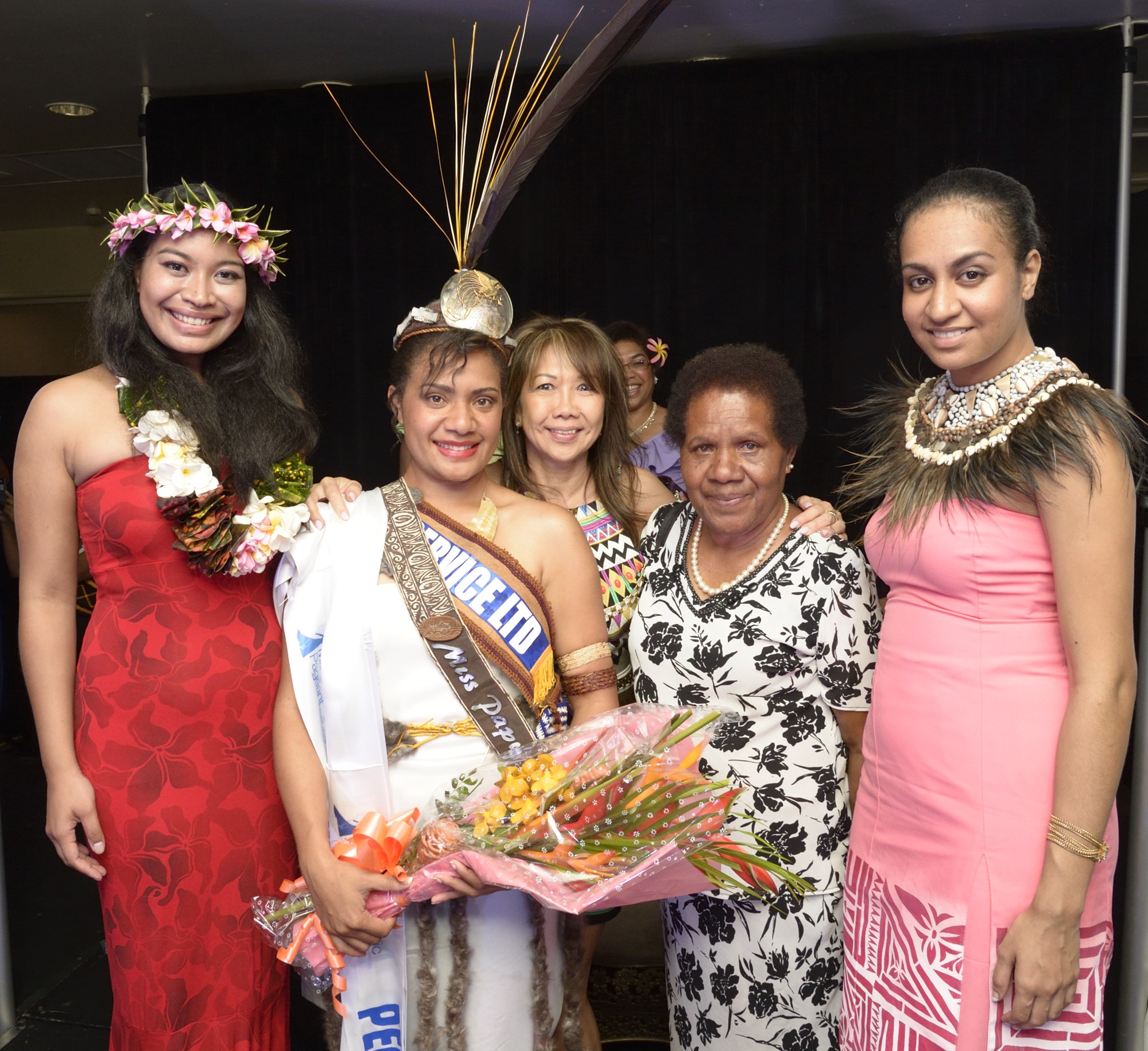
Grace Nugi pictured last Saturday with a bouquet is surrounded by two former Miss PNGs, Quest Committee member Kathy Johnston and her mother.

Grace Nugi was crowned Miss South Pacific-PNG 2014. The 24-year-old from the Papua New Guinea Simbu Province took out four other awards from her five competitors. Grace will represent Papua New Guinea in the Miss South Pacific Quest in Samoa later this year.

2014-10-18-21-37-20Roe     2014-10-18-20-36-30Roe

My Views

What I enjoy most from this beauty quest is, it is nothing like what you see or hear in the international arena. Coming from challenging personal backgrounds and a wider culture (PNG) where women’s freedom is threatened with continued violence and in many areas women and girls are regarded as lesser than their male counterparts. It takes a lot of courage for the contestants to be in public and learn to develop a sense of confidence. The quest teaches these young women – how to gain confidence and strive to be whoever they want to be. The quest opens doors for the young contestants to opportunities in education and career apart from the obvious tourism aspect.

2014-10-18-20-30-52Roe      2014-10-18-20-37-33Roe

2014-10-18-22-08-15Roe      2014-10-18-20-57-03Roe

Cultural Heritage and Cultural Preservation

The other thing I love about the quest is that it promotes our material culture, the intangible culture and it involves family and community. Through the promotion of both tangible and intangible culture we preserve our heritage.

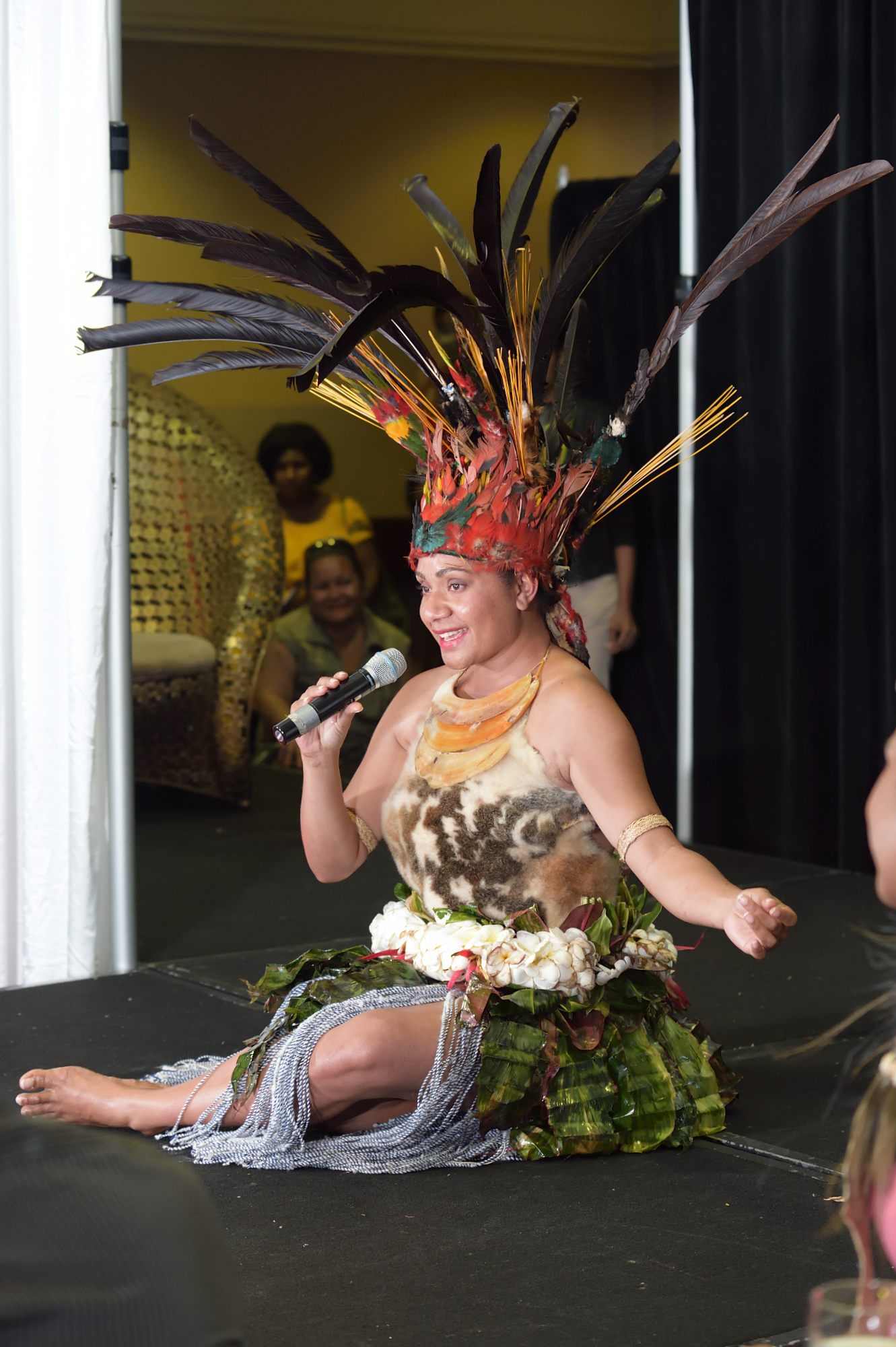
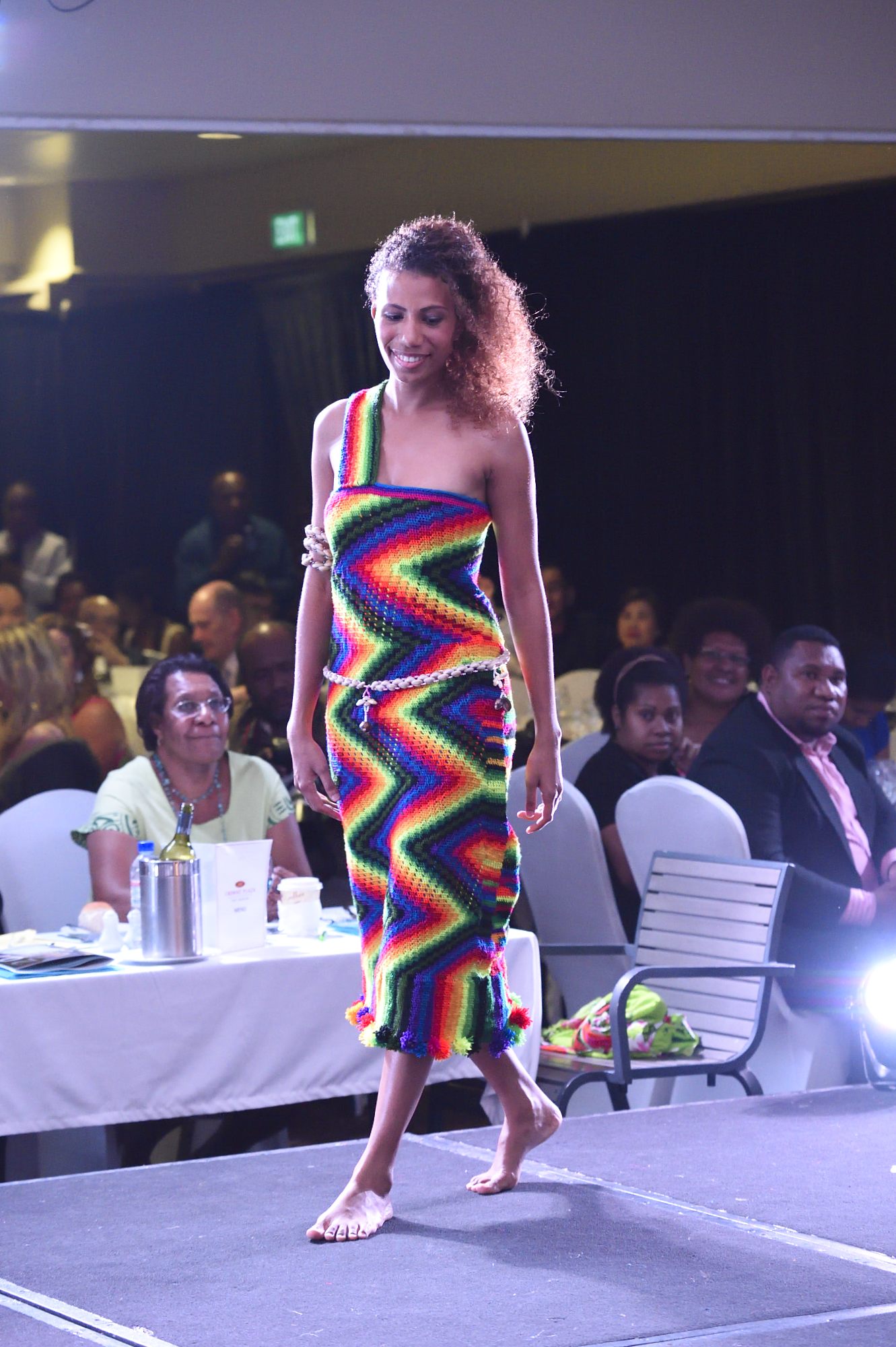
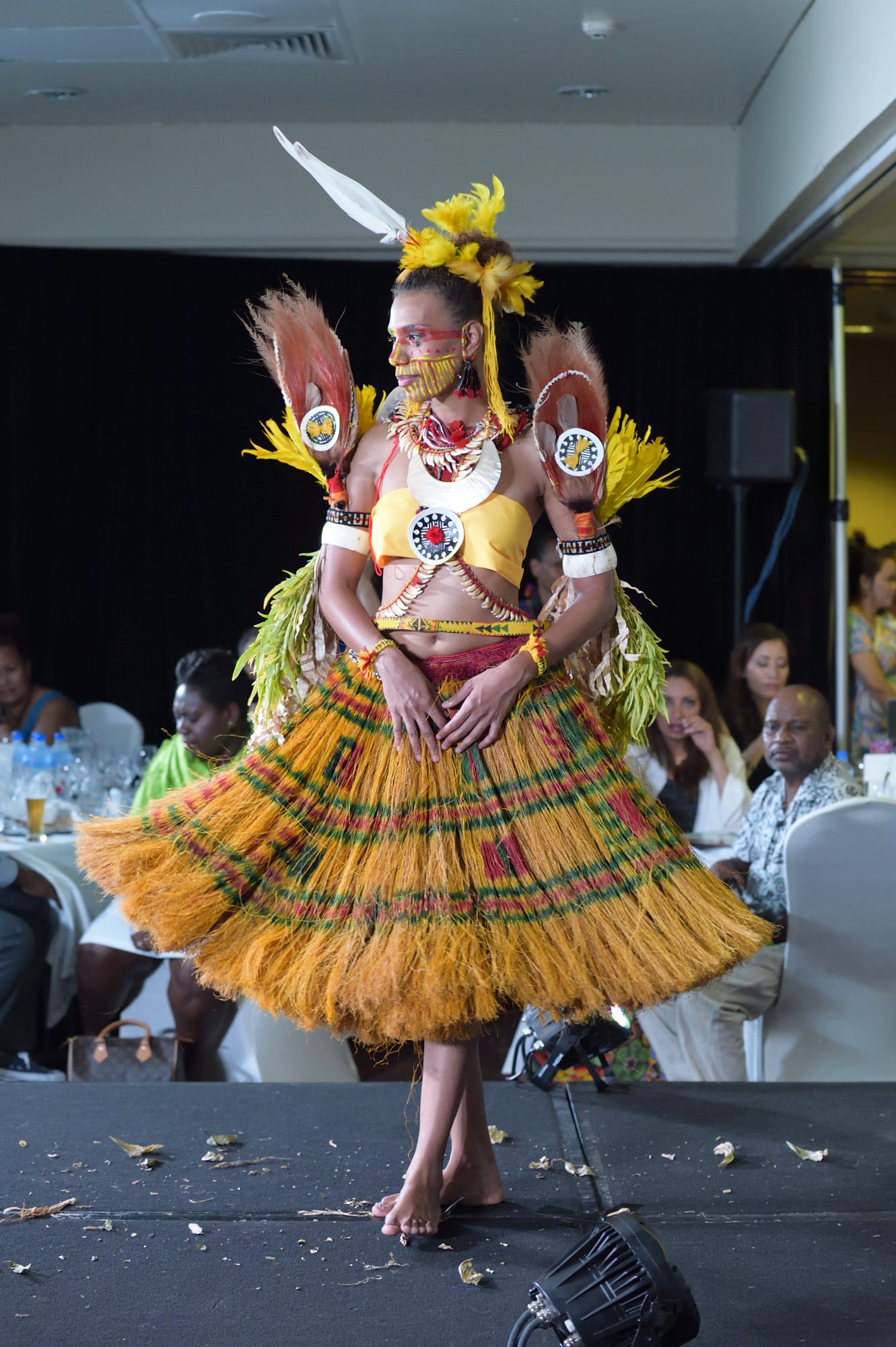
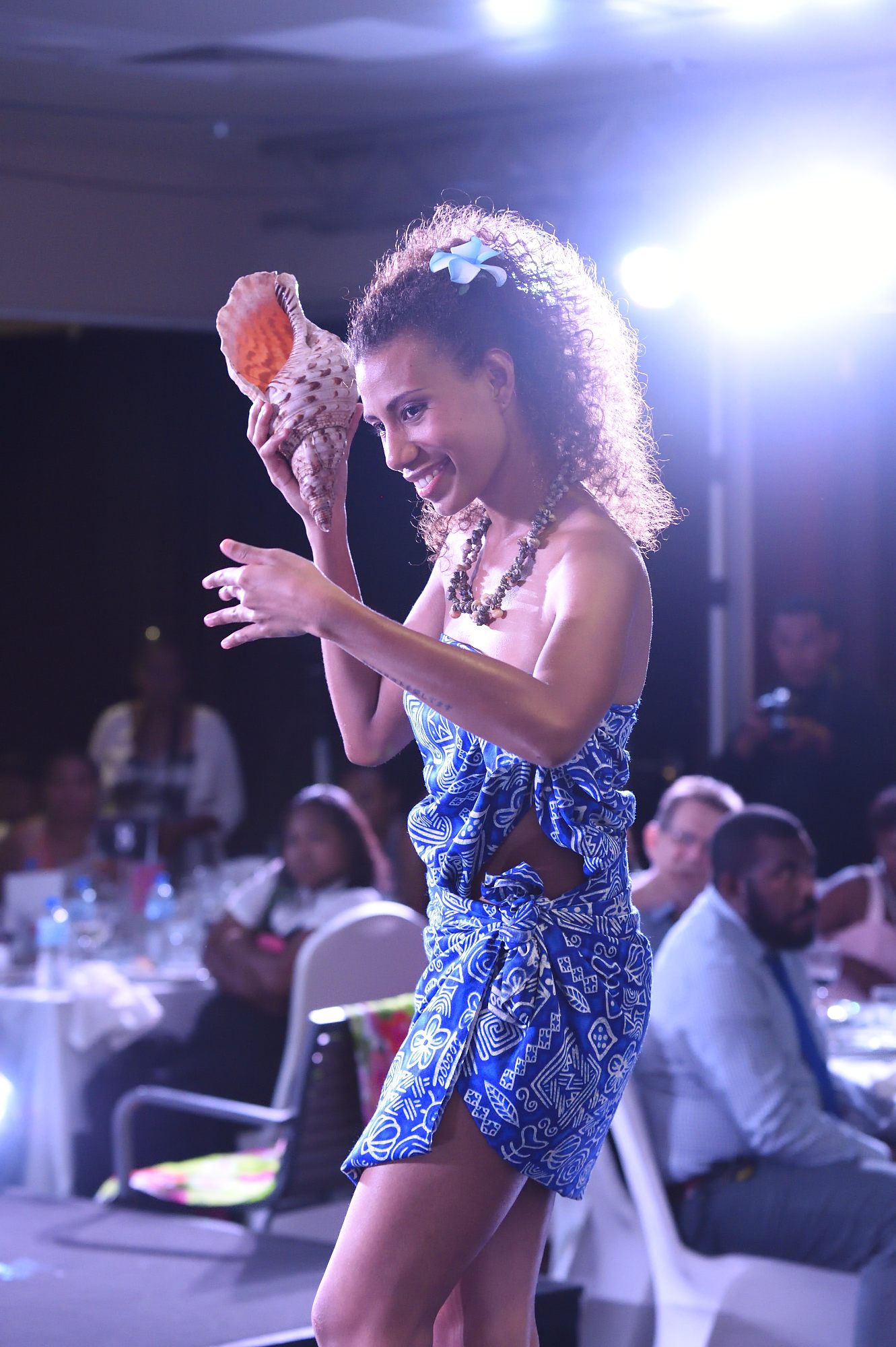
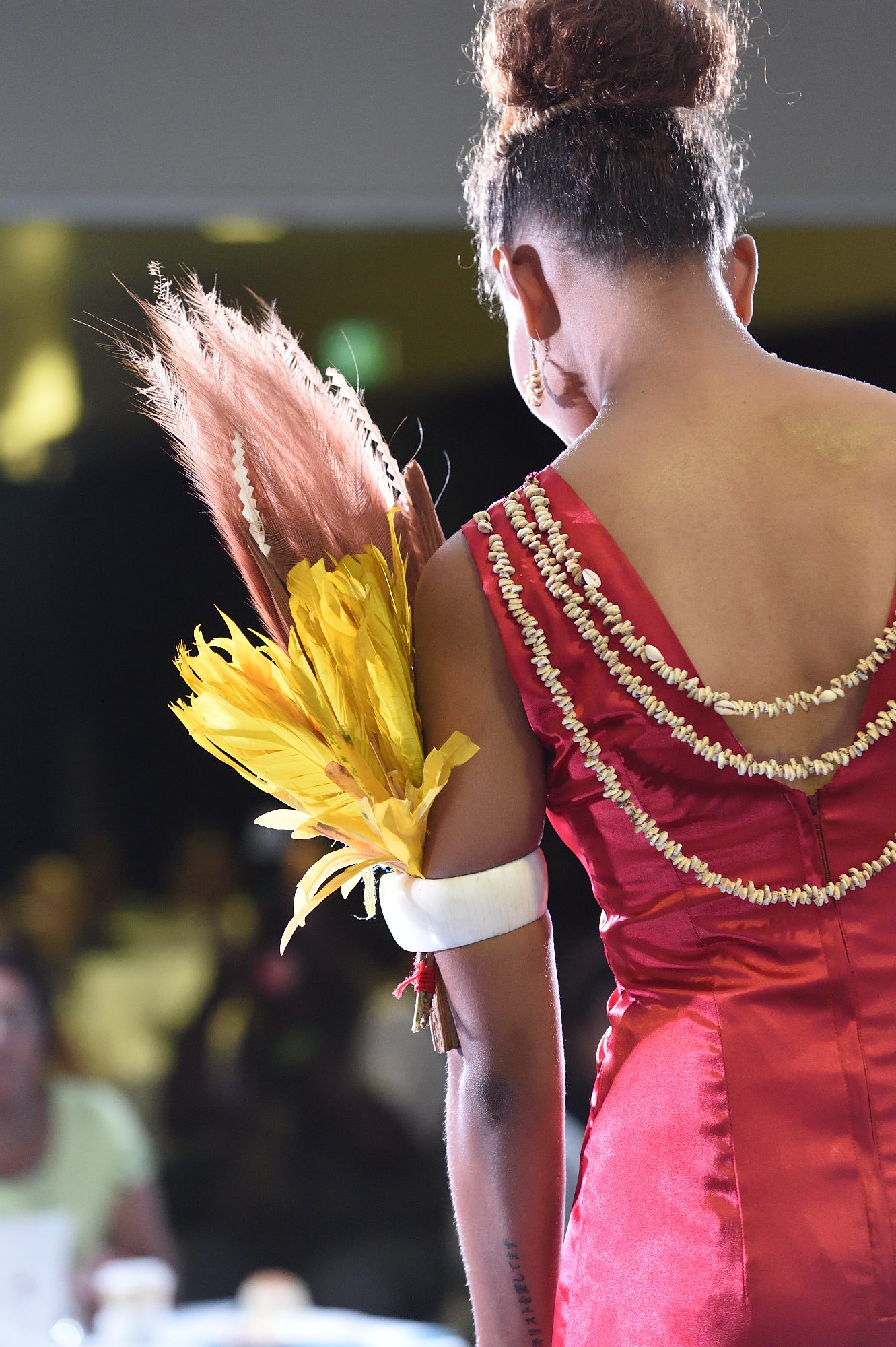
How does this happen? Each contestant wears (traditional and day wear) that is original and handmade. The dress could be made using tapa cloth or hand knitted string made fibre (hilum) from natural fibre, shells, bark etc. The headdress and body adornment would come from the province of their heritage and most likely made by family members. Each contestants have to perform a traditional dance from her own heritage. Bear in mind PNG has over 330 languages and 22 provinces with many tribal groups.

Finally, the money paid by their sponsors, is put to a good cause. It funds other young women to complete their education. The quest also assists the winners in international travel to the Miss South Pacific, and further develops the contestants while they are engaged in tourism to promote their country.

2014-10-18-21-59-45Roe-2     2014-10-18-20-34-58Roe

2014-10-18-20-32-18Roe     2014-10-18-21-41-06Roe

2014-10-18-21-06-08Roe     2014-10-18-21-32-55Roe

2014-10-18-23-08-56Roe


All pictures shown here are from Rocky Roe Photographics. http://www.rockyroephotographics.com

For more on Miss South Pacific (PNG) click on the click below:

https://www.facebook.com/misssouthpacificpng


Red Lionfish: A “Super-Invader” or Super Supper?


redlionfish
Google Image: A most beautiful and most invasive creature.

Red Lionfish: A “Super-Invader” for Supper?

In the world of art-practice this creature is one of the most photographed, filmed, painted and generally studied for its beautiful, delicate and visually exotic body. When you look at a lionfish, it is so luminous, graceful and breath-taking that it is hard to imagine such a creature could be so harmful to humans and other species.

The Red lionfish has been named an invasive species, taking over the smaller fish and other crustaceans in the Atlantic ocean. Scientists reported that lionfish were invading the Atlantic Ocean at an increased rate they  were worried that the consequences could be grave. A year ago (October 21, 2013) UPI released a report that this native of the tropical waters of the South Pacific and Indian Oceans, was not only venomous but it was also a fast-reproducing fish that had no known predators. The lionfish can produce 30,000 to 40,000 eggs every few days. They are aggressive eaters that will eat almost anything and the lionfish can destroy 90 percent of a reef. 

If you found this story disturbing, read the next part.

1-d3736a1359
Photo: Grace Beahm

In an article written for the Coastal Heritage magazine Editor John H. Tibbetts wrote; a group of strategist made up of fishermen, divers, chefs, educators, conservationists and scientists have come up with a solution to rid the lionfish in Bahamas, Mexico, Cayman Islands and Florida Keys.

The strategy is simple: the only way to get rid of the invasive species they said was to harvest and eat it.

To read more:

https://www.academia.edu/5962273/Red_Lionfish_A_Super-Invader_for_Supper

http://www.upi.com/Science_News/Blog/2013/10/21/Lionfish-invasion-is-threatening-the-Atlantic-Ocean/9321382363683/


Miss South Pacific Quest (Miss PNG)


It is that time of the year again and the Pacific islands’ quests leading up to the Miss South Pacific has begun. Miss PNG held their competition last Saturday evening, October 18th in the capital Port Moresby.

Here is a preview of the contestants.  Rocky Roe pictures show contestants parade before judges. More pictures and story tomorrow.

2014-10-18-20-56-35Roe  2014-10-18-22-09-55Roe-2

Do you know how your car engine works?


That was the question from my 15-year-old son, Chris.

Am I suppose to know? I thought, somewhat guilty that I had no idea how my car engine worked. And so it was, a few moments ago that I had to learn about car engines. I am smiling as I write this post because I was thinking earlier, what was the point of having a potential engineer in the family when you didn’t care about what their interests or capabilities were? Besides, I did learn something new. I learnt about “controlled explosion that makes a car work” to put it in Chris’s words.


icengines9
The controlled explosion theory. Google images.


Well you may ask, how does this relate to my stories about extra-ordinary things. Let’s go back to when it all started.

Friday, October 17th October 2014

Apart from his school bag, I saw my son leave the house with a re-cycled groceries back and something heavy inside. I thought, “that’s a lot of lunch for Chris”.  I did not ask him at that time because I thought he could be sharing food with his friends; perhaps they were having a party at school. Teenagers are mysterious but sometimes as a parent you have to trust your instincts and give them some space.

Same day, 3:40pm, Chris walked home carrying the same bag and the bag was still full. He put the bag down on the lounge floor in the corner.

“What’s in the bag?” I asked him.

“My technology project”.

“Is it a child’s toy?” I asked knowing he was working with wood.

“No mum, it’s an engine”.

“What?”

“It is a 3-cylinder combustion engine”, he said.

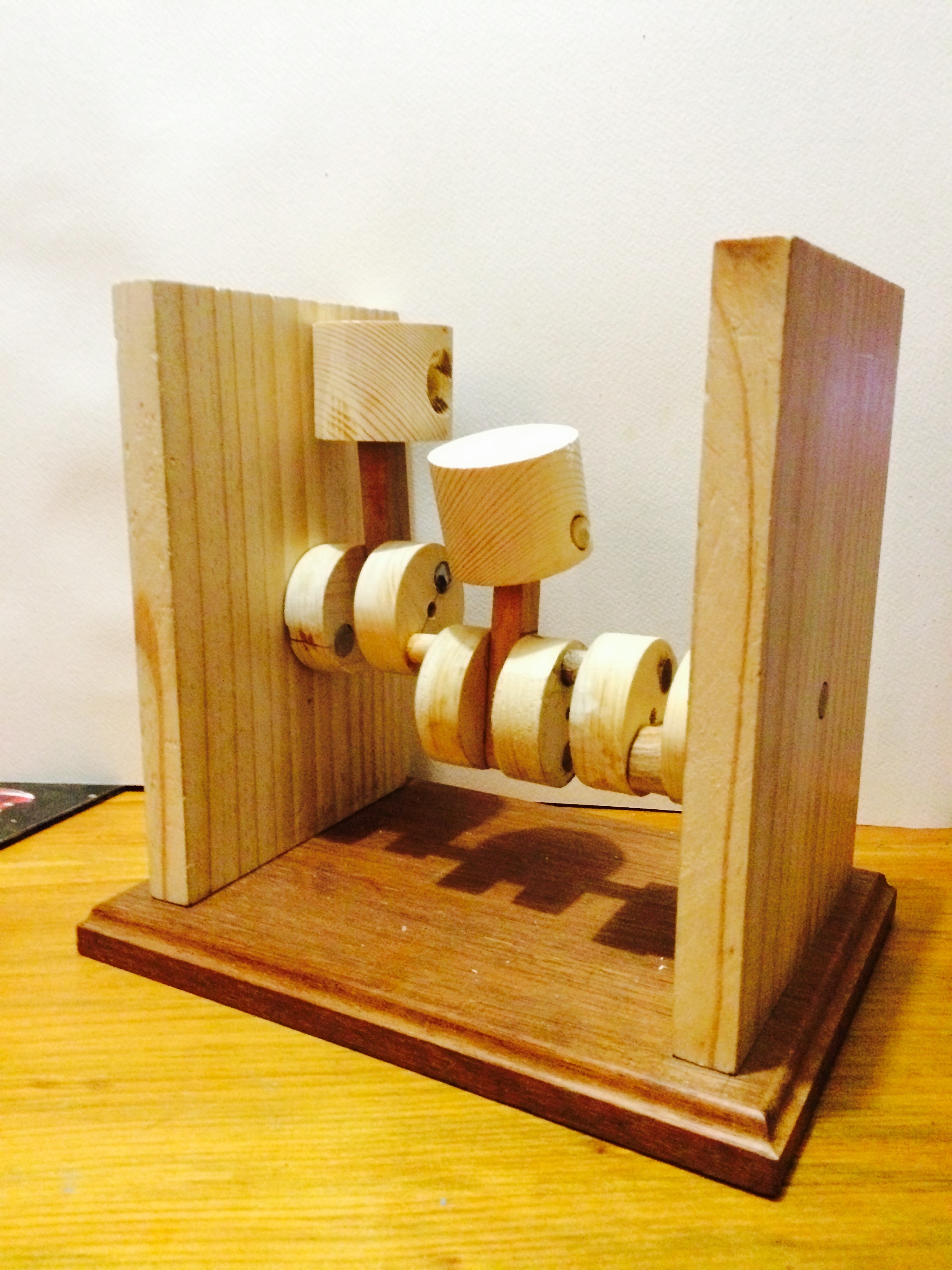
Then he explained there was no such thing, (as a 3 cylinder combustion engine) but his replica shows part of an engine.

The class was asked to build a child’s toy initially. I guess Chris wanted to be more creative.

“This children’s toy/ working model of a 3 cylinder combustion engine aims to explain to children in a simple way about what goes on in a engine”, Chris said.

Sunday October 19, 2014

Tonight, curiosity got the better of me, I had to see it. I asked Chris to show me what was in the bag.

“It is not finish mum”.

“I want to see it”.

Chris reluctantly revealed the content of the bag, pictured below and explained how it worked. I was intrigued but at the same time impressed with the woodwork. Although it was only one of many things Chris had designed and build over the years, he is a perfectionist and he was not too happy that I wanted to take a photo. I insisted on a work-in-progress picture and later a follow-up picture to show a completed the engine.  I also asked his permission to blog about the engine and I am sure he thought it was weird but he agreed.

FullSizeRender-2
Christopher Harris 3 cylinder combustion engine wood-tech project. Year 11. Kenmore High School.

The wood engine did look like a child’s toy at first. Then my 15-year-old explained how his project was only a replica of a real engine. He demonstrated how it worked by turning the handle. I was  impressed.

Naturally I was trying to place the replica in my car body, in my head. To show me the “big picture” Chris pulled up some pictures. Google helped. I looked at the pictures and realised the magnitude of what was involved in making a car engine. I was quite emotional. I was and am a very proud mother regardless of whether this wooden replica was three or ten cylinders. There are some extra-ordinary rewards in being a parent. So the answer to my question in the post is, yes! now I know how my car works.

Here are some of the Google images.

stock-photo--d-model-of-a-piston-crank-mechanism-of-an-internal-combustion-engine-140479198

Unknown
Google image of a car engine

Owls: The Silent Aerodynamic Hunters


White Owl - wash and ink
My art: A study of snowy owl in ink and wash.
Photo_36753DD6-2554-92BC-5038-7B51BC3AF9FF
My Art – Owl. Acrylic on canvas.


Above are two  of many artwork I created, purely because I love owls and I find them very interesting.

Growing up in my culture, owls have been linked to death. If you hear an owl consistently calling or crying then, death is near. This was the belief. An owl crying or calling is quite rare but when it does happen, it is quite scary.

Unusual visitors

In some Brisbane (Australia) suburbs and out where we live, there are a few species of owls. The most common one is the Frogmouth. My family and I have had several occurrences with owl visits that I find very interesting and hard to understand. Once we had three owls come into our garden and sit for three days in the same spot. There was another incident where two large owls appeared at the front of our house and sat on a very low dead tree. They must have arrived before we woke up. At first, we thought they were part of the branches of the dried tree trunk. These two sat in the same position for almost a week. I went up very close to them one day and the taller of the two opened its eyes and glared at me – so I left. I hope to find their photos that I took that day and post it here in the future. Despite my cultural learning and spiritual beliefs about these birds, I find them especially interesting because of how quiet and often secretive they are. Sometimes, you don’t know they are there. They can camouflage very well.

Xyli_Snowy_Owl
Snowy owl picture from http://www.sodahead.com

Many owl species have developed specialized plumage to effectively eliminate the aerodynamic noise from their wings — allowing them to hunt and capture their prey in silence. Almost a year ago, a research group started working to solve the mystery of exactly how owls achieve this acoustic stealth — work that may one day help bring “silent owl technology” to the design of aircraft, wind turbines, and submarines. I found this small clip on reddit.com. Click the link below to see the wing action.

http://i.minus.com/iOdEkaHhIXl2b.gif

131124093515-large

To read more: 

http://www.sciencedaily.com/releases/2013/11/131124093515.htm

Short Story – Mother’s Coffee Land


Memoir series – JLeahy

article-2290094-1883C6D0000005DC-964_634x429
Credit: Dr Wright picture

In the first moon of the coffee season, the bees would have long gone from the sweetness in the coffee blossom. The delicate petals of coffee blossoms would wither, turn brownie-yellow and drop to carpet the base of the trees. Here, under the tree, other insects such as ants would gather around the sticky rotting pulp. This was the picking time. My mother and her sisters would prepare to harvest grandpa’s coffee.

This is my mother’s Coffee Land story.

39c91a5d89f1a8c1b3a504398b06a31a
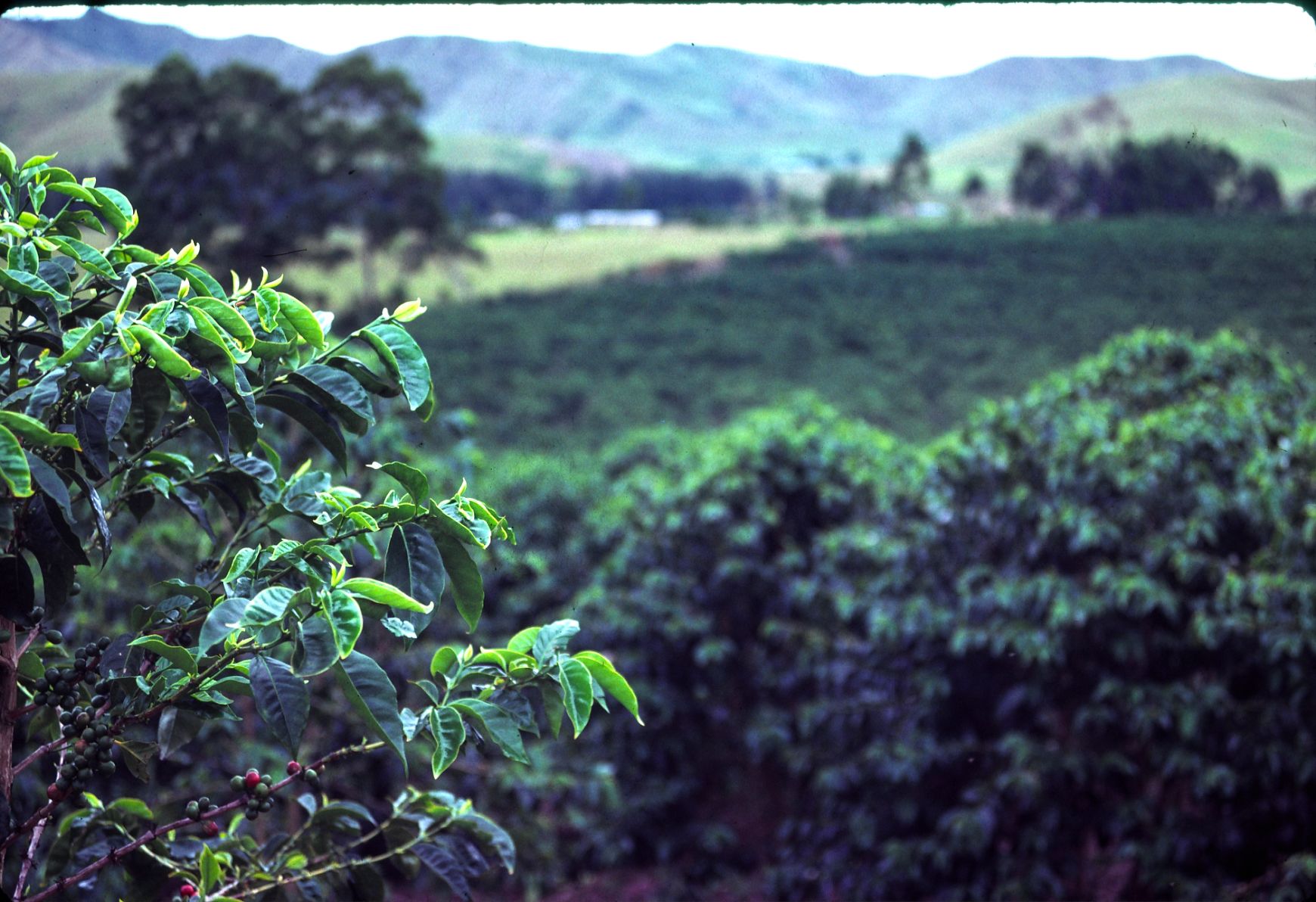
A coffee plantation in Morobe Province

My grandfather’s name means “intelligent” and so he was. Kauc’s coffee garden was planted on his father’s land, miles away from our village.

To harvest the coffee beans; equipment, food, bags, water and all other necessities for processing had to be carried to the garden on foot. It was a labour-intensive method in which cherries are picked, selected and pulped by hand all day and for several weeks.

The remaining flesh from the pulping process was used as composting material for both the coffee and food gardens. Once the bean was dried, it was shelled. The coffee was now ready to sell and grandpa took it to town and in exchange, he bought sugar, rice and a small stick of tobacco. The tobacco was his treat, although he rarely smoked. My mother often wondered why he spent his hard-earned money on tobacco he did not really smoke. She said perhaps he shared it with his friends.

The coffee garden was Kauc’s pride and joy. Being a male and the second eldest in his family, Kauc owned a large piece of land. He was a devout Lutheran and a teacher. Kauc loved the land and he tried some cocoa and his coffee garden for cash.

The coffee garden, near our food garden, was situated less than an hour walking distance from our small coastal village outside Lae, Morobe Province, Papua New Guinea. Kauc grew Arabicas. With a high rainfall and good soil, the trees grew well and produced top quality beans. The family did not drink this coffee. They drank tea which came from Garaina, a sub-district in our province. This coffee garden was purely cultivated as a cash crop.

When the coffee berries ripened they developed a glossy sheen on its deep red shades. My mother, her sisters and my grandparents would go to the garden to pick the coffee and spend the whole day sorting and processing.

Sometimes, they would take a break and make a fire in nearby kunai (grassland) to surround and trap bandicoots for lunch. This made the long day interesting.

My mother said she would feed me milk and lay me down in a bilum (string bag) and hang the bag on a Rosewood branch. Under the shade, the cool breeze kept me asleep while she and her sisters picked coffee. My grandfather washed and peeled the red skins, revealing pale beans. The sisters would pick and bring bags of the red cherries and pour them into my grandpa’s pulper.

“He would stand there in his laplap and T shirt and just turn the handles until the machine skinned and spit the pale brown seeds out the other end. The seeds were collected and dried in the sun. He was in charge of this machine” my mother said.

The trees and in particular, the Rosewood tree became the landmark. Memories of the coffee garden surfaced in a family argument over land allocation eight years ago. My grandfather and his brother were the head of our family and clan. Both men had died three decades ago. Their sons, my two uncles who became head of our clan and land had also died. My mother remains the eldest of the family and clan. Her being a woman brought another cultural and customary argument about where she would live.

According to my cousin brothers, my mother should not have any land. Fortunately for my mother, and for the fact that she was born the daughter of an intelligent man, she stood up for her share. My mother made sure she had spoken to my uncles and got both their approvals before they died. When my uncles asked her to choose, she had marked the land where she used to hang me in a bilum, while she picked coffee with her father. This coffee garden became her land. In memory of her father, my mother named her son Kauc and I named my son Kauc.

Unspoilt treasures of Papua New Guinea. An underwater short film.


OceanShutter.com presents an Underwater Short Film.
Please Like, Share and Comment!
The Rolling in the Deep series takes us to Papua New Guinea. One of the last unspoiled diving destinations left on earth.
I hope you enjoy it!
All Underwater Video Copyright © Dustin Adamson/Oceanshutter.com. All Rights Reserved