I was looking for various textiles that have been prepared by hand and I was particularly interested in natural dyes and its processes. I found this great article in Victoria and Albert Museum called “The Fabric of India: Nature & Making”.
These are some of the short film clips and a paragraph on the dying process. If you are interested, read the full article on the museum’s website.
India’s natural dyes, especially those for blue and red, have been renowned for millennia. Blue dye was so closely associated with India that the ancient Greeks took its western name – indikos (indigo) – from the country itself. Red dyeing with fixing agents (mordants) was known to the Indus valley civilisation by about 2500 BC.
Fixing the colour is the great challenge of dyeing cloth. Indian dyers’ use of mordants was key to their expertise, which was unrivalled until the invention of western chemical dyes in the 19th century. It is this wealth and mastery of bright and lasting natural dyes that perhaps best distinguishes India’s textile heritage.
Dear friends, I am away from this blog for an assignment. I will be back with loads of stories – I promise. My son Nathan said he may cover the blog for me while I’m gone. He somewhat likes the Mondays Finish the Story fiction challenge and the Cool Stuff. I hope it is not like when he says he would do the dishes and then I find them in the sink when I come home. Jokes aside, don’t despair if you don’t see a post in the next couple of weeks, just think of all the stories I will be telling you when I return. Besides, Nathan may surprise all of us with one of his tales.
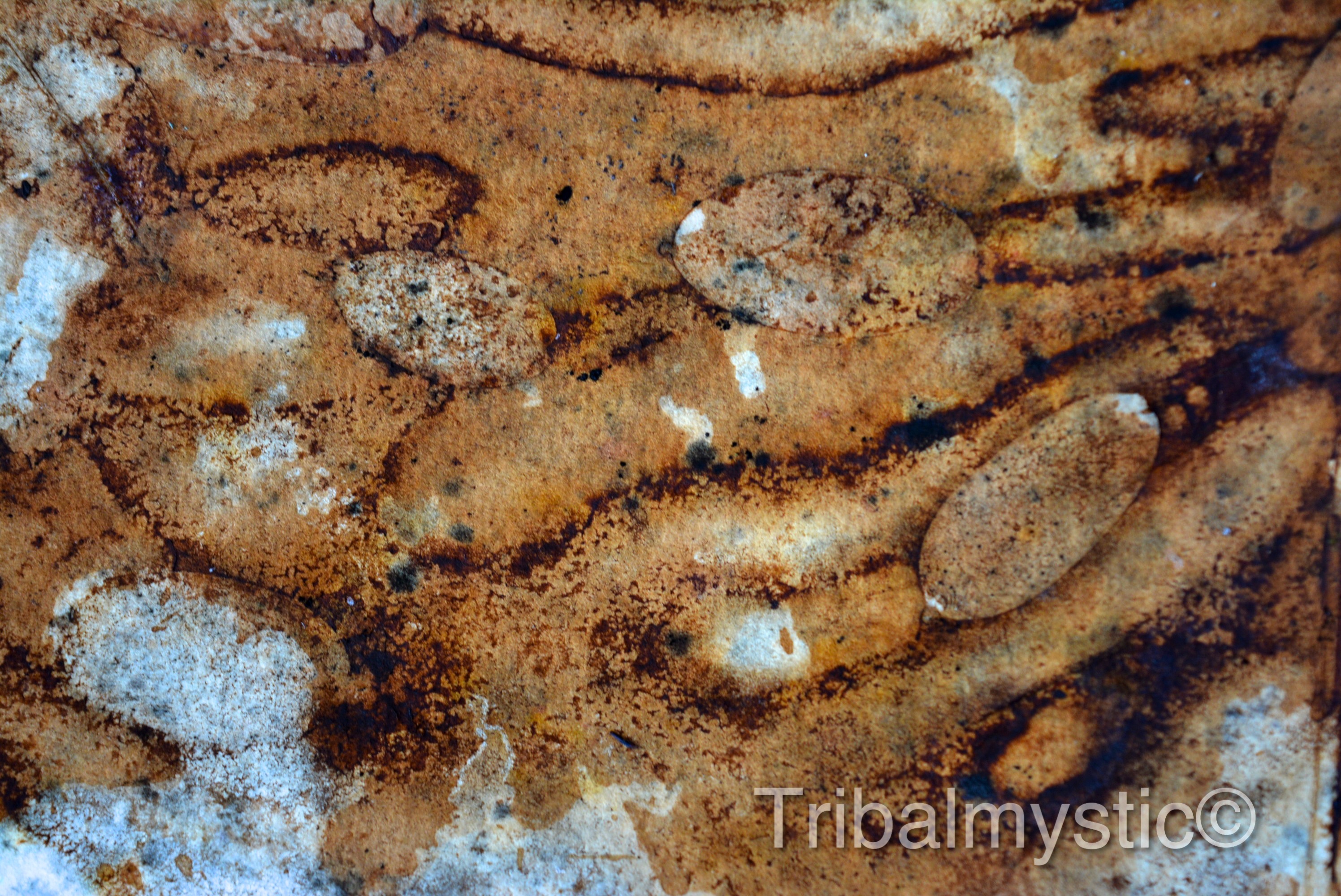
In this post before I go, I wanted to revisit the accidental artwork. If you have been wondering what happened to the work I pressed – this was the result when I ‘harvested’ it a few days ago.
I set with leaves and natural dyes in an earlier post (The Accident Artwork – Art Experiments). After three weeks of moist disintegration of leaf fibres on paper with tea, coffee and garden dyes, the work was totally unexpected.
In the work above and below, I used Acacia leaves with tea and other boiled leaves.
In the next two work below, I used coffee and gum leaves. This is what rotten gum leaves look like on paper. The liquid is quite thick and can really stain.
I am thinking of trying the mixture to stain wood furniture next time.
I also would like to wish all Papua New Guineans a Happy 40th Independence Day today – 16th September.
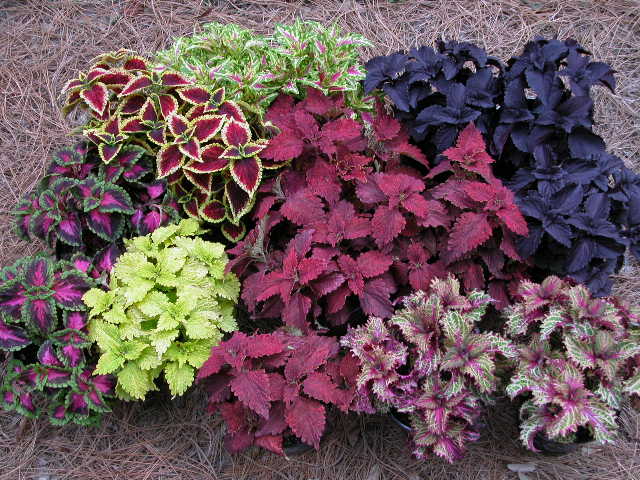
Coleus Canina (pictured above) is one of the most colourful tropical plants with almost every colour you can think of. It is my mother’s favourite plant. I grew up with in Lae, Papua New Guinea (PNG) seeing Coleus growing on the side of our house, along the main road at our village, in our food garden or in the cemetery. Everybody grew some kind of Coleus plant. They are gorgeous. We used Coleus to decorate ourselves when we danced. Sometimes, our people just stuck a small branch of the plant in their hair or hung in on their bags for decoration because it is pretty.
I knew the plant had a distinct smell, but I did not know, in Australia, Coleus was planted to repel animals such as cats and dogs from gardens. Perhaps it is a myth? This attractive perennial herb is actually an aromatic member of the Mint family. They’re native to southern Asia and eastern Africa, and they attract butterflies and bees.
In early 1990s, I was engaged by Peace Corp and the Conservation Melanesian to run some entrepreneur workshop and training for crafts people in the Crater Mountains in Eastern Highlands Province, PNG. I had volunteered to teach the artisans and spend some time learning about their art and the way of living. It was here that I discovered something new about the Coleus plant. Certain types of the plant had strong pigmentation. Women were using the leaves to rub into flax fibres as they twisted the fibres into ropes for making (bilum) bags as pictured below. As they twisted the ropes and rubbed with Coleus leaf, the rope would instantly turn from its natural colour into deep purple, blue and even black. I was amazed.
Dark blue, almost black dye from Coleus plant rubbed into the fibre on this bilum by the Herowana (Crater Mountains) women in PNG.
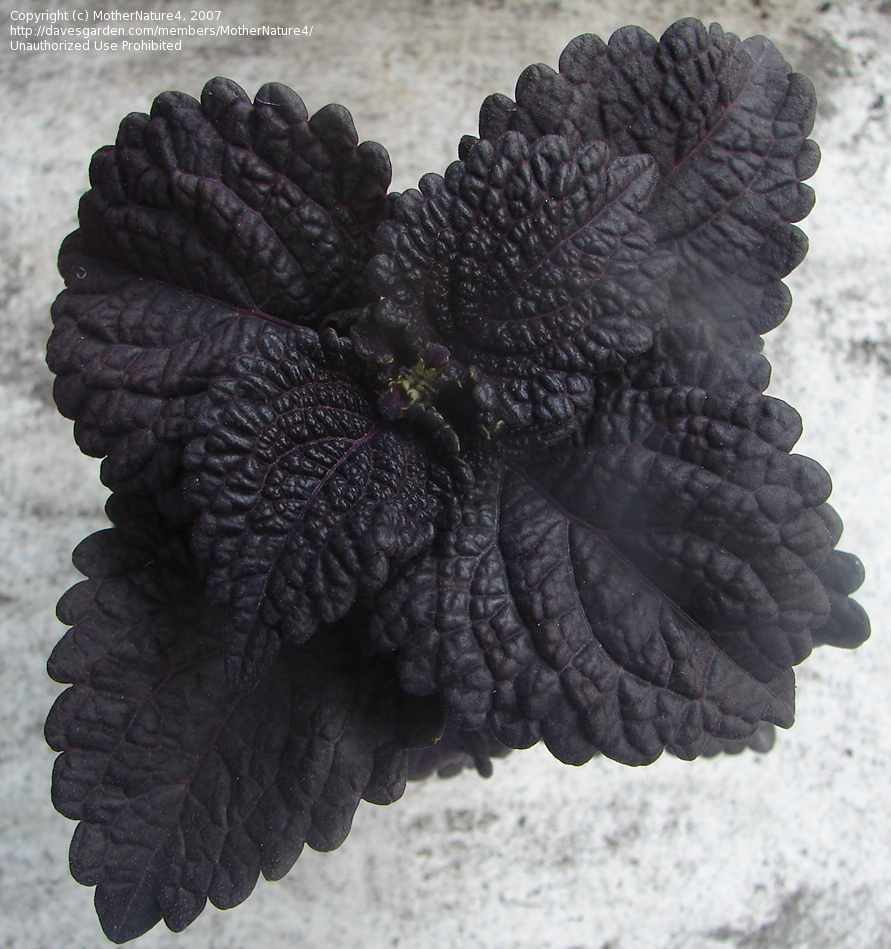
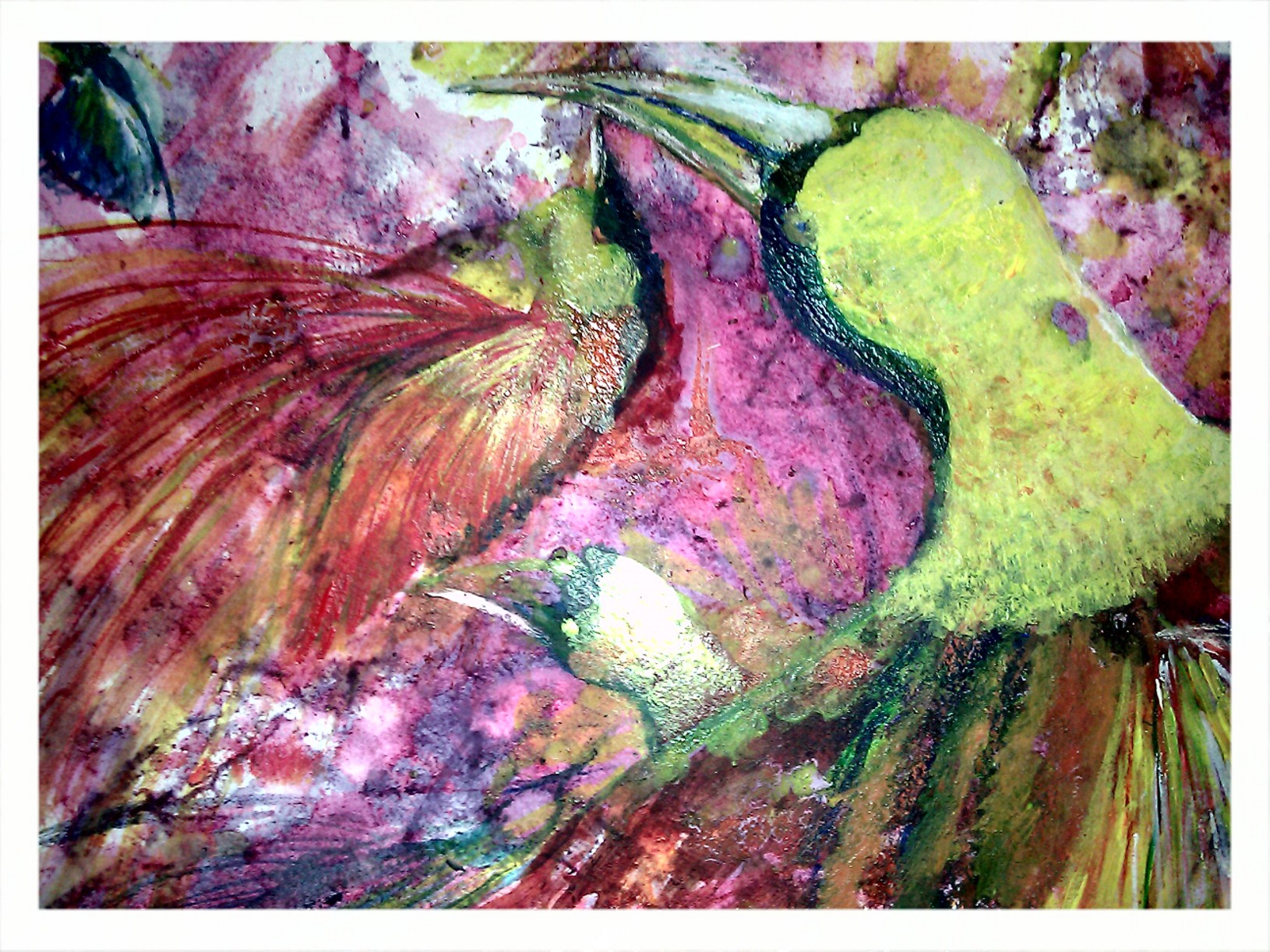
Years later, while living here in Brisbane (Australia) and experimenting with using natural dyes and pigments in my painting, I remembered the Coleus. I had already used coffee, tea, turmeric, beetroot, some grass seeds so it was a refreshing addition to my natural pigments. I had made a trip to the local Bunnings and started growing the Blackberry Waffle, pictured below which gives the strongest colour dye. I made good artistic use out of the plant all summer but unfortunately I lost the Coleus plants in winter. Spring is here so it is warming up and I will start again. That is why I am making this post. Below is an artwork, “Paradise Birds” I created from using a mixture of watercolour and natural pigments from my garden. The pink and purple background in the painting is the pigment/juice from the Coleus plant.
The Blackberry Waffle Coleus – the pigment king.My Art – I painted this mixed media called Paradise Birds with Coleus ‘Blackberry Waffles’ – it is the pink and purple background. I also used the blue seeds from grass and turmeric for the gold and yellow bird heads. This work is on paper.





 Tribalmystic Stories