Tag Archives: Joycelin Leahy short stories

Short Story: Swamped


Final part of  SWAMPED

(JLeahy on Creative Writing with Isabel De Avila Winter ) ©
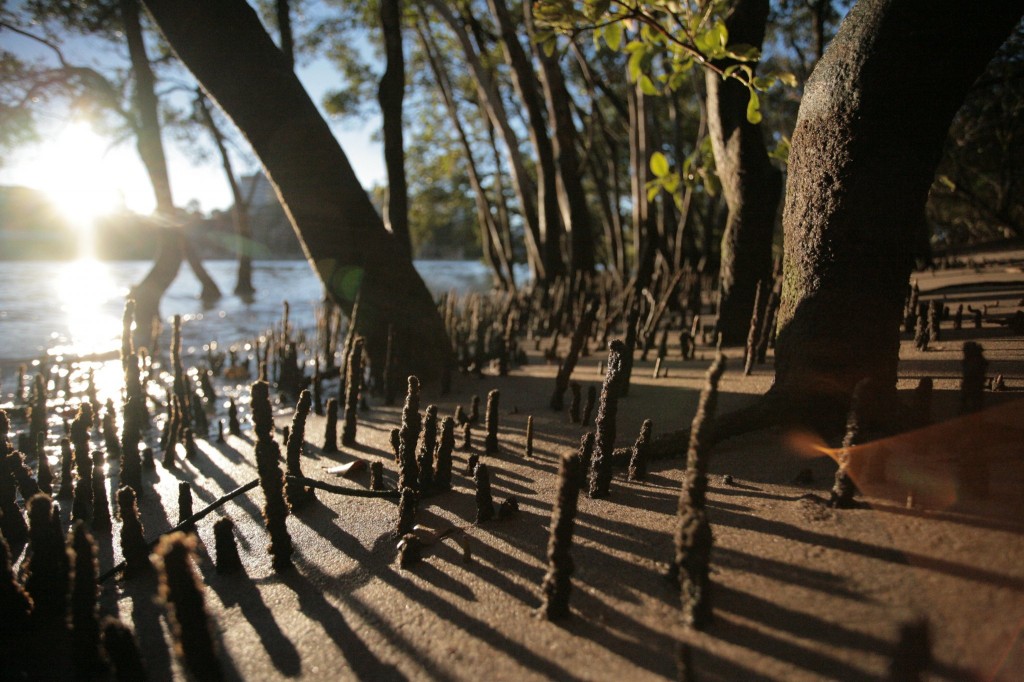
Mangroves-1024x682
Public Domain image.

I remained standing at the T-junction and my attention shifted to where the two waterways met. I wondered where the birds were today. By now, the sun rays would have come through the leaves and woken the birds, causing an eruption of an electrifying orchestra. There was not a single bird-song. That part of the equatorial rainforest norm was missing.

My arms hung loose and lifeless, I could not feel them. I tried to, but I could not lift my arms nor move my legs. I was not terrified; I only felt stuck and this alarmed me a little because the mud was not deep. When I drew breath, it was slow, restrictive, and my chest was constricted. Something large of several layers like a heavy coil of thick, soft, rubber hung around my neck and shoulders. It weighed me down. I was tall for a teenager, but my thin, weak and small shoulders were crushed by this weight. I thought it was a heavy towel as we often hung towel around our necks to keep warm while fishing. I shut my eyes.

And then it moved, so suddenly. I realised this was not a towel. It was a large snake, a python! A different set of knots, the horrid kind, started tightening inside me. On me, I saw the coils move and could feel it tightened.

My eyes re-focused. The snake’s colour reflected that of the greyish mud, faint yellow like a banana skin, and the brown mangrove tree bark. I could see the diamond-shaped outline of each scale. It was detailed vividly in intricate patterns on its centre spine above my breasts and just beneath my chin. The scale patterns, beautiful and seamless, disappeared under the next coil. I became more aware, alarmed and numbed by the weight, closeness and firmness of its grip. I shifted my eyes ahead beyond the mangrove. It did not make sense to scream and it seemed too hard to remember how to scream. I refused to imagine where the snake’s head would be, I did not want to meet it nor look into its eyes. Now I remember how that poor pig must have felt when the python took it behind our house. Was this the same snake?
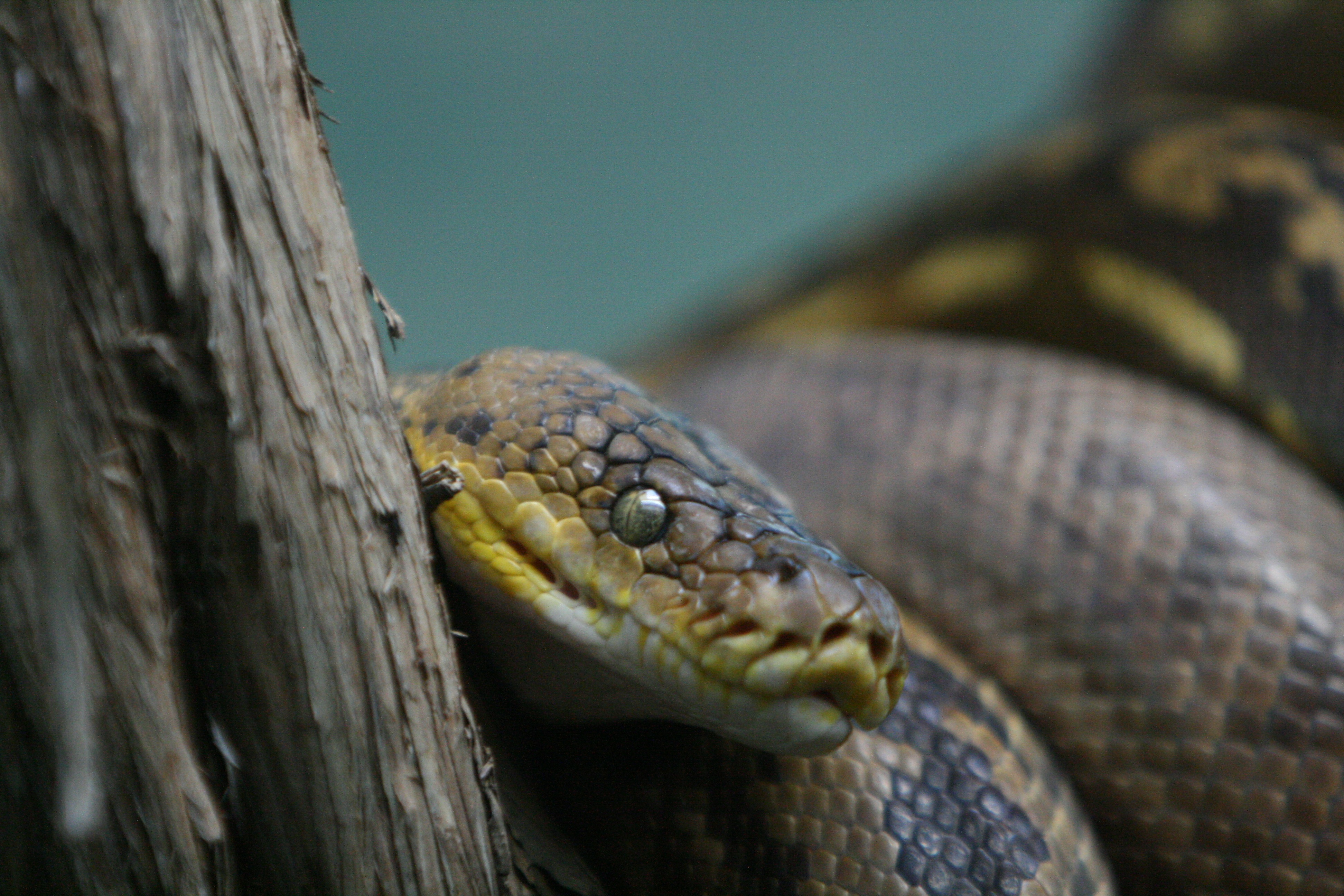
TimorPython
Timor Python: Public Domain image

I waited for a few more minutes and I sensed the snake was not trying to kill me. That was strange. It seemed comfortable the way it restricted and detained me, and I was afraid to move and disturb it. The dank smell re-appeared and honed the swamp stink. I could not feel the mosquitos. I wondered if that stink was the snake. Its weight became too much and I wondered how long I would be standing there in the mud, carrying the snake.

Then, a single call of a Sock-ngkwing bird, the spirit bird, pierced the silence and my eardrums. I moved to the bird’s cry. The python tightened its grip, and squeezing .. and I screamed just like the bird, feeling my body become alive. I moved my arms and legs. I flipped over and woke up with my bed sheet tight around my neck. It was THAT dream. Before I went to high school, in my early teens, I had this dream so many times. It was always the same dream. I shuddered. Still tense and terrified, I went to see grandma.

I re-told the dream to my grandmother; she looked at me for a long time.  Her eyes searched, speaking to my face, without words.

“There is a decision you have to make, a path you have to choose. What is stopping you from choosing, is your fear”, she said.

I looked at Tinang, afraid.

“Don’t be afraid” she said and hugged me. I shut my eyes and fell against her soft, tattered, spun rayon dress. Grandma’s scent of Chinese White Flower lotion, mixed with mustard and chewed betel-nut soon erased the swamp stink. I had thought about this dream interpretation often when I was growing up, and it always frightened me because I knew what it was, but it was not a single thing; it was many…

Nothing Came With the Rain


The Family
First days in the family (Australian Wood ducks).

The rain eased at noon in Bellbowrie, Queensland today, but only for a few minutes. It has been storming for two days. The rain’s destruction was evident in washed garden beds and the main road overflows. I found some of my cuttings and seedlings floating in odd places, near the main road.

Yesterday, at the Coles Supermarket we were unable to purchase staple food like bread and rice. A Cole’s staff member said residents had a panic buy, stocking up in case it flooded like the 2011 Queensland floods. The supermarket was empty.

Several places outside our house were flooded. I had kept indoors and started a new artwork and read blogs. Only two days of wet weather and storms – yet there was too much water. On the news Brisbane was supposed to have 500mm of rain over the weekend. More rain will come.

In the distant, I heard a familiar cry that tugged at my heartstrings. I left the watercolour and went outside to the balcony.

“Listen!” I told my son Nathan.

We both waited and the cry was muffled by the sound of rain on our iron rooftop. It came again and I knew the cry was coming from the open field and then it moved around the back, near the duck’s nesting ground. She did come back. Her cries were strange, long and despondent. I knew.

“It’s her, something has happened”, I said.

I put my raincoat on and walked through the drizzle in the soft mushy flooded ground to her. The male duck, her partner was by her side, quiet. They made a striking couple. Her brown and white spotty breast and belly topped with deep brown-black wings, and he with a touch of spotty chest, blue-grey and black flumes. They stood on the fuzzy open plain of short stubby blue couch, Queensland’s native grass. The rain water was caught in the grass blades giving it a wet, fuzzy sheen.

I looked around the two ducks. The seven ducklings were nowhere to be seen. My heart sank. The inevitable had happened. The mother’s face was turned towards the pool, where she had hatched them. Her neck stretched forward and long in a breaking curve. Her mouth was wide opened, showing her pink insides as she wailed. Her cries were louder as I got closer. My eyes warmed into tears.

She looked at me and stopped crying. I stopped a few meters away. I wished I had some duck-words to comfort her. I could only offer her some food and walked away.

Short Story: Swamped


Pneumatophore_overkill_-_grey_mangrove
From Wikimedia Commons, the free media repository

If you have missed the story opening published last week, click here

Although peeking through the pale mud with life and vibrancy, the young mangrove regrowth looked naked and vulnerable against the open swamp, and without the mother-tree nearby. In the distant, under the long shadows, piles of de-skinned fallen mangrove laid like stacked cadavers. This was part of an extensive wetland area used for fishing and gathering food like sugo, small snails and Kina, a fresh water mussel. There was some kind of an order in the distribution of the mangrove shoots along the random waterways. It was a peculiar, and neat arrangement. Amongst this orderly disarray, I stood out like the tallest cross in a dwarfed graveyard. The young mangrove shoots only came to my knees, just like the old stumps.

I must remove myself from here, I had thought although this had always been our favourite fishing spot. Today, the place felt strange, unlike before. Before, we would fish for hours and take our breaks on the logs. We ate with one hand and smacking of mosquitoes, then wiping their blood off and scratching the small bite mounds with the other hand. I had been to this place with my Grandma and Aunty Yellow. I also came here with my cousin Alison before she lost her mind to Malaria. I should not have been here alone today.

Once when Alison was eleven and I twelve we spotted a stranger here. On that day, we had brought with us Tinang’s (grandma) bush knife, which we were forbidden to use. The bush knife had cost a lot of money and one bush knife served many families in many ways. It turned out, the man we had seen was not a stranger, nor was he real. From his actions and the way the Sockwing (a type of wag-tail) birds were calling, my cousin and I became alarmed and we ran off, leaving grandma’s bush knife behind. I had to run back and get it. If we had left the knife there, we would have been punished for taking the bush knife. We were told that same evening, the man we had seen was a spirit of a dead great-uncle. This too was his favourite fishing spot.

I thought I saw a movement and my eyes tried to focus. Nothing seemed out-of-place, and everything around me looked like it had always been.

The Japanese bombing in the Second World War left a large gap in the wetlands. The bombs opened the place as wide as a soccer field, and made it lifeless; right in the middle of the thick mangrove that was relished by fish, birds, snakes, lizards and all kinds of insects. My Aunty Yellow said, in the open centre, mangrove regeneration since the bombing struggled for decades. The bomb explosions took both natural and human lives; our great-uncle was amongst those.

Apart from the war, this place was a landmark because the mouths of many small creeks gathered into the head of the largest one, which flowed into the main river, named Bu-dac. Budac meant Blood River, a name that reminded us of our history.

Our house was built along the river near its centre and at the entrance to our village. In pidgin, it is called, maus-rot which means mouth road.

I was standing at the head of Budac. There was a large T-junction, where the main creek met the river. The swamp clay was very soft and pale and covered with dead rotting leaves. In the dark river, life existed; a place where fresh-water fish feeding, spawning and nursery took place. Fish gathered daily to feast on other fishes and debris collected and deposited by the creek as well as the river at this meeting point. Not today, I had not seen fish movement breaking the water rhythm nor its surface. I could not understand nor remember why I was here today, and alone – only a few kilometres away from our village, just outside Lae, Papua New Guinea.

(© JLeahy, 2015)

More Swamped soon…

Short story: Swamped


SWAMPED     (Copyright JLeahy on Creative Writing Wk 3)

Mangroves 5
Mangrove stumps – Public Domain

The river emptied rapidly as the new day reluctantly begun. The sun had not yet arrived for warmth was lacking. I stood facing the river, able to see the creek. A war that was not ours took many of my family’s lives here, on this customary landmark. The small creek had reduced to a thin flow of a silver running snake. It slithered along a dark swampy path, often picking up flashes of light from the sun on its scales. The flashes only came when the mangrove trees allowed the sunlight trickle through its dense, green-yellow leaves. In contrast to the creek, the river was fuller, darker and moved in a quiet menacing meander. I was the tallest, standing amongst the mangrove stumps. Around me was hazy with un-condensed dew and I could not find my way, even though I had been here many times. I could almost smell the dank, which hung in a strange and familiar blanket.

This is the opening of a short-story (non-fiction) for our exercise in the Creative Writing Workshop – Kenmore. I wanted to share the opening with you. I may post more depending on how the story ends up. It may become a chapter in the JL memoir. I hope you like it.

The End of the Broom


The End of The Broom

JLeahy Memoir Series

Unknown
Brooms. Credit: Wikipedia

The day was hot, thick and sticky with humidity. School was over yesterday. I was nearly nine. My mind was lost. Mother was going away. I had no idea when and for how long. She had a new job in Kundiawa, Simbu Province, Papua New Guinea.

It was so hot. I was dying to have a swim. Already, the children in the village were swimming in the river near our house. I looked down and saw them. Then my eyes caught the broom on the ground. I knew I had to get down there and sweep.

Mother trained women to sew clothes and make a living. She loved her job with the Lutheran Mission at Ampo (Lae), but now the government welfare office gave her a real job, she had said. Werner Knoll offered her this job. Werner was a German kiap who became a welfare manager and headed the office in Lae. He had told me he was my guardian. I knew being a guardian meant, he was not my father, but something like an angel.  I heard that word “guardian” used in our church. I also saw it in grandma’s bible.

I went to our room to get my red towel and walked back to the kitchen. I stood there and looked at the children. They were jumping off a platform we built on a tree, and landing in the river with a bombing sound. The water splashed everywhere. I was jealous. I looked at them but my mind went back to my mother. May be Werner could not pay us any more. Maybe, he ran out of money.

Mother and I visited Werner each month to collect money. Mother said we collected $AU20. When we arrived at the Welfare, Werner would beckon me with his pointer. He then lifted me onto his lap and pinched my cheeks. Then he pecked me on both the cheeks with his beard scratching me roughly. He had a large pink mole on his cheek. Then, he would order me to open my mouth so he would check my teeth for betel nut stains. I was terrified but I did as I was told. Mother and all the women in the welfare thought it was funny and laughed. After, Werner would tell me to  promise to be a good girl.  He would warn me not to chew betel nut and wink at my mother as he handed her a pink slip to go with to the bank. This ritual started when I was able to walk and speak.

I was to find out much later, this money came from my father whom I had never seen nor heard about. No one told me the money was from my father then, so I never knew. I had always thought Werner was related to me somehow and it was Werner’s money that he gave us. He was being kind. Mother had to bring me every time she visited Werner to get this money. I thought the whole ritual with Werner was part of the reason for getting the money. It was Werner’s rule.

“I will make a lot of money in this job”, Mother had said last night.

“Yamandu?” Really? I said, not convinced.

Mother promised me with such excitement in her eyes, I started to wonder what we would do with a pile of money. I did not think it was ever possible for us to have money except for Werner’s $20. Grandma said too much money was evil. Not many people made money, unless you had a bank; that’s what the village children said.

Mother’s job sounded ok. We could share the money with everyone. However, I was also concerned it would be too cold for Mother in Simbu. She needed to keep warm. She was smart, she could make fire in the evenings, I thought. I could not imagine how we would be apart. Deep inside, I had too many questions and felt uneasy about this job as I embarked on my own jobs for Saturday morning. I decided not to think about Mother. I went and started my chores.

“Kalem! Kalem!” the children were calling me from the river. I could see them from our house. I waved and made hand signs that I was busy, and would join them later.

To get my chores done I started with the coconut broom. I picked up the bundle of dried brown coconut sticks. They were held firmly at the thick end with re-cycled black rubber from tyre tube. I started sweeping from the back of the big house. My chores had increased with my age. Each day the chores changed, but most of the tasks were the same. We shared the chores between all the women in my family. The boys and men shared theirs. My chores were cleaning, washing, cooking, and helping Mother. Sometimes I helped my grandmother and aunties. If not fishing, the girls and women would be gardening together or making art and singing. On special occasions we would prepare our costumes and dance. The evenings were for story telling, and laughter after the church service. There was an occasional women gathering or village meeting. On Sundays we went to church and cooked a feast after. If someone died, we all gathered and cried together for at least two days before we buried them in our village cemetery.  As we carried the dead to the cemetery, we sang in Yabem:

“Where is the mouth of the road?

At the entrance of the cemetery.

That’s where my body will rest and become soft.

But my spirit would fly to you,

Where I will see your face Lord”

………………………………

(Draft only, and to be continued in my memoir series).


Unwanted Fall


Short story, JLeahy, Tribalmysicstories

20126605631
Thirteenth floor. Picture courtesy Ash Fouwad

I stepped outside the doctor’s room into the surgery. The air felt warm even though the air-condition was on. It smelt clinical and I felt nausea. My mouth dried and suddenly, I felt I needed to drink a whole tank of water. From the red seats, amongst the other sick patients, and their loved ones, Bill dutifully stood up. He walked to me. I saw the water cooler near the receptionist but resisted the urge to stop and drink. A toddler, covered in bandages was crying in pain. I needed to get out.

Bill wore a black T-shirt and a pair of old Levis. His hair was messy.
“Yes?”, he asked when his eyes met mine.
I didn’t reply. I walked past his glaring eyes to the lift. I felt his previous night’s anger slicing through my back as I stopped in front of the lift.  The lift arrived on the 13th floor, and I stepped in. I pressed the green “G” button set on the silver squares inside the lift door. I tried to get a space as far from Bill as possible. It was close to midday and already the lift was full of office workers and sick people.

“What did the doctor say?” Bill asked as he squeezed next to me. He reeked of Old Spice and alcohol. I turned away.

“I’ll tell you at home”, I mumbled as I looked at the people in the lift.

A beautiful 5’ foot 7” blonde with popped China Red lipstick gave me a weak sympathetic smile. Her make-up was flawless. She had my height, but her red high heels put her at least two inches taller. An old Muslim lady, head covered in pink cotton stood next to the blonde. The old lady only reached three-quarters of the blonde’s height. In contrast to the blonde’s green slimline dress, the old lady wore a brilliant blue Mama-dress, and a pair of flat, soft, black shoes. The old lady was holding onto two girls, about three, and five years old. The three had beautiful olive skin and deep-set eyes. The girls were looking at the blonde. The old lady looked at me with no expression.

“Why don’t you tell me now?”, Bill broke my thoughts.

“I don’t want to”, I said.

The middle-aged man, Indian, dressed in a fine, light grey Cashmere suit stared at me. He was on the other side of the blonde, and directly opposite. I looked down. The Indian man’s right hand-held
a briefcase by his sleek pants. He should look at the blonde, not me, I thought. On the floor, next to the Indian man’s black Italian leather shoes, my eyes caught a pair of white crocodile-skinned shoes. It had a pointy tip, just like a real crocodile’s mouth. Who wears crocodile skin shoes?, I wondered. My eyes travelled back up his green tight vinyl pants into the eyes of some 17-year-old wacko with pink shirt. He had stood his pale two-inch blonde hair up in an attention with strong gel. He slipped me a fake smile when I caught him starring. Croc-shoe boy wore a small gold earring on one ear, and a diamond stud plunged into his narrow flat nostril. He exaggerated his eye lines with some make-up. The croc-shoe boy’s friend was twice his size. He seemed to be the same age but looked unhealthy. He was pimply, scruffy and dirty; a complete opposite to the croc-shoe boy. They were saying something and giggling. They both looked at me, mocking. Why is everyone looking at me?, I wondered and kept my eyes down.
“Is everything alright?” Bill asked me again, and the lift jerked off and glided down towards the front of Wickham Terrace, Brisbane.
I ignored Bill. I felt the lift stopped. A tall young man stepped in, and greeted the blonde awkwardly.
“Lunch?” he asked smiling. She blushed.
The lift took off and did not stop on the next level, nor the next. The Indian man in Cashmere tried to press the buttons. The lift kept going, and accelerated.
“It is not stopping!” he yelled.
It felt like the lift was falling into empty space and my gut was going in the opposite direction. I heard screams. My mind went into slow motion.
BANG! The lift crashed into something hard and stopped. We must have hit “G” Level. Everybody kept screaming. The lights went off and came back on. Some people fell on the floor. Bodies crashed onto me. The two girls screamed for their mother. They grabbed the old lady. The alarm went. I felt sick. I turned into the cold silver wall and let myself slide onto the floor. The last thing I saw were the white crocodile shoes.

“Jess! Jess!” I heard Bill calling.
“Jessica! Wake Up!”
I came to. It was very hot; I was drenched in sweat. It smelt. Different smells of people smell, both good and bad. I must have passed out. I could vaguely see the others in the room but they felt close. They were in various moving shapes. I didn’t know what had happened.
I felt like throwing up again and tried to focus. Slowly, everyone came back into form. I could hear the two little girls crying softly into the old woman’s dress. She was speaking very gently to the girls in a foreign language. The awkward young man, looking concerned, had his arms around the beautiful blonde. The blonde was pale. Her lipstick smeared. The Indian man had taken his jacket off, revealing a sky-blue cotton shirt teamed with a pin-stripe tie. In a large “V” shape, sweat soaked and darkened all his front chest. He looked crumpled on the floor with his briefcase in his lap and jacket rolled in a ball.
“Jess!”
My eyes turned to Bill’s face hanging over me and I looked away. I had leaned into the lift wall with my head resting on the croc-shoe boy’s shoulder. The croc-shoe boy and his friend were cursing nervously. I felt awkward. I could not move myself so I turned and looked at Bill. In place of his 40 years of age, I saw a sweaty 55-year-old wrinkled man. His unshaven face matched his salt and pepper hair. His eyes were bloodshot and his jaw line was tight. Now the Bourbon was obvious on his breath. His eyes continued to hold the question as he spoke.
“The lift is stuck. There is someone coming.”
There was no emotion in his recount.
“You have to stay awake,” he changed his tone.
What is wrong with you?”
I had no more strength to hold it back.
“I am pregnant!” I said aloud.
Bill’s jaw dropped. He stared at me in disgust, speechless. Everyone in the lift looked at me as if I had announced I had smallpox. I had kept this for three months. Bill and I have not had sex for at least three years.

A Wash In The Bush – Short Story


4526911846_956e72f6dc
Google Images – Fireflies

It was pitch black. The day had gone. Heat and humidity parted swiftly and everything was swallowed by the early evening darkness. By touch, I placed my towel on a nearby tree branch and stripped for my bush wash. My skin woke to the cool breeze. My right foot carefully searched on the large, rough and wet stones to the small piece of plywood. I stepped up, trying to keep it balanced under my weight. The ‘ply’ was held up by other stones. The underneath was muddy water. I stared into darkness and caught very faint glimpses of trees.

Already pulled out of the well with a rope and bucket, I reached it. The water felt cold. Today was an especially hot day. My mind went over how sticky it was. As I filled the saucepan, the steel cooled to the temperature of the water. I raised the saucepan and saw them coming. The ‘light’ visitors. They came in a fanfare of glows seemingly in rhythm, yet, their presence was soundless. I realised I had missed the fireflies in Port Moresby’s city life.

The fireflies came closer as if curious. They scribbled bright disappearing lines in the ‘black’ all around me. Their light made the darkness even darker. 

I poured quickly. The water was cold.
“Ohhh nice!” half-shivering, I yelled out to my family, wanting to connect us through the depth of darkness between us. The chattering of my mother, my sons and, nieces and nephews were a few metres away.
This well water must have come from the centre of the earth. Untouched by the 36 degrees heat of Lae, Morobe Province. It was so cold.
After pouring three saucepans of water on myself I looked up again. By now the fireflies gathered just above me. They synchronised in an orbit-like dance. I looked up at the fireflies, entrenched, and the soft mushy Lux bathing soap slipped out of my hand. The soap’s creamy white oval-shape slithered away under the old plywood with a soft plonk in the muddy water.
“Shit!”
I am not about to put my hands in there I thought. I stared at the ‘nothing’. It was still pitch black. I bent my knees but half-way, I decided, it was not a good idea. I am not going to find that soap unless I am prepared to feel through snakes, centipede, spiders, worms, and God knows what else is in there.
An owl startled me back to reality. I listened to the owl speak to another softly. I was dripping, half-soaped and cooling down fast. The fireflies lost their rhythm and separated. They flew away. I reached for another saucepan of the cool rinse and grabbed my towel.
“I’m finished!” I called and picked up my clothes.
Through the bush, I could hear my mother bringing my sons towards me to wash them. They were nine and six. She had the lamp and the boys had their torches. Suddenly, everything looked different.
In the background, my nieces and nephews were waiting their turn to the waterhole. My cousin Sam Newton dug this well before he even built his house. The water feeds and quenches the thirst of hundreds in our community. Because of where Sam had dug the well, the water remained cool all day and night. We used the water for cooking, drinking and washing.
“Where is the soap?” I heard my mother ask.
“Forget the soap Ma, just wash them in the water”.
I smiled and dried myself.

Where My Eyes Are From


Where My Eyes Are From


I turned to face the door and sat down in the centre edge. It was the softest part of mama’s large queen-size bed. I ran my large grey eyes over the bed. Papa had built this bed. The bed was rustic but sturdy. Because of the many years in the timbers, the bed talks like an old man when you are on it. Right now, the bed is not talking because I am not moving. The white cotton sheets were crumply and warm. I wanted to climb into the sheets but I could not.

We had buried mama at 3pm. The day had been long and tiring.

The few friends and family returned to our small two bedroom cottage on the edge of town in the hills of Mt Crosby. The offering of sweet tea and cake to the mourners wrapped the day. However, the sweet tea did not change the taste in my mouth. Soon, they left papa and me. We sat together on the small veranda and did not speak. At 15, I knew half of papa was buried with mama this afternoon.

The day hurried passed. Soon, it burnt orangey into dusk. The ambers from the remains of the daylight pierced through the small cottage.

“You can go to her room” Papa had said close to 5pm.

I saw the small clock on mama’s bedside as I sat down. Mama’s room smelt like Vanilla with faint coffee. I had tried to shut out the noises with the door, but I could hear the puppies. All five of them ready for their milk. They needed their mother. A sharp pain went through me.

My hand felt under the pillow slip and I found it. The small white envelope mama promised before she took her last breath. I gazed back at the door. I waited. My heart started to race.

Through the gaps in the window I caught the late breeze approaching carrying bush smells of Gum and Acacia. I could hear my father humming “Gershwin’s Summer Time” and rocking in the old chair. The chair squeak was rhythmic and soothing. It re-assured me of his location. I did not want him to come in.

The house seemed to mimic Papa’s humming and suddenly I felt the sadness heavy in my chest. Papa was a real sweet man. Not only did he lose his woman, but his best friend.

I sat still and held mama’s envelop; firmed by the content of its small card. In this envelope was something mama wanted only me to know. My stomach did not feel right and I knew it was something I do not wish to know.

The room held on to the last of day light. In this dim light I read my name written neatly across with dainty curls. Mama always made a point of making big long tails in letters ‘y’ and “g”.  My name was Margaret Meadows. Mama shortened it to “Maggy” with a “y” instead of an “ie” like in other Margies which was short for Margaret.

I brought the card closer to my nose. It smelt of Vanilla too. This made me smile and my eyes salted. I felt that weight in my chest move up to choke me. I looked at mama’s photo of us in a white frame by the bed. Tears rolled down my eyes. Slowly, I pinched the corner of the white envelop and slit the end through with my index finger. This forced the white envelope open to reveal a small red card.

I eased back on the bed. I felt I needed some support and security before I opened the red card. I let my shoes drop on the wooden floor. I starred at the door; hoping papa would not come in. I need to be alone when I read this. That was what mama wanted.

“My Love Maggy,

You were born a beautiful baby of glorious soft honey skin, pink lips, fair hair and long legs and arms. You were a fairy with piercing eyes. I swear if you had had wings, you would have flown away. Your eyes were a mysterious twinkle to your father and me. When you were little I had wondered if you were worried or just curious about your eyes because you asked me many times why your eyes were different from your father’s and mine. As you know, we both have brown eyes.

I need you to understand that Paul Meadows loves you like his own daughter. There is not a single person that loves you more and not a single reason to be ashamed of who you are.

Your grey eyes came from a man named Peter Sullivan who was once your father Paul’s best friend. Last year, I found out that he died in a car accident while driving back to Brisbane.”