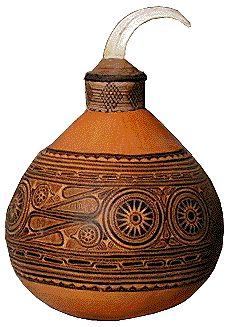
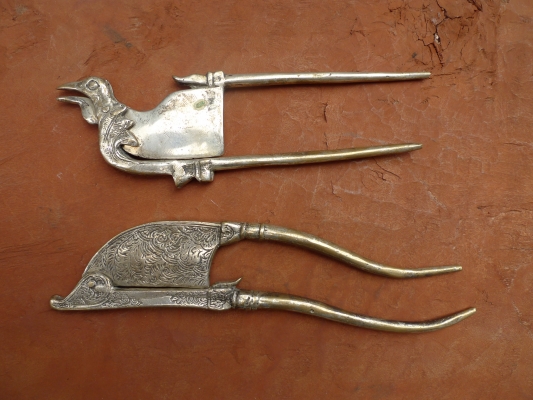
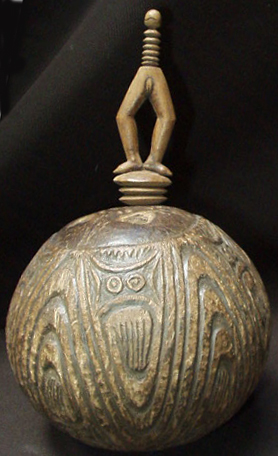
I have previously made a post about the betel nut culture. I wanted to show some art and objects made for the betel nut culture. This is a collection of objects that were used by those who chewed betel-nut in Asia and the Pacific islands. While the habit may be disgusting to some, indigenous artists have specifically crafted a wide collection of ‘tools’ that can break the nut open to containers that store lime or referred to as lime pots as the one pictured above. Often, these objects are quite small and are hand carried in a bag by the users. As a museum curator, I find the tribal patterns exquisite and many represent cultural and spiritual meanings. The objects also tell stories. Perhaps in the future, on this blog, I may be able to bring some interpretations and explanations about some of the traditional Papua New Guinea patterns showed here. To introduce the art of the betel nut culture, here is a small collection I found on the public domain.
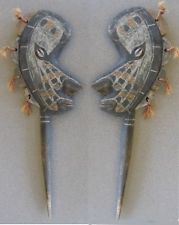
Lime pot lid and also sticks for dipping into lime for chewing. Sepik, Papua New Guinea.
Betel nut – the fruit of the areca palm, is a nut well-known and used as a cultural practice in Western Pacific Islands.
The green nut. Google Pics.
In Melanesian cultures such as Papua New Guinea and Solomon Islands, betel nut was traditionally shared in gatherings. Betel nut is chewed in India, Vietnam, Thailand and other Asian countries. Vanuatu, Fiji and New Caledonia as well as West Papua and Thursday Islands, are not traditional betel nut chewers or growers. Betel nut is also chewed in Micronesia. In the Melanesian pidgin (PNG Tok Pisin to be exact), betel nut is called buai. The nut is chewed with Daka and Kambang – mustard and lime. Over the years, in PNG, the betel nut has become a commercial product, creating an economic lifeline for many squatter dwellers and low-income earners, including villagers. It has also created havoc and health problems.
My friends having a chew at the opening of my art gallery, Pacific Art Gallery, in Brisbane. Pic: Mari Ellingson, Island Meri Blog
Traditionally, in PNG, the betel nut has a cultural significance and a ritual is followed at gatherings. Perhaps it could be compared to how the Kola nut in used in Africa but in a less formal way.
Both the green and older, orange-skin nuts are chewed when a family receives visitors. They sit together, exchange the nuts and chew the betel nut with mustard and lime. Greetings and stories including family news are exchanged before serious business is discussed. It has been suggested that the origins of chewing betel nut dates back to the Lapita culture when the first Melanesians came to settle.
Like many customs and practices associated with objects, food or places, this buai heritage has changed. Betel nut has become a commercial product in PNG. Medical books record it as a drug and the nut’s commercial trade has even affected the Consumer Price Index. In the last two years, according to the PNG Health Department, diseases associated with chewing has increased in numbers.
Rubbish from betel nut trade, including skin and spit stains created not only health problems but a physical havoc and embarrassment to authorities. Buildings, walk-ways and government property had permanent spat and stained marks all over. These marks often shocked foreign visitors who thought these were blood stains. Controlling sellers and buyers became a nightmare for authorities.
The Port Moresby Governor Powes Parkop declared a ban on the sale of the nuts in Port Moresby City in October 2013. This ban was reinforced in January 2014. The sale and chewing points were re-located to outskirts and villages away from the capital. A task force roamed and confiscated the nuts and arrested sellers and even chewers. The governor said this ban was purely for commercial sellers of betel nut that made the city dirty. The cultural usage was not affected.
The Nut in the Coffin
While the ban had cleaned the city, sellers continued to smuggle the betel nut into the cities to sell. Last year, at a police roadblock, a friend who runs a trucking service recalled a story where betel nut smugglers packed a coffin with the nuts. The smugglers pretended they were a group of mourning highlanders. It was customary for highlanders in PNG to cover in clay or mud when they mourn. The clay-covered smugglers told the police at road-block that they were returning from Gulf Province to Port Moresby City with a body to bury. The police knew this route too well and despite this theatric, the police forced the travellers to open the coffin. Inside the coffin, the ‘dead’ nuts were all confiscated.
Health Effects
Studies have been conducted and doctors have warned excessive use of betel nut causes mouth cancer and even death due to high blood pressure and other related diseases.
Health officials in PNG say 25,000 people die annually from mouth cancer and the figures of oral cancer relating to betel nut chewers is rising amid the controversial ban.
The powerful combo. Lime powder, mustard sticks and betel nut. Google Pics
Chewing the Nut
When you chew the nut with mustard and lime, it creates a chemical reaction which results in a bloody red substance in your mouth. This makes the face and body of the chewer warm and sometimes they would sweat profusely, depending on each individual chewer and how their body reacts to the nut. There are different species of the nut. Some are more bitter and stronger than others. For example, in Markham Valley in Lae, the fleshy meat of the betel nut is quite sweet and you can chew the nut on its own or with lime and mustard without feeling any strong reactions. The Markham nuts are mild compared to other nuts grown in North Solomons Province, the Buka buai as it is known.
Solomon Islands betel nut chewer. Google Pics.
First time chewers have reported being extra alert, a mild feeling of euphoria, quickening heartbeat, high blood pressure and sweating or feeling very warm.
I know betel nut well, having grown up with it all my life – it is part of our culture. Often in large singsing, (cultural dancing) the nuts are strung like beads, coconut oiled and hung like a necklace.
To the nightmare of my mother, who was an educated nurse, I chewed betel nut most of my childhood with my grandmother. It was my late grandmother’s way. My grandmother called it a ‘medicine’. I had my own bag of betel nuts with my lime pot and my mustard supply. My grandmother’s teeth were permanently blackened by betel nut chewing. She believed, it kept the (western) doctor away. I found her words funny because she herself was the traditional doctor. We also planted the trees and grew the mustard to chew. My grandmother and I made lime powder from kina shells. When we had extra, we sold it at the local market. I was lucky to have Colgate and a toothbrush (and my mother) so I have white teeth today. If ever you want to try this, make sure you are with someone who knows how to chew the betel nut very well.





 Tribalmystic Stories