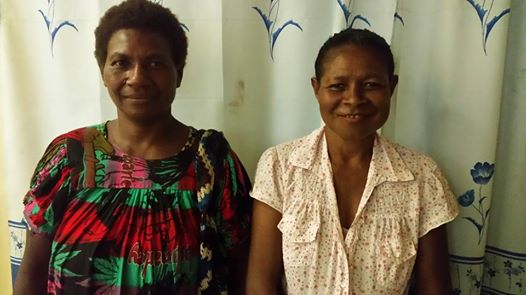
Two women are the first female canoe coordinators in the male dominated National Canoe and Drum Festival next week in Milne Bay Province, Papua New Guinea (PNG). Some of you may think this is “not a big deal” but it is. Nellie George ( left) is organizing five sailaus or traditional canoes from the South Duau area of Esa’ala District and Vicky Lodi will lead in organising bogama canoes from the Maramatana area of Alotau District.
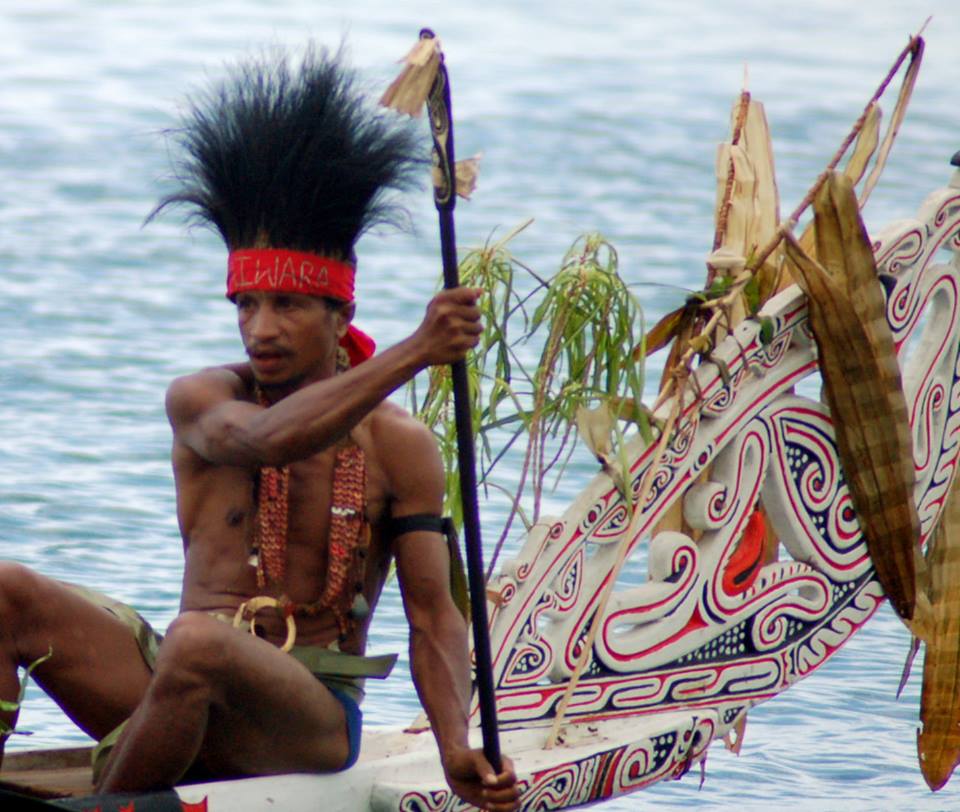
Each canoe will have its own tribal and ancestry markings and other decorations carrying special meaning and luck.
Sacred Culture
This part of PNG culture is sacred to men. Canoes and drums are used mostly by males in the Melanesian societies. Although it is dominated by males, we do have some females using drums in other parts of the PNG. From the start canoes especially are prepared by men. Men choose the tree, carve and design the canoe. The canoes can be used by the whole family when it is completed.
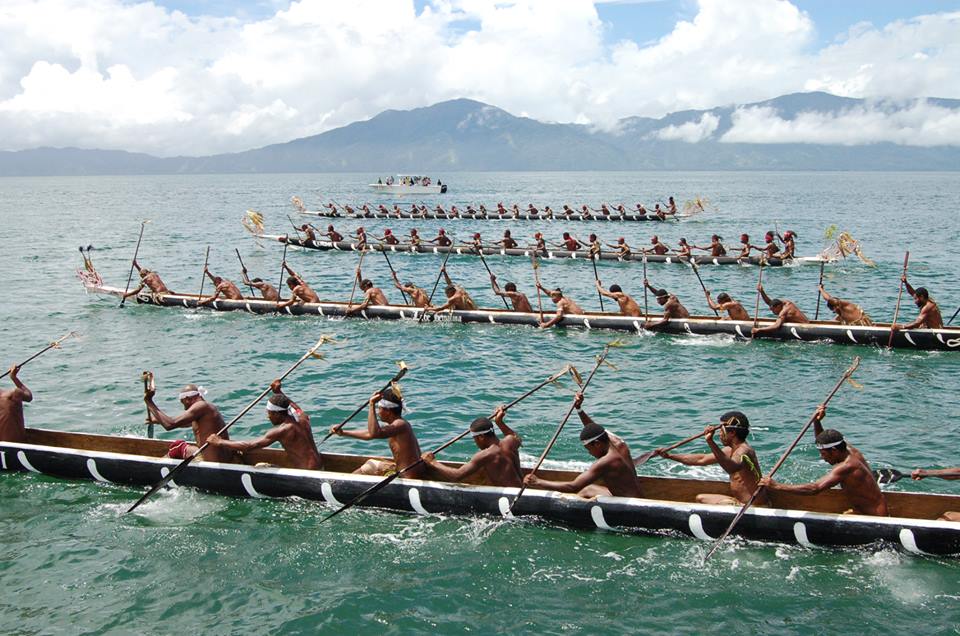
Last year’s canoe racers.
Annual Event
The festival is an annual event that happens every first weekend of November in the sleepy seaside township of Alotau. This festival is the southern region’s major event of the year and showcases the coastal communities’ way of life particularly through traditional sailing canoes. Kundu (traditional drums) have been included in this year’s festival.
Men launch a brand new canoe.
To visit the festival and see other information, contact the PNG Office of Tourism and Culture.
I Am Wale Respect Me, series of photos depicting women of Congo returning to society and gaining their rightful status. Photo by Patrick Willocq.
I Am Wale Respect Me. Personally, I think this is an awesome title for a body of art. This work celebrates motherhood, fertility and femininity. Photographer Patrick Willocq’s recent projects explore non-western narratives and mise-en-scenes in collaboration with local communities in the Democratic Republic of Congo. After spending a portion of his adolescence in Congo, Willocq returned to document indigenous culture and customs through carefully composed performative images. In “I Am Walé Respect Me”, female subjects stage their return to society through a lyrical account of their isolation. Willocq’s photographs are in the Lagos Photo Festival which opened yesterday(Saturday Oct 25th) with 39 artists from 15 nations. Thank you Art Living for sharing this story.
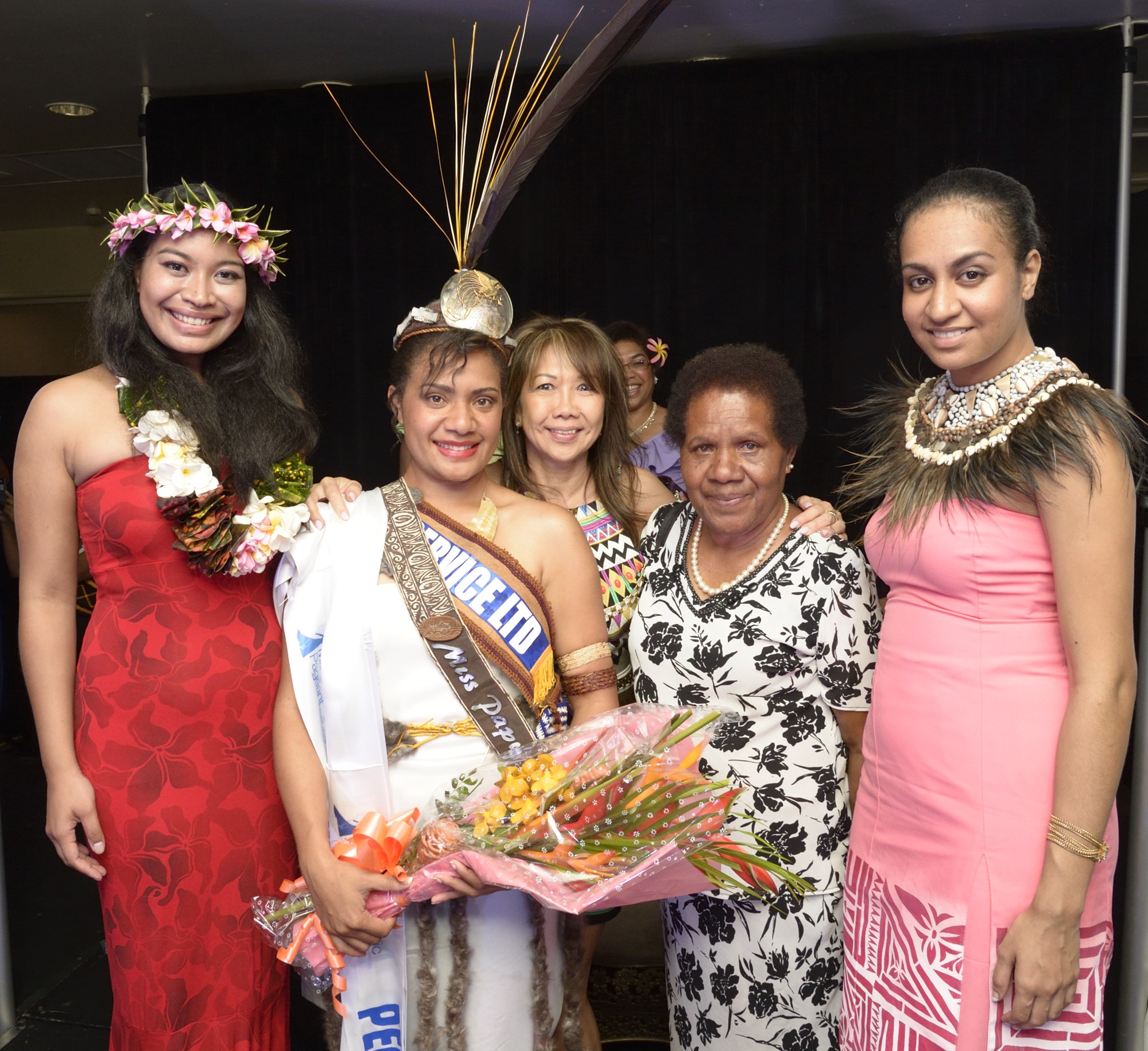
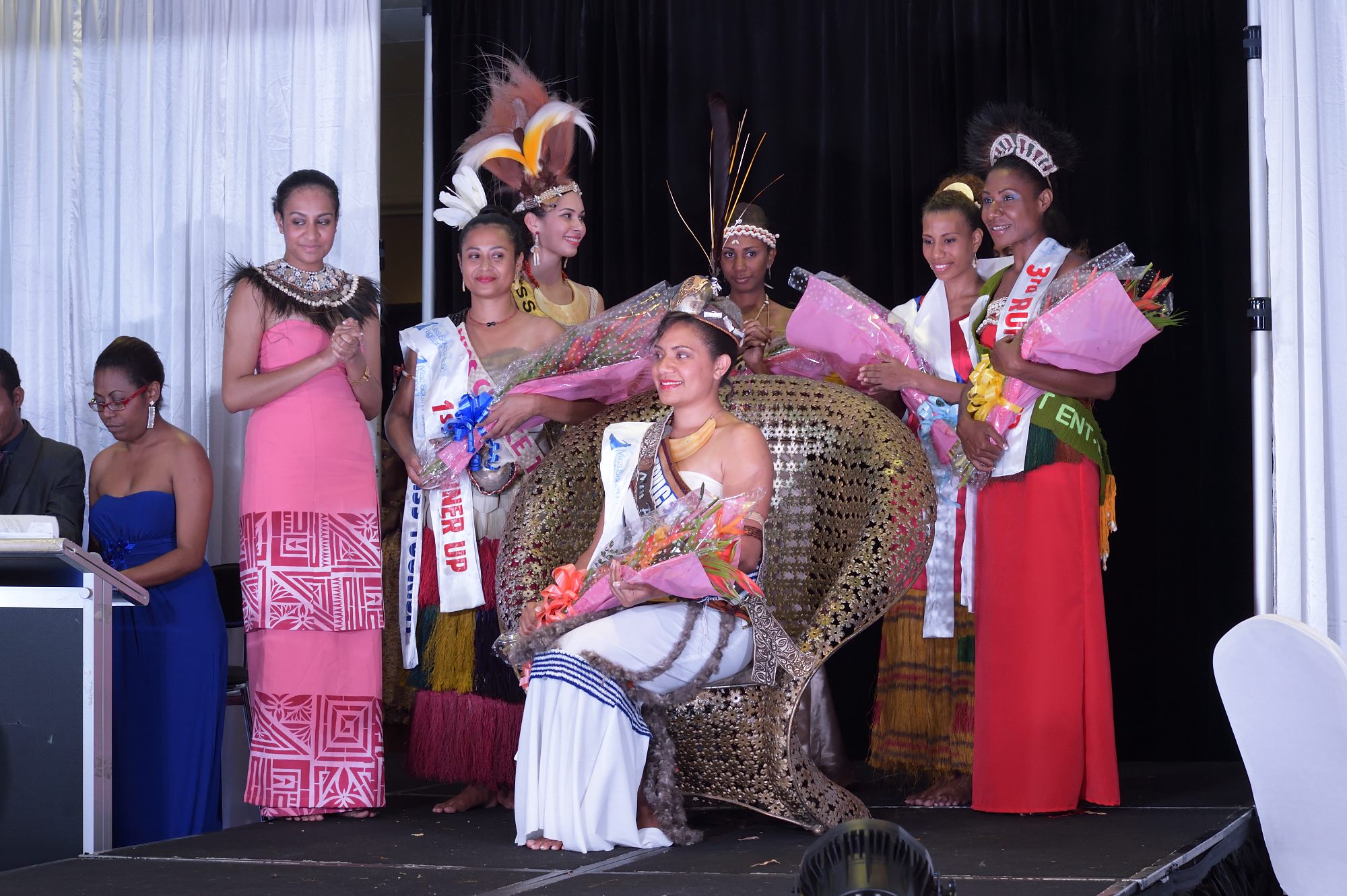
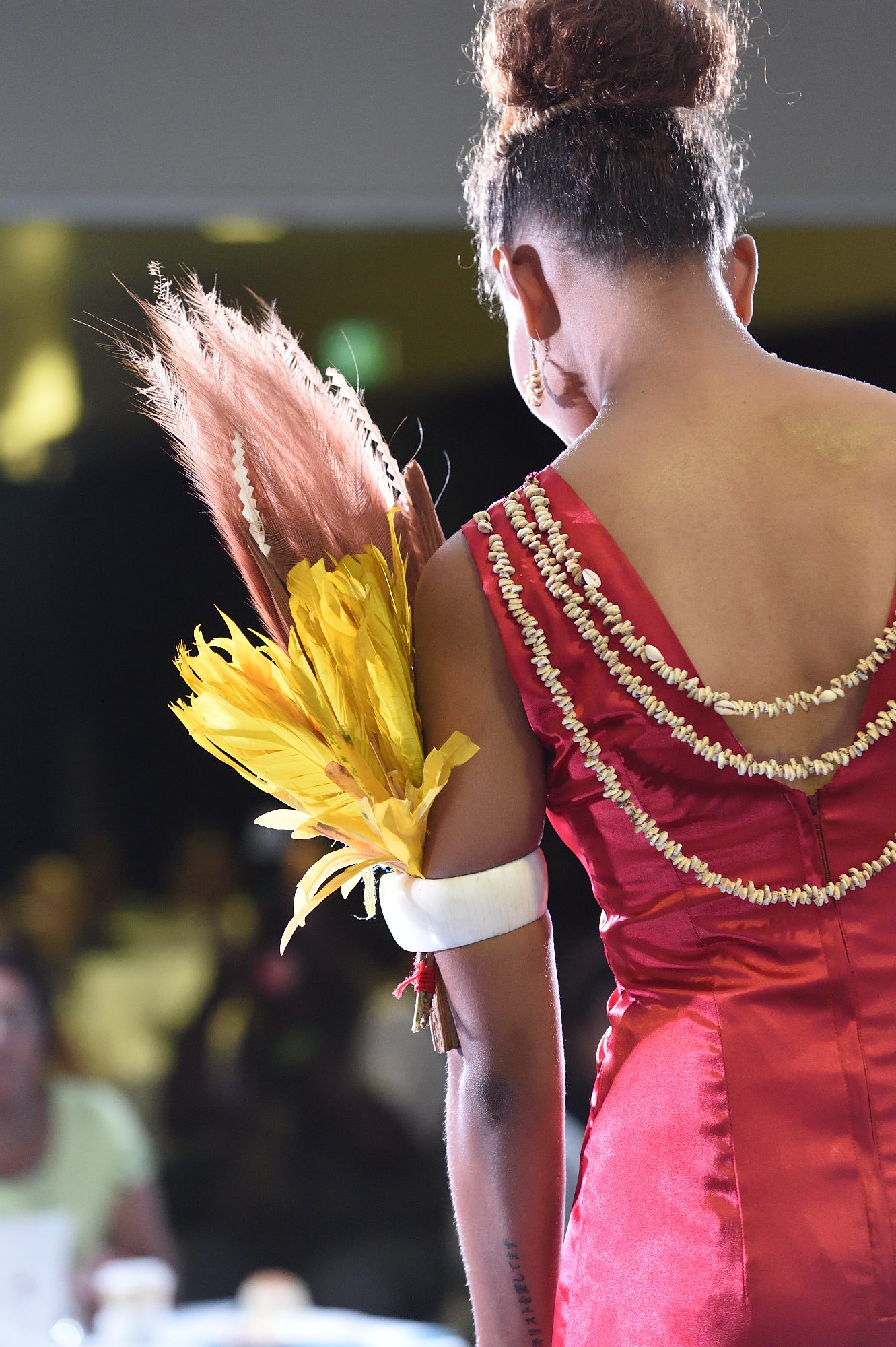
Grace Nugi pictured last Saturday with a bouquet is surrounded by two former Miss PNGs, Quest Committee member Kathy Johnston and her mother.
Grace Nugi was crowned Miss South Pacific-PNG 2014. The 24-year-old from the Papua New Guinea Simbu Province took out four other awards from her five competitors. Grace will represent Papua New Guinea in the Miss South Pacific Quest in Samoa later this year.
My Views
What I enjoy most from this beauty quest is, it is nothing like what you see or hear in the international arena. Coming from challenging personal backgrounds and a wider culture (PNG) where women’s freedom is threatened with continued violence and in many areas women and girls are regarded as lesser than their male counterparts. It takes a lot of courage for the contestants to be in public and learn to develop a sense of confidence. The quest teaches these young women – how to gain confidence and strive to be whoever they want to be. The quest opens doors for the young contestants to opportunities in education and career apart from the obvious tourism aspect.
Cultural Heritage and Cultural Preservation
The other thing I love about the quest is that it promotes our material culture, the intangible culture and it involves family and community. Through the promotion of both tangible and intangible culture we preserve our heritage.
How does this happen? Each contestant wears (traditional and day wear) that is original and handmade. The dress could be made using tapa cloth or hand knitted string made fibre (hilum) from natural fibre, shells, bark etc. The headdress and body adornment would come from the province of their heritage and most likely made by family members. Each contestants have to perform a traditional dance from her own heritage. Bear in mind PNG has over 330 languages and 22 provinces with many tribal groups.
Finally, the money paid by their sponsors, is put to a good cause. It funds other young women to complete their education. The quest also assists the winners in international travel to the Miss South Pacific, and further develops the contestants while they are engaged in tourism to promote their country.
It is that time of the year again and the Pacific islands’ quests leading up to the Miss South Pacific has begun. Miss PNG held their competition last Saturday evening, October 18th in the capital Port Moresby.
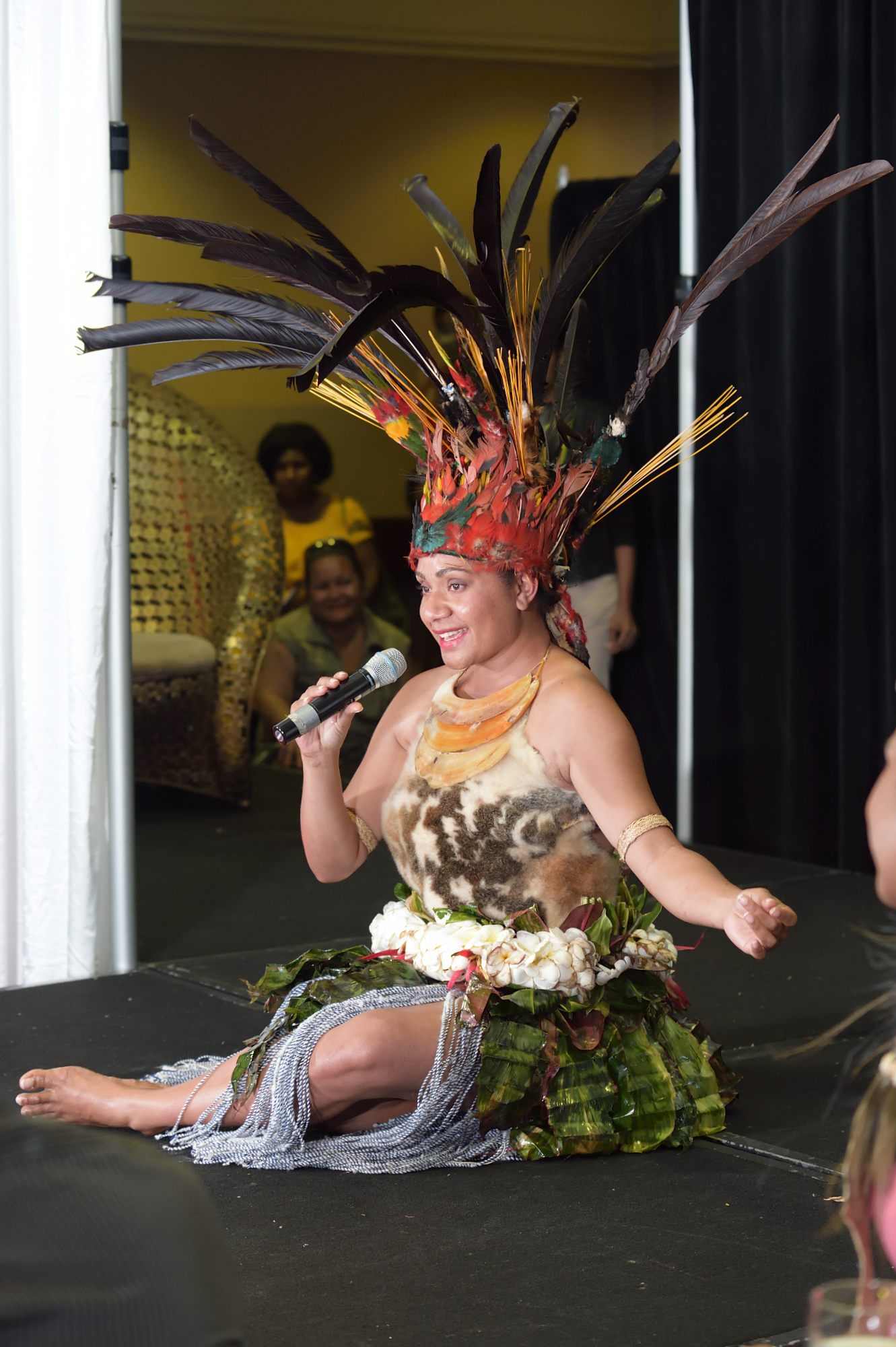
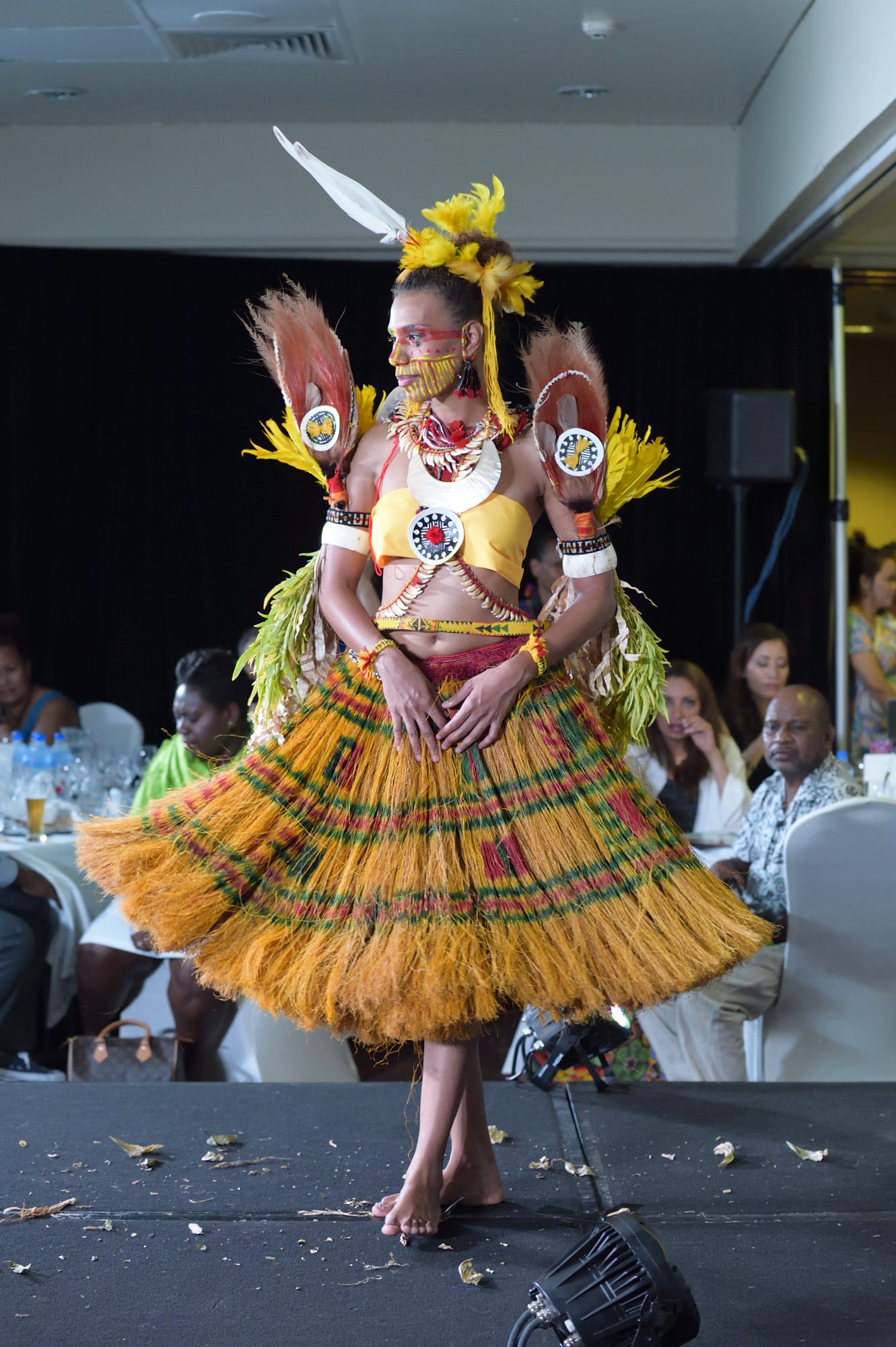
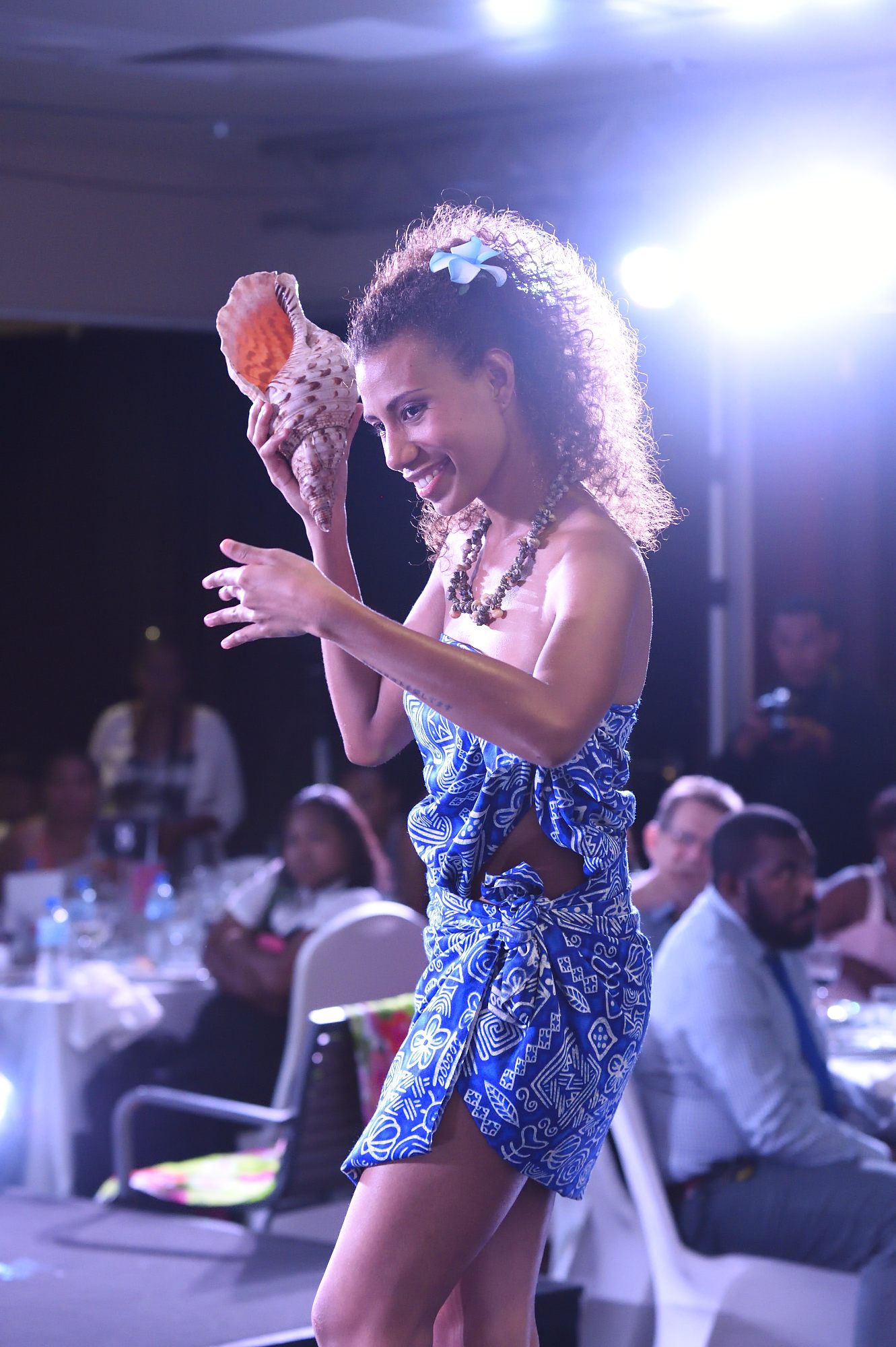
Here is a preview of the contestants. Rocky Roe pictures show contestants parade before judges. More pictures and story tomorrow.
In the first moon of the coffee season, the bees would have long gone from the sweetness in the coffee blossom. The delicate petals of coffee blossoms would wither, turn brownie-yellow and drop to carpet the base of the trees. Here, under the tree, other insects such as ants would gather around the sticky rotting pulp. This was the picking time. My mother and her sisters would prepare to harvest grandpa’s coffee.
This is my mother’s Coffee Land story.
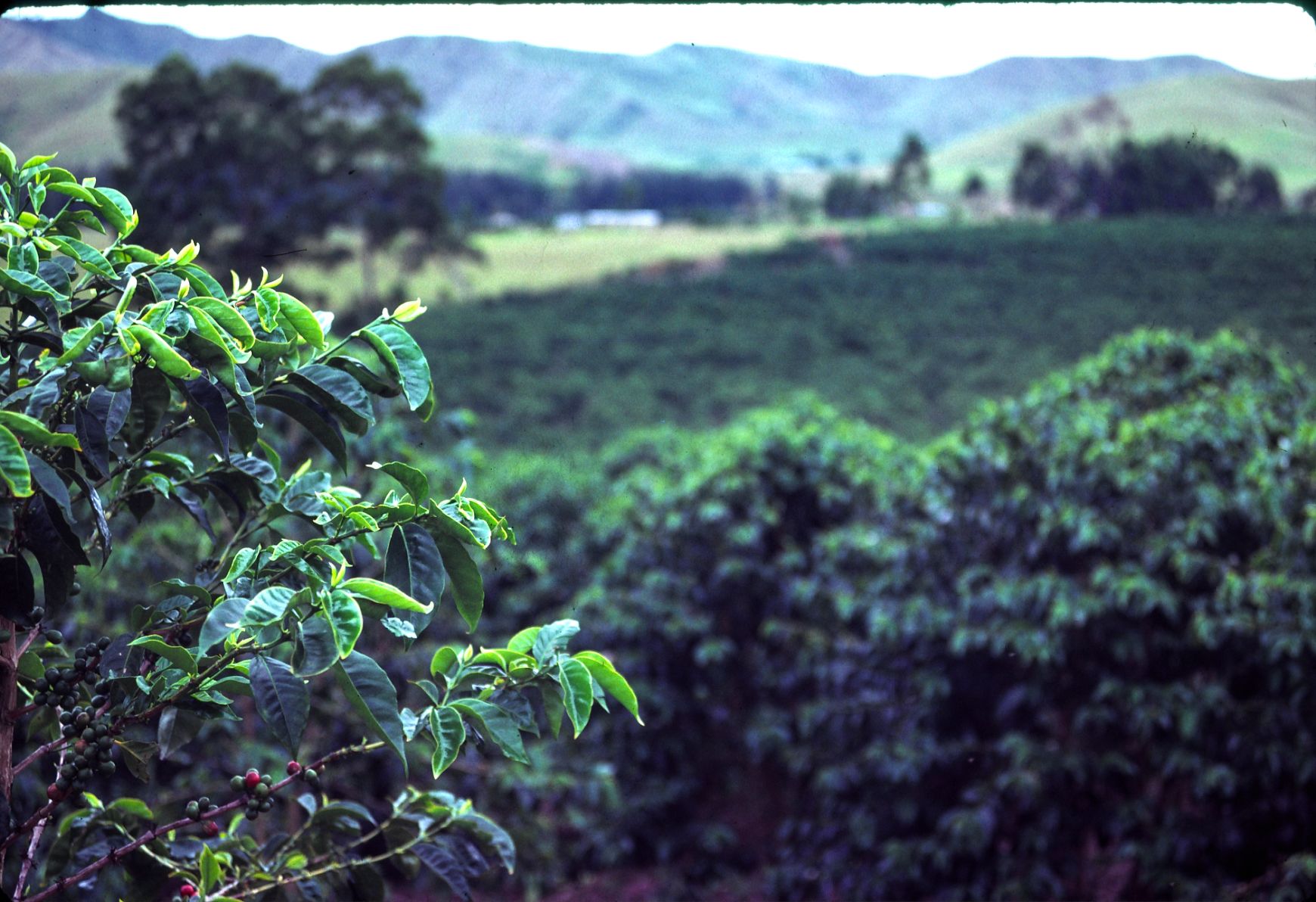
A coffee plantation in Morobe Province
My grandfather’s name means “intelligent” and so he was. Kauc’s coffee garden was planted on his father’s land, miles away from our village.
To harvest the coffee beans; equipment, food, bags, water and all other necessities for processing had to be carried to the garden on foot. It was a labour-intensive method in which cherries are picked, selected and pulped by hand all day and for several weeks.
The remaining flesh from the pulping process was used as composting material for both the coffee and food gardens. Once the bean was dried, it was shelled. The coffee was now ready to sell and grandpa took it to town and in exchange, he bought sugar, rice and a small stick of tobacco. The tobacco was his treat, although he rarely smoked. My mother often wondered why he spent his hard-earned money on tobacco he did not really smoke. She said perhaps he shared it with his friends.
The coffee garden was Kauc’s pride and joy. Being a male and the second eldest in his family, Kauc owned a large piece of land. He was a devout Lutheran and a teacher. Kauc loved the land and he tried some cocoa and his coffee garden for cash.
The coffee garden, near our food garden, was situated less than an hour walking distance from our small coastal village outside Lae, Morobe Province, Papua New Guinea. Kauc grew Arabicas. With a high rainfall and good soil, the trees grew well and produced top quality beans. The family did not drink this coffee. They drank tea which came from Garaina, a sub-district in our province. This coffee garden was purely cultivated as a cash crop.
When the coffee berries ripened they developed a glossy sheen on its deep red shades. My mother, her sisters and my grandparents would go to the garden to pick the coffee and spend the whole day sorting and processing.
Sometimes, they would take a break and make a fire in nearby kunai (grassland) to surround and trap bandicoots for lunch. This made the long day interesting.
My mother said she would feed me milk and lay me down in a bilum (string bag) and hang the bag on a Rosewood branch. Under the shade, the cool breeze kept me asleep while she and her sisters picked coffee. My grandfather washed and peeled the red skins, revealing pale beans. The sisters would pick and bring bags of the red cherries and pour them into my grandpa’s pulper.
“He would stand there in his laplap and T shirt and just turn the handles until the machine skinned and spit the pale brown seeds out the other end. The seeds were collected and dried in the sun. He was in charge of this machine” my mother said.
The trees and in particular, the Rosewood tree became the landmark. Memories of the coffee garden surfaced in a family argument over land allocation eight years ago. My grandfather and his brother were the head of our family and clan. Both men had died three decades ago. Their sons, my two uncles who became head of our clan and land had also died. My mother remains the eldest of the family and clan. Her being a woman brought another cultural and customary argument about where she would live.
According to my cousin brothers, my mother should not have any land. Fortunately for my mother, and for the fact that she was born the daughter of an intelligent man, she stood up for her share. My mother made sure she had spoken to my uncles and got both their approvals before they died. When my uncles asked her to choose, she had marked the land where she used to hang me in a bilum, while she picked coffee with her father. This coffee garden became her land. In memory of her father, my mother named her son Kauc and I named my son Kauc.
I love this story. Malala Yousafzai is a brave young woman who chose a path many teenagers would have never considered. Her journey started as an 11-year-old activist blogger, putting her life at risk to speak out against women being denied education.
Today (Friday) she wins and shares the Nobel Peace 2014 with 60-year-old Indian campaigner against child trafficking and child labour Kailash Satyarthi. To combine and make winners out of two amazing people from two conflicting cultures and religion is not something you hear often.
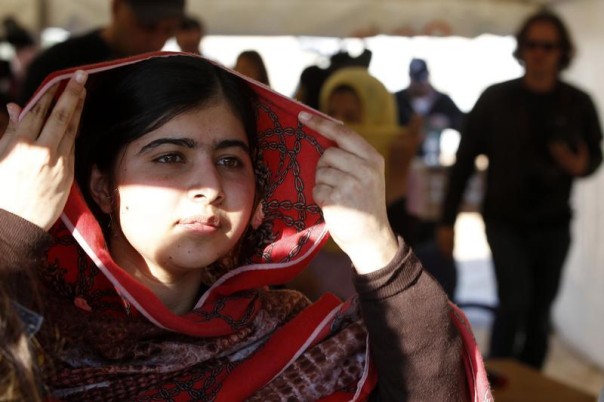
Pakistani teenage activist Malala Yousafzai leaves after speaking at a news conference at the Zaatri refugee camp, in the Jordanian city of Mafraq, near the border with Syria, February 18, 2014. REUTERS/Muhammad Hamed
By Balazs Koranyi, Alister Doyle and Gwladys Fouche
OSLO, Oct 10 (Reuters) – Pakistani teenager Malala Yousafzai, who was shot in the head by the Taliban in 2012 for advocating girls’ right to education, and Indian campaigner against child trafficking and labour Kailash Satyarthi won the 2014 Nobel Peace Prize on Friday.
Yousafzai, aged 17, becomes the youngest Nobel Prize winner and 60-year-old Satyarthi the first Indian-born winner of the accolade.
They were picked for their struggle against the oppression of children and young people, and for the right of all children to education, the Norwegian Nobel Committee said.
The sharing of the award between an Indian and a Pakistani came after a week of hostilities along the border of the disputed, mainly Muslim region of Kashmir – the worst fighting between the nuclear-armed rivals in more than a decade.
“The Nobel Committee regards it as an important point for a Hindu and a Muslim, an Indian and a Pakistani, to join in a common struggle for education and against extremism,” said Thorbjoern Jagland, the head of the Norwegian Nobel Committee.
Satyarthi said he now hoped to work with Malala for peace.
“I will invite her to join hands to establish peace for our subcontinent, which is a must for children, which is a must for every Indian, for every Pakistani, for every citizen of the world,” he told reporters at the New Delhi office of his organisation, Bachpan Bachao Andolan, or Save the Childhood Movement.
Kristian Berg Harpviken, head of the Peace Research Institute in Oslo, described the joint award “an innovative prize that brings attention to the problems of the young”.
“A BREATH OF FRESH AIR” AMID VIOLENCE
Yousafzai was attacked in 2012 on a school bus in the Swat Valley of northwest Pakistan by masked gunmen as a punishment for a blog that she wrote for the BBC’s Urdu service as an 11-year-old to campaign against the Taliban’s efforts to deny women an education.
Unable to return to Pakistan after her recovery, Yousafzai moved to England, setting up the Malala Fund and supporting local education advocacy groups with a focus on Pakistan, Nigeria, Jordan, Syria and Kenya.
Norway’s NRK TV said Yousafzai had been told she had won but decided not to make any immediate public comment – because she was at school.
“This is a breath of fresh air, a gift for Pakistan, at a time when we are embroiled in terrorism and violence and wars,” Ahmed Shah, Malala’s former teacher, told Reuters by telephone from the Swat Valley.
“Those who oppose her, extremist elements or whoever else, they have been rendered irrelevant. They are a weak minority.”
Yousafzai addressed the U.N. Youth Assembly last year at an event Secretary-General Ban Ki-moon called “Malala Day”. This year she travelled to Nigeria to demand the release of 200 schoolgirls kidnapped by the Islamist group Boko Haram.
“To the girls of Nigeria and across Africa, and all over the world, I want to say: don’t let anyone tell you that you are weaker than or less than anything,” she said in a speech.
“You are not less than a boy,” Yousafzai said. “You are not less than a child from a richer or more powerful country. You are the future of your country. You are going to build it strong. It is you who can lead the charge.”
FIGHTING CHILD SLAVERY
Satyarthi, who gave up a career as an electrical engineer in 1980 to campaign against child labour, has headed various forms of peaceful protests and demonstrations, focusing on the exploitation of children for financial gain.
“It is a disgrace for every human being if any child is working as a child slave in any part of the world,” Satyarthi said. “I feel very proud to be an Indian that in India I was able to keep this fight on for the last 30 years or so. This is a great recognition and honour for all my fellow Indians.”
In a recent editorial, Satyarthi said that data from non-government organisations indicated that child labourers could number 60 million in India – 6 percent of the total population.
“Children are employed not just because of parental poverty, illiteracy, ignorance, failure of development and education programmes, but quite essentially due to the fact that employers benefit immensely from child labour as children come across as the cheapest option, sometimes working even for free,” he wrote.
Children are employed illegally and companies use the financial gain to bribe officials, creating a vicious cycle, he argued.
Last month, based on a complaint filed by his organisation in a Delhi court, the Indian government was forced to put in place regulations to protect domestic workers who are often physically and sexually abused and exploited.
Satyarthi joins a handful of Nobel Peace Prize winners with ties to India – even though the most famous peace activist of them all and father of independent India, Mahatma Gandhi, never received the honour.
Mother Theresa, an Albanian-born nun, was recognised in 1979 for her work with the poor in the Indian port city of Calcutta. The Dalai Lama, the exiled Tibetan spiritual leader who won the prize in 1989, resides in India.
Many commentators say that the omission of Gandhi from the list of laureates is the biggest error in the history of the Prize, first awarded in 1901.
“Maybe there is a little nod to Gandhi there,” Harpviken said of the award to India’s Satyarthi.
The United Nations’ Childrens’ Fund in South Asia said the joint award recognised “their struggle against the suppression of children and young people” in a region where nearly 17.5 million girls aged between 5 and 13 are out of school and over 12 percent of children between 5 and 14 are engaged in labour.
The prize, worth about $1.1 million, will be presented in Oslo on Dec. 10, the anniversary of the death of Swedish industrialist Alfred Nobel, who founded the award in his 1895 will.
The previous youngest winner was Australian-born British scientist Lawrence Bragg, who was 25 when he shared the Physics Prize with his father in 1915. (Additional reporting by Terje Solsvik, by Krista Mahr, Douglas Busvine and Nita Bhalla in NEW DELHI and by Maria Golovnina and Mehreen Zahra-Malik in ISLAMABAD; Writing by John Chalmers; Editing by Angus MacSwan)
Have you ever read an internet article and dreaded the comment section that followed? Those poorly-spelled, hate-filled glimpses into the dark recesses of the human soul–complete with racist, sexist, xenophobic, and religious-based attacks on anyone and/or anything that is considered different? Those people are out in the world among the rational, and they are as frightening as their defense of Ghostbusters as a male-only endeavor. I recently had an unfortunate experience with such a piece of human waste.
I write for a local sketch comedy group, and the new season has brought fresh blood for the writer’s pool. One of those eager beavers was a tall, glasses-wearing oaf of a young man, and he quickly made his presence known with his mouth: while the head writer caught people up on new business and the meeting’s outline, the kid interrupted several times with random nonsense as well as calls to read his…
If you had asked me if I knew the late Fijian Laisa Taga of the Island Business International I would say “yes”.
Although it may seem strange if I told you that I never met her in person. Last year Eva Arni, head of PR and marketing for Air Niugini, Papua New Guinea suggested that I contact Laisa about writing some stories for the Paradise In-flight Magazine. When I wrote to Laisa some six months ago, she immediately wrote back with enthusiasm.
After discussing the general understanding of what types of articles to write and the expectations between a writer and an editor were established, we warmed to each other with bits of Fijian words thrown into the conversations. Not long after that, Laisa published my first article on the Kula Trade in the Paradise. I have posted a copy of that article in this blog. I was thrilled. Most of what I had written in the Kula story had been kept meaning Laisa must have liked what I had written. It was true she liked what I wrote because she hounded me after that first story for more.
I had promised Laisa two articles. One on weaving and the other on the Miss South Pacific Quest and the events that unfolded that crowning night.
When I told Laisa I was not feeling very well and would need to send her the articles later to go into the next edition, she accepted graciously and said she would wait. She told me “your health is very important” and I should take care of that first. Tonight as I read an email from Godfrey Scoullar – Publisher & Managing Director Laisa’s colleague, about Laisa’s passing and that she insisted she needed to work until she could work no more I could only cry. Not once did this woman show and make me feel in any way, that she herself was facing the greatest challenge of her life (cancer) which would in the end, take her life. My insides were ripped.
Isn’t it amazing how we take life for granted? And how precious is time?
I had only written to Laisa two weeks ago wondering if she had received my copies. It was unusual for her to take so long to reply. I had taken it for granted that I missed the deadline and I should just wait for her to write back.
And tonight, when I went over our email and how lazy I had become in paying so much attention to other things and not submitting these articles sooner, I feel absolutely hopeless and angry at myself. Jason from A Good Blog is Hard to Find (blog) once asked the question – could you really know someone virtually even though you might have never met them. My answer was “yes” and my answer tonight is “yes”, I do know Laisa. I am so grateful to have known her and especially in her last weeks. Laisa Taga had used her last precious time to continue her work with people like me – to bring stories for enjoyment to thousands of readers like you all over the world. I hope that I had given her something very small in return by what I had written for her editorials.
Farewell Laisa. The angels will rejoice at your glorious spirit that you have shared with us.
Below was the last I heard from her.
Joycelin
Bula vinaka.
Just checking on those two stories promised.
I am now working on the next issue of Paradise – collating pieces.
Islands Business International is touched and comforted by the outpouring of grief and sympathy on the passing of our Group Editor in Chief Laisa Taga who died peacefully surrounded by her close family members at her Suva home on Friday morning.
Quietly and determinedly, Laisa had been battling cancer for some time.
It was her wish she should continue to work until she could work no more.
Her family will announce funeral arrangements once they are finalised.
On behalf of Islands Business International, its staff, clients and its many friends in Fiji, in the Pacific and around the world, I wish to thank you most sincerely for the expressions of sympathy and sorrow on Laisa’s passing.
Laisa was a tower of strength, a hard working and knowledgeable editor with a measured temperament and great sense of humour.
As a regional media figure she was a quiet achiever who downplayed her achievements and never sought recognition.
She has left a vacuum that would be difficult to fill.
May Laisa rest in peace.
Godfrey Scoullar – Publisher & Managing Director
Islands Business International.
It was my sister’s birthday today. It was also April Fool’s day.
I celebrated Vagi’s birthday because she turned 34. And, I also celebrated her because she recently became a mum of a beautiful son (just over a year old) and Vagi has made one of the toughest decisions of her life. Only in the last week, she has decided to return home to Wagang, Lae, Papua New Guinea, after over 2.5 decades of living in the capital city, Port Moresby. My mother, brother and I celebrated her home-coming. My family on our land in Bowali, Wagang Village and me at the other end of the telephone in Brisbane Australia all talking and laughing and just being happy.
My sister Vagi had vouched never to go back to Lae again. Over the years we tried to pursued her to return. She would not. Last year, when she had her son, I asked if she would consider taking him home because my mother and brother could help her with her baby. So when Vagi finally made the move, we were ecstatic. My brother and I were so relieved and him being who is said, “it was all in God’s Plan.”
I was pleased because being in the big city has become so expensive. Port Moresby was also one of the scariest place to live in. Vagi’s partner was not always with her, him being part of a ship crew, Vagi would have to raise their son Ratu single-handed in a dangerous, expensive and stressful place. Everyone in the family were thrilled when we spoke after their arrival in Lae on Saturday.
Today, Vagi called. I answered my mobile in Brisbane and wished her a “Happy Birthday”. Vagi broke down and cried and I became afraid. I had no idea what had happened but I had to wait for her to finish crying to tell me her toddler was very ill and had been admitted to the hospital. I was shocked. I had only listened to the little man’s gurgles last night. I truly felt her despair.
Everyone in our family knows the status of health services in Angau and other PNG hospitals. They are mostly ‘dead ends’.
Angau, the public hospital in Lae has been deteriorating for so many years. Coupled with termites having been through the whole facility, the building and service has not been at its full capacity for a very long time for the second largest province in PNG. This issue of lack of proper health services and a good hospital has been a major set back for the people of Morobe Province, especially Lae City. I can imagined why my sister would be so upset. She did not have a lot of choices and it was daunting to go somewhere you think you could trust, but you really can’t.
Personally, I have watched in the emergency ward and other wards in Angau as many family and loved ones died due to no proper care nor basic equipment and medication. I am sure many others have gone through the same heart-breaking experience.
I was alarmed at my sister’s phone call. She assured me that they were in one of the private hospitals which was costing about $AUD300 per night. Not that my sister had such money, hence, the phone call. But even I did not have money to keep up with the such nightly expense.
The panic in Vagi’s voice said it all. It is the same panic many have when they go to Angau. Our people always made a joke that you need to make sure your health is in top shape because when you head to that hospital, you might as well be dead. Many people are afraid to be sick.
When my grandmother had her stroke a few years ago, we were told by private doctors that her lungs had already been flooded with fluid and there was nothing anyone could do. Everyone waited for her to die. After we could not get better assistance, we were directed to Angau and we spent a day waiting for a bed to become available. There was a tug-o-war over the bed between myself and the ambulance assistant that wanted to take the bed back to the private clinic. They were preparing to place my grandmother on the cold dirty and bloody concrete floor until a bed became available, who knew when.
I begged the assistance until they got sick of me and they left the bed with my grandma on it. Throughout the evening in the emergency ward, I helped to answer the phone calls which were going every second and every hand in that ward were busy. I was told by one of the staff that there were five female HEOs (Health Extension Officers), no doctors except one working across the whole hospital. As I watched, several people were admitted into the emergency ward and all were placed on the floor because there were no beds. It was a daunting experience.
And just for a background story, a few years before that, I had through Soroptimist Brisbane (South East QLD) organised 100 beds donated to be donated Angau Hospital. These were shipped from Brisbane to Lae through Lions Club. I was told these beds were used in the wards the hospital needed particular emergency beds which they could not afford. The hospital needed so much more in other areas such as skilled doctors and nurses, medicine and equipment.
I would really like to challenge the affluent, leaders and those in the know to please go to Angau and other public hospitals and take a look around. Spend a day in the emergency ward. I bet you may never want to be rushed into that emergency ward yourself. You would rather take a medivac (medical evacuation) to Cairns or Brisbane or even fly to Singapore for your emergency.












 Courtesy of mrwgifs.com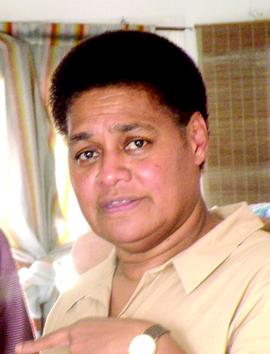
 Tribalmystic Stories