Category Archives: Nature and Climate Change

Nature Inspired Talent


http://youtu.be/Z_IRzKqmj5Q

The Australia Day will be next Monday, January 26, and I would like share a few Australians that have extraordinary stories and make me and the country proud. There many Australians I am proud of. It would even be impossible to fit them all into my blog in the 1000 posts I had promised in September. However, given the limited time between now and the actual day, I will share only a few stories. I would like to start with someone my sons and I admire for his musical talent, his love for his culture and nature. It is a little like me, except, my musical talent appears when there is no audience and I have had a few wines.

On a serious note, please ask Abung (Google) to help find Xavier Rudd and listen to many of his beautiful songs. I am sure many of you will know him. He is a one-man band and plays most of the instruments himself. His life as a nature activist makes me particularly proud and this is his story from The Nature Conservancy

Xavier Rudd
Hometown: Bells Beach, Australia
Day Gig: Environmental Activist, Surfer
Night Gig: Internationally Acclaimed Singer Songwriter and Didgeredoo Master
Environmental Concern: Oceans

Singer-songwriter, musician, activist and surfer Xavier Rudd is considered to be an iconic voice in Australian music. Using a range of instruments, including guitars, yidakis (also known as didgeridoos), stomp box and percussion, Rudd has become known for marrying uplifting music with thought-provoking lyrics.

Since his first studio album, To Let, debuted in 2002, Rudd has earned a reputation as a strong mult-instrumentalist who writes, sings and plays from the heart. Solace, his second album, was recorded in Vancouver with friend and producer Todd Simko. It debuted in 2004 in the top 20 of the ARIA charts and three of its songs were voted into triple j’s annual Hottest 100. It was followed with the ARIA-nominated albums, Food In The Belly and White Moth. In 2008, the gritty, dark and dynamic Dark Shades Of Blue redefined Rudd as a lapsteel player and lyricist. His sixth album, Koonyum Sun, was recorded as “Xavier Rudd And Izintaba,” and featured a collaboration with bassist Tio Moloantoa and percussionist Andile Nqubezelo.

In 2012, Rudd released Spirit Bird. His seventh studio-recorded album, Spirit Bird debuted at #2 on the ARIA album chart, and has earned critical acclaim as well as a 2012 Australian Independent Record Labels Association Awards nomination for Best Independent Blues And Roots Album.

As a review in the Seattle Post Intelligencer notes: “over the course of his career [Rudd] has evolved from being the accompaniment for surfers and late night beach parties (not only were some of his songs featured in the movie Surfer Dude, he wrote parts of the movie’s score) with an environmental conscience to singing about having a spiritual bond with the planet and the compassion required to create it… he gives us his vision of the potential for a better world.”


Rate of environmental degradation puts life on Earth at risk, say scientists


While suffering in the heat in Brisbane, Australia, the past 48 hours, I have been re-thinking the whole debate about climate change and how little is being done by our leaders. It seems to me that many of us are just happy in our little pockets of the world, as long as we feel comfortable and climate change issues do not affect us. Scientists are telling us in more studies that things are getting serious. We are seeing more physical destructions such as violent storms, long periods of drought, very high temperatures, all happening right before our eyes. Reuters reported climate migration numbers are increasing at an alarming rate across Asia and India. In the Pacific Islands, people from small, low-lying islands low-lying countries are also migrating.  So, in the big picture, we know MORE about our own destructions to this planet than we have ever before. The media even reminds us what we are doing, daily. Why are we not reacting?

2014 was the hottest year ever recorded. These figures finally challenged the climate skeptics. Is that alone, not scary enough? Does it not mean anything to us? Do we care and as humans, does it matter that we only have ONE planet to live on? I wanted to pick up this topic again and share this Guardian article about how we have accelerated the rate of our destruction to our planet. Please read and share the link below.

Humans are ‘eating away at our own life support systems’ at a rate unseen in the past 10,000 years, two new research papers say.

2000
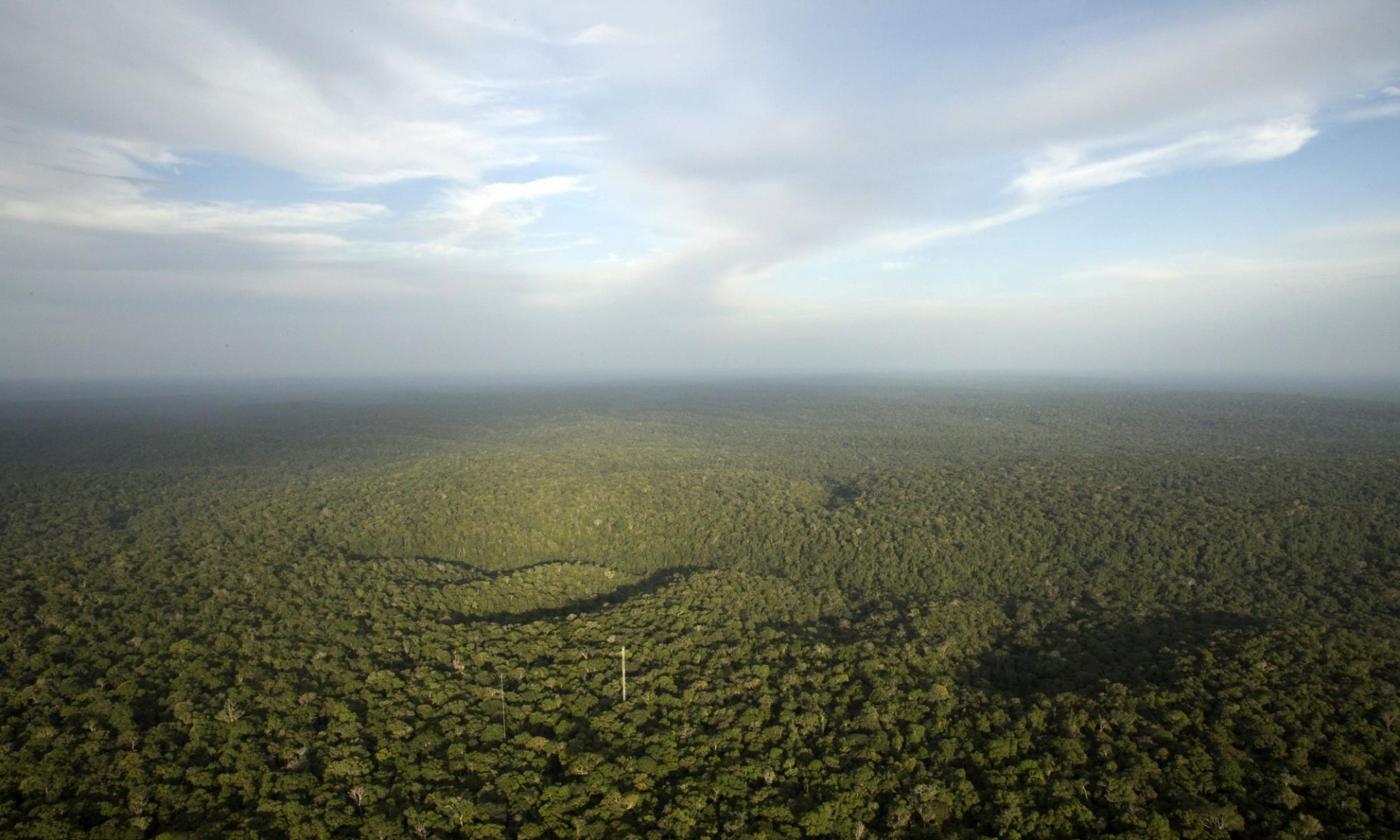
The view from the Amazon Tall Tower Observatory in the middle of the Amazon forest. Researchers say that of the nine processes needed to sustain life on Earth, four have exceeded “safe” levels. Photograph: Reuters

Humans are “eating away at our own life support systems” at a rate unseen in the past 10,000 years by degrading land and freshwater systems, emitting greenhouse gases and releasing vast amounts of agricultural chemicals into the environment, new research has found.

Two major new studies by an international team of researchers have pinpointed the key factors that ensure a livable planet for humans, with stark results.

Of nine worldwide processes that underpin life on Earth, four have exceeded “safe” levels – human-driven climate change, loss of biosphere integrity, land system change and the high level of phosphorus and nitrogen flowing into the oceans due to fertiliser use.

Environmental authorities probe central China pollution
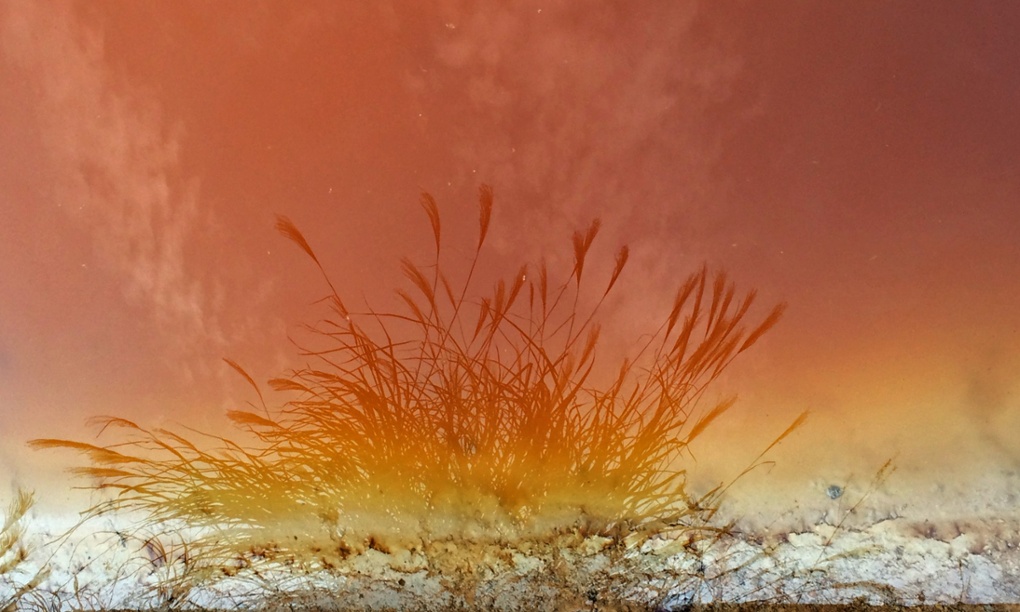
View of aluminium-polluted water, which flows into the Yuanjiang River, in Taoyuan county, Changde city, central China’s Hunan province, 19 November 2014. Photograph: Imaginechina/Corbis

Researchers spent five years identifying these core components of a planet suitable for human life, using the long-term average state of each measure to provide a baseline for the analysis.

They found that the changes of the last 60 years are unprecedented in the previous 10,000 years, a period in which the world has had a relatively stable climate and human civilisation has advanced significantly.

Carbon dioxide levels, at 395.5 parts per million, are at historic highs, while loss of biosphere integrity is resulting in species becoming extinct at a rate more than 100 times faster than the previous norm.

Read more here:

http://www.theguardian.com/environment/2015/jan/15/rate-of-environmental-degradation-puts-life-on-earth-at-risk-say-scientists#img-1

The Sisterhood of World Bloggers Award


World Sisterhood Blogger Award

I want to sincerely thank MillieThom for nominating my blog, Tribalmystic, for, The Sisterhood of World Blogger Award. Millie is the author of Shadow of The Ravens. Millie makes history sound like hot romance. She writes about various subjects with many fascinating historical content, and that’s why I enjoy her blog.

Once again, the show of kindness is deeply touching. Thank you Millie, fellow bloggers, friends and readers for supporting this blog.

The Sisterhood of World Bloggers Award

Five rules to follow:

  1. Thank the blogger who nominated you, linking back to their site.

  2. Put the Award logo on your blog.

  3. Answer the ten questions sent to you.

  4. Make up ten new questions for your nominees to answer.

  5. Nominate seven blogs.

Ten Answers About Me

1. What do you like best about blogging?

I love the writing or storytelling in blogging. This becomes more valuable with the responses I get from the readers and respect from the blogging community. I also love reading and learning from other writers/bloggers. I am driven to seek new or interesting stories for my readers. These stories can be  humanitarian news, environment and nature stories, inspiring human stories or stories about beautiful things.

I enjoy writing fiction, but on this blog, most of my stories are about life. I love writing about my culture and heritage and that helps maintain my sense of identity. I also understand the greater world we live in, therefore, I cannot ignore the realities of cruelty and poverty; what we humans do to one another. As a victim of violence myself, I want to see an ending to violence against women, children and the helpless – so I write about these topics. When I feel something is not right when I am reading an article, I share the post or write about it too. My passion goes beyond mankind. It includes other living things in the ocean and all nature. Blogging about the real and the living is the least I can do. Many risk their lives every day to fight for what is right, or to save other lives. I can only do it with my keyboard and posts on this blog, from the safety and comforts of my home.

2. If you could visit any place in the world, where would that place be and why?

I would like to go to Zanzibar, Africa one day. I would learn to dance like the Zanzibar women. Sounds crazy? Well, in 1998, I was in World Festival for Island Cultures in Cheju Island, Korea. I was pregnant with my second son. In a very rhythmic  performance, I saw large women from Zanzibar dancing at the festival like I had never seen before. They were big and heavy but so light on their feet and movements. It was incredible. I come from the islands and we dance, but not like this. From that day, I thought, I would like to go there and learn to dance like that. I am sure, the music ran through these women like their own blood. I tried to learn while on Cheju but my stomach was in the way. This trip is on my bucket list.

3. If you could change one thing about your life, what would it be?

I would like to change my pace of doing things – from fast to slow. I feel sometimes that I need to slow down and relax. I do not sleep enough. Writing is helping me to slow down, sit and think more than I have ever done in my life.

4. List 3 things that you are proud of doing / having done.

  1. Being a mother.

  2. Standing up for Women’s Rights.

  3. Being a Climate Change activist

5. What was your favourite subject at school, and why did it appeal so much?

I have never had one particular subject appeal to me – I loved many. I really enjoyed Maths and History apart from Arts, Philosophy and Literature. I loved problem solving and satisfying my curiosity. I enjoy old stories and understanding meaning of life. Social science and Geography were fun too. I could be in nature and interact with insects, animals and also people.

6. Is there any particular environmental issue that causes you concern?

What deeply concerns me is Climate Change and sea level rise in small Pacific Island nations, less than two metres above sea level. These islands will be lost soon. I would like the developed countries to lend their ears to hear us. Help us work together for a better planet for our future generation. It is not only about us sinking. We only have Earth to live on. Our earth deserves better treatment. In Australia, Prime Minister, Tony Abbott announced last week, his proudest and best decision he made was to reverse the climate policy. Two days ago, he employed a climate skeptic. The ignorance and denial of developed countries such as Australia is shameful.

7. What is your favourite childhood memory?

Being in the swamp, catching fish with my grandmother was what we did daily, for our food. One day, my grandma and I went to town with almost $5. She made this money from selling betel nut. She told me, she felt like eating bread so we went to town. It was a long walk and then a bus ride. We headed for the bakery in Lae City (Papua New Guinea). Grandma bought a whole loaf of white, unsliced bread; still hot and straight out of the bakery oven. The smell of the bread was unbelievable. Hugging the hot bread, I walked with grandma to the supermarket and she used the change to buy a tub of butter. Then we searched for a shady tree and she broke the loaf in half. She told me, it was half each.

“Eat it all” she said.

We dipped the halves in butter and ate the whole thing under the shade of a tree in the middle of Lae town. Bread was a treat. We never had that in the village. I cannot believe how much I ate that day. I can still smell the bread, 40 years later.

8. Who is your favourite character in a novel or film and why do you like them so much?

I love too many. One worthy of note is the common decency and friendship developed in Shawshank Redemption. I loved it because life has a way of rewarding us if we listen and feel more. Sometimes, because of our own perceptions, we miss the truth, opportunities and friendships.

9. What is your greatest ambition in life?

To teach more about LOVE by showing more LOVE. Hopefully it will grow and help others feel the same way.

10. What is the biggest compliment you have ever had?

I have been told that I am a good listener. That compliment is a kind one because, I am a very good talker too. I believe that being a good listener, takes skill. I hope they are right.


I have chosen these sister blogs because I really enjoy reading them, and I learn a lot from the writers. Some of these ladies make me laugh and I really like that because life is not all about being serious.

  1. A Refugee’s Journey – Vietnam to Australia

  2. Razorbackwriteraus

  3. Fifty Shades of Reality

  4. Altitude of Art

5. Poetheart

  1. L.T.Garvin

  2. Love Letters to Spam

Ten questions to nominees

  1. What makes you want to blog?

  2. What inspires you in life?

  3. What are your three favourite things and why?

  4. What is the most important thing you have ever done?

  5. Describe where you would like to live in the future and why?

  6. What do you miss most?

  7. Is there something special you would really like to do for someone and what is it?

  8. Do you have a lucky charm? Tell us about it.

  9. Have you or anyone close to you had a near-death experience? What happened?

  10. Name one thing you would like to do to change the world, if you could and how would you do that.


How Whales Change Climate


Australia’s $200 million climate pledge falls short of its true debt


http://theconversation.com/au (Dec 11, 2014)

QUESTION TIME
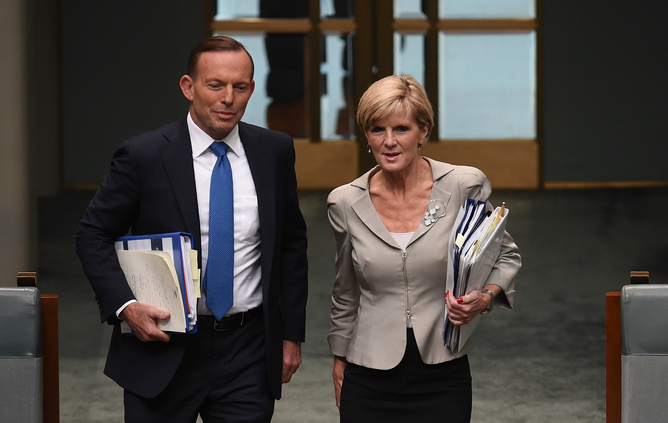
Tony Abbott and Julie Bishop are bidding to repair the government’s tarnished reputation on climate – but have they pledged enough? AAP Image/Lukas Coch

At the United Nations Lima climate summit, Australia’s foreign minister Julie Bishop has pledged A$200 million over four years to the Green Climate Fund, which seeks to raise US$100 billion (A$120 billion) per year by 2020 to help developing countries deal with climate change.

The announcement is good PR and plays readily into the narrative that the Abbott government will “reboot” and “re-engage” with voters in 2015. It also directs attention to the cabinet’s “star performer” Julie Bishop, and provides an alternative framing to Australia’s embarrassing isolation on climate action.

Scratch beneath the surface, however, and an alternative picture emerges. Put simply, the size of Australia’s contribution to the fund does not suggest that the government accepts the moral argument of “climate debt”, or that it is willing to put its neighbours’ well-being ahead of its own short-term political gain.

Climate debt is financially complex but morally simple. It is the idea that rich countries should pay reparations to poor countries for damage suffered as a result of climate change. Justin Lin, former chief economist at the World Bank, summed up the moral argument succinctly back in 2009:

“Developing countries, which have historically contributed little to global warming, are now, ironically, faced with 75 to 80 percent of the potential damage from it. They need help to cope with climate change, as they are preoccupied with existing challenges such as reducing poverty and hunger and providing access to energy and water.
The share of responsibility for fossil fuel-derived greenhouse emissions since 1750 can also be broken down by country. James Hansen, former director of the NASA Goddard Institute for Space Studies, provided estimates in an open letter to Australia’s former Prime Minister Kevin Rudd. Hansen estimated that the historical carbon debt of the United States was 27.5% of the total.

Australia has much lower cumulative emissions (1.5%) but is the worst greenhouse emitter per capita among major western nations. Using this figure, groups like the Climate Institute have suggested that A$350 million is the minimum fair contribution to climate financing that Australia should make.

Read more here:

http://theconversation.com/australias-200-million-climate-pledge-falls-short-of-its-true-debt-35318

Together, We Are Stronger!


The song titled “Oceania – a Hymn for the Pacific”,  features Pacific island artists. Set in a series of images from across the Pacific islands region, the song was a fitting symbol of the growing recognition of the need for collaborative partnerships and journeying together on “one vaka” – one canoe.


https://www.sprep.org/biodiversity-ecosystems-management/sprep-side-event-highlights-collaboration-and-coordination-for-conservation-at-the-world-parks-congress

Study: Penguins personalities may help them cope with climate change


141008140933-large
Little penguins’ personalities may help them cope with climate change. Credit: John F. Cockrem, PhD

As the global climate continues to change, the ability of many animal species to adapt is being put to the test. Bird populations may be at particular risk. According to the Audubon Society, nearly half of all North American bird species are severely threatened by shifts in climate. The threat reaches beyond North America and could have similar effects on global bird populations.

John Cockrem of the Institute of Veterinary, Animal and Biomedial Sciences at Massey University in New Zealand suggests that a bird’s individual personality may be among the factors that could improve its chances of successfully coping with environmental stressors. He studied differences in the level of the stress hormone corticosterone that native little penguins (Eudyptula minor) secreted when exposed to stressful stimulus.
“There is considerable individual variation in corticosterone responses, and a stimulus that initiates a large response in one bird may initiate a small response in another bird,” Cockrem wrote. “Corticosterone responses and behavioural responses to environmental stimuli are together determined by individual characteristics called personality. Birds with low corticosterone responses and proactive personalities are likely to be more successful (have greater fitness) in constant or predictable conditions, whilst birds with reactive personalities and high corticosterone responses will be more successful in changing or unpredictable conditions.”
These findings may help in predicting the adaptability of bird species as they face a new normal.

http://www.sciencedaily.com/releases/2014/10/141008140933.htm

World leaders: I can no longer place my faith in your hands


http://youtu.be/d06K7bvls_0

The words of Bai Kamara Jr

Published on Nov 20, 2014
George Marshall, writer and co-founder of the Climate Outreach Information Network talked about why our brains are wired to ignore environmental threats at TEDxWWF. Brussels, 13 October 2014.Climate Campaign

Saving Harry


A Filipina mother’s story of birth and survival in a cave during Typhoon Haiyan


604-1

Author: Thin Lei Win

MARABUT, Philippines, Nov 6 (Thomson Reuters Foundation) – Elizabeth Caramol was nine months pregnant with her ninth child last November when Typhoon Haiyan, the strongest storm on record to hit land, swept away her family’s rickety home on a coconut farm in the Philippines.

Haiyan damaged practically everything in its path as it hit land on Nov. 8, packing winds of up to 315 km an hour (195 miles an hour) and unleashing seven-metre (23-foot) storm surges. It killed, or left missing, some 7,000 people and forced up to 4 million from their homes in the central Philippines.

Caramol and her family took refuge in one of the many caves along the beautiful, winding coastline in Marabut municipality in Samar province. She feared for her life but safely sheltered, delivered a healthy boy and named him Cavein – pronounced “Kevin”.

A year later, Caramol, now 36, spoke to Thomson Reuters Foundation from her home, a newly rebuilt wooden house on stilts, about how her family is slow rebuilding their lives.

“A day before the storm, we evacuated to a cave about 200 metres from our home. It was a big cave with two levels. About 60 families took refuge there, but we stayed there until Dec. 4. We were the last to leave because we didn’t have anywhere else to stay.

“We went to the cave because we were told a strong storm was coming and there could be sea level rise from the water. Here, the water was halfway up the coconut trees and even came inside the cave.

“Many people moved up to the second floor when the water started coming in, but I had to stay on the first floor. I was due to give birth on Nov. 8, and I was starting to experience labour pains. They hurt so much I could not move.

“I thought I was going to die. I told Napoleon, my husband, to take all the kids to the second floor and leave me there. The water rose to around one foot and then it went down the next day.

“I didn’t want the baby to come out because the conditions in the cave were not good. We brought rice, water, salt and matches, but we ran out of water and matches pretty quickly. There was no other means to get water. We just had a container to collect water that dropped from the trees. There were no toilets either.

“I had labour pains for five days. When I finally gave birth on Nov. 12, I was so excited but I also had fear in my heart because of the hygiene conditions and the infections that could set in.

“Our home was washed away so we had nothing for the baby, not even clothes. We cut some blankets into pieces of cloth to wrap the baby. We named him Cavein Cuevas Caramol, because he was born in a cave.

“For five days, we ate nothing but rice and salt. I just breastfed the baby, like how I raised my other kids. I was worried that he is not going to be healthy but he is.

Source: Thomson Reuters Foundation – Thu, 6 Nov 2014 07:49 GMT