Category Archives: Living

The Sorcerers’ Watch


The Sorcerers’ Watch

JLeahy memoir series – opening chapter/short story

We buried him this afternoon. He had died a week ago. There were a few hours left before the sorcerers would come for his remains. That’s what his father said. We needed to get to his grave before dusk and guard the grave until dawn. His father, mother and I left for Karogo’s graveyard after the last of the gathered family members left.

My aching joints gave me small comfort as I forced them to help me walk quickly up the main road, away from Saroa Village. We were near Rigo, Central Province, Papua New Guinea and in this region, witchcraft and sorcery were rife. We walked inland, headed for the small hill where Karogo and some of his deceased family members had been buried. Other villagers buried their dead in their backyard, gardens and other special places; something I was not used to. In my village, we had one cemetery for everyone.

The heavy rain and dense humidity kept the soil on the road, wet and slippery. The red clay had been washed frequently down the hills by the torrential rains leaving earthy red lines meandering through rough patches of grey and black gravel. I placed my feet carefully away from the soft red mud and in between the milky puddles. I wore thongs and these flipped a backsplash of sand and muddy water onto the dress. My clothes and looks were the last things on my mind.

For a few minutes, I stepped off the main road and I walked along the greyish clay roadside track. The muddy track was imprinted with hundreds of footprints from local traffic. I passed a few thongs left stuck in the mud and this made me want to smile. A pair of thongs was a priceless footwear. Obviously the toe parts of these pairs came apart so the thongs had been abandoned. Karogo’s father was ahead and his mother was walking behind me. I knew the couple had planned to be in this position, to protect me.

I walked as quickly as I could because it was getting dark very quickly. The moon was still rising but night creatures were already on the scene, I could hear them.

Today had flown by quickly like each day in the past week. The funeral only ‘formalized’ the death certificate. Karogo was long gone and this absence was so stark in this strange village. This place was an hour’s flight and several hours on the road, south from my home town. Apart from his immediate family, I did not know anyone. That did not bother me. I wasn’t afraid to spend the night in the graveyard. I knew I was a stranger and as his father told me, “you are a target, so you must follow everything I say”.

“Ok” I said. My own family had taught me how to handle any kind of situation with sorcery. It was always best to follow local rules as grandma would say. I had really wanted to go to the graveyard. That may have sounded crazy, as it sounded to me, but I needed to know what the sorcery-watch was about and I wanted to see Karogo again. Fear was not my issue. I could face the sorcerers or anyone from the dead.

It was not fear, as I had said, it was my anger. Karogo’s death made me very angry. This anger was so strong, that I felt cold and hardened inside. I started to feel older and stronger than my 17 years. I had insisted to his parents to take me to the grave tonight.

The torch slipped out of my tired hands and dropped into the mud almost tripping me.

“Shit!” I cursed and picked it up quickly. I quickened my pace to reach Solomon, Karogo’s father. As I caught up, my mind went back to the funeral again. My eyes salted and I wiped them quickly.

This morning about 9am, while the pastor was preaching, trying to cover his eulogy and bring closure to Karogo’s 18 years of living, I had felt every vein in my heart burst into tatters. Our past three years together were a mixture of child-play and maturing into adulthood together. Then, there were the mysteries in his life that I now could never ask anyone about, ever.  He was beautiful inside and out, but he had secrets.

In the front pew, among strangers today, I felt I had been thrown off a plane into a strange place where no one understood my language or me. People were just staring at me, even in church, while the pastor was preaching. To find comfort amongst the staring pitiful eyes, I had looked down at the bright red roses on my black polyester dress. The hem had come apart but the dress kept together. My “Gypsy dress”, Karogo had called it. We were together when I bought this Gypsy dress at the second-hand store in Lae. I was on two weeks mid-year holiday from Year 12. The dress cost me 50 cents. It was strange to feel at ease for a moment while looking at the red roses on the Gypsy dress. I wanted to see Karogo alive in my memories about the dress but only briefly I saw him before my eyes moved and focused on the coffin. The roses in the wreath on his coffin were alive. Karogo wasn’t. He laid there, just like he could have been on the day-bed at his father’s house. His eyes were shut, but he wasn’t sleeping in the opened, beautiful, rosewood coffin.

My dress was the only item that connected us briefly and at that moment in the village church. I sat amongst hundreds of strangers. Mourners, children and adults, dressed in white,  kept sneaking glances at me, probably feeling sorry for the young widowed girlfriend. I had cried inside and begged for my heart to stop right then. Yet, above the haunting Perovetta hymn at the funeral service, I could hear my heart still beating while I tried to understand why death could come to a life so young and promising.

“Joyce!’ someone had called me in the church. I remember, I did not even turn. Perhaps it was someone else with the same name. I didn’t know. I was in a daze. My thoughts were too far-gone. I had wanted to know why my chest kept moving, expanding, and contracting. I was breathing air and life, which I did not want, into me. I had wanted to stop breathing.

“Joyce!” Solomon called.

I turned my head quickly to him. I paused. He was a large, tall man with a large Afro. He combed it out neatly and sweat combined with water from his wet hair was coming down his face. He pointed a few metres ahead of me. The physical and emotional pain returned to my body once more as I stepped in the slippery, pale mud towards him.

“Come this way”, Solomon directed and I walked closer to him.

“Are you ok?” he asked, searching my face when I stopped and looked at him. We were both sweating from the walk. His wife caught up and wiped her flushed, sweaty face. She also looked at me concerned.

“Yes”, I tried to smile.

“Let’s go”, Solomon said.

We turned away from the main road and reached a small, slow flowing creek, about ankle-deep. The stones in the creek were all covered in green and black algae. We crossed the creek as the day’s shadows dissolved, forcing us to use artificial light. Solomon lit the Chinese kerosene lantern and gave me the large torch. His wife held the smaller torch. We climbed. In a few minutes, we will be at Karogo’s graveyard.

(Draft only)
How Whales Change Climate


Shakuhachi – One Man’s Meditation


I found this beautiful story on Jonnathan Dunnemann blog.

I come from Papua New Guinea where traditional bamboo flutes are played in most of our regions. My mother plays the flute. It was a beautiful sound I grew up with.  The Shakuhachi is a Japanese bamboo end-blown flute, which has a rich culture and history associated with it. It is believed the Chinese brought Shakuhachi to Japan in 6th Century.

Blind New Zealander Kevin Falconer has made the sound of bamboo his own by developing his own relationship with bamboo, the craft and the Shakuhachi music. I found his story very moving and at the same time very inspiring. We are only limited by what we set for ourselves.

Kelvin Falconer walks through his bamboo groves, with tall shoots of bamboo towering over him. The bamboo littered with beautiful hand-made terracotta tags that Kelvin has made for knowing how long each culm has been growing for.
Once he finds a suitable shoot he proceeds to patiently craft the bamboo using only his senses of touch and hearing. At a glance Shakuhachi appear to be simple instruments but the understanding and skill in shaping even a basic flute is something which requires Kelvin to have an acute knowledge of the physics of sound and a finesse to fine tune each unique culm of bamboo.
Through playing the Shakuhachi, Kelvin is able to develop a calmness which he describes as ‘Meditation through Sound and Breath’. Through watching him craft a flute from beginning to end we are witness also to a craftsman putting his all into every detail.
Kelvin shows us that the Shakuhachi is a tool that can bring calm and focus to distracted and stressed Minds. His flute becomes a metaphor for what we ‘make’ in our own lives and through his craft he transcends his perceived disability and the limitations of Blindness.
Type: Documentary
Country: New Zealand
Year: 2012
Filmmaker: Michael Hobbs
Format: Digital 1080
Language: English
Subtitles: N/A
Colour: Colour
Film Ratio: 16:9
Sound Type: Stereo
Running Time: 11m38s

The Melody That Stole Me


Anhang 2

“The music of the “2 Days and a Year” album tells stories of the world of daydreaming, falling snow, sunlight glimmering on the water, night skies, and not least, the value of the fragile moment,” said Jens Felder.

Imagine taking all those complexities and depths of nature, seasons, feelings and thoughts then combining it all into music. No wonder the music sounded so good. I guess that is what all artists strive for when creating something wonderful.

When I first heard Jens Felder play 2 Days and a Year,  a few weeks ago, I let this melody steal me. I wanted it to. It was a piece of music that I could go places with.  I love music and I have a large collection. hen’s is a combination of many types of music from many parts of the world. I played Jen’s music over several times, just to see if I could get tired of it. I didn’t. I don’t mean this in a negative way. Part of me wanted to play it again, but the other part kept wondering why I wanted more. I do not know how to explain it in words. I am sure every once in a while, we find something beautiful and it affects us. Life is beautiful and mysterious. I could not imagine life without music. 

Like everything we do in life, there is a story. In Jen’s story, his music is his life story.  I could not write his story better, therefore, I left my interview follow in Jen’s own words:

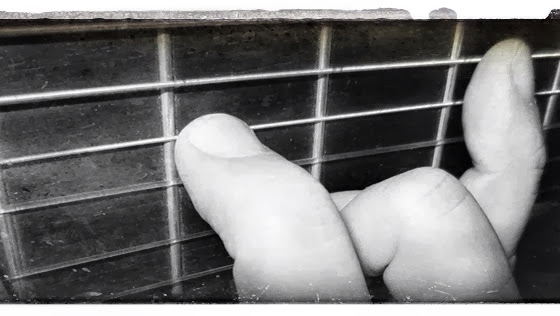
I am playing guitar for over 30 years now. I can’t remember the first time I had a guitar under my fingers. The feeling is still very present. When I held the guitar, I knew immediately that it was exactly what I was missing in my life. Playing music feels like a meditative experience, like “being in the moment“. The silence is expectation and excitement, and gets filled with sound. The silence returns images and echoes back, what gives me great joy and peace. My goal was and is, to communicate the emotions I experience in the music through my instrument.
My heroes were the old masters and so I studied classical music for many years.  I completed a postgraduate study with Andreas Higi at the music college in Trossingen and attended various master-classes by i.e. Frank Bungarten, Carlo Marcione and the amazing Aniello Desiderio.
The learning was followed by many solo concerts with classical programs. I was fortunate to play in chamber music ensembles with violin and vocals and also worked as a soloist with orchestras.
I now live with my family in southern Germany and work as a freelance artist and music teacher. The old masters are still my good friends, but now I play my own music. In my pieces melds classical music with elements of world music. You can hear African or Asian modes and even some nods to rock music all within the context of solo classical guitar playing. It feels like a trip around the world with the language of classical music.
As a composer, I have worked with various artists from different regions of the world, including also music for short films.
In early December, I published my first solo guitar album “2 days and a year”, available on iTunes and Amazon as a download.
The title piece “2 Days and a Year” is a story about time perception in music. I have written this piece in 2 days, but the emotional experiences have accompanied and influenced my music all year thereafter. So this piece has become the title track of my album. I’ve written a text, which describes the emotions of this time (also in the booklet of my album):

“Time is different in music. Close and friendly it is
drifting by – sometimes flying, sometimes even
standing still, but never passing. Nothing gets lost –
the first tone is not older than the last one.

All music is a child of its time, but not bound by time.
It arises from moments and lives in people. Musicians
capture that moment in time and listeners make
the music their own. These moments are present, and alive.

iTunes link to “2 days and a year” album: https://itunes.apple.com/de/album/2-days-and-a-year/id946450529?uo=4

Soundcloud link to the “2 days and a year” piece: https://soundcloud.com/jens-felger/2-days-and-a-year


A multi-award winner short film: Home Sweet Home


This is the story of a house which escapes from its suburban foundations and sets off on an epic journey.

A short movie by Pierre Clenet, Alejandro Diaz, Romain Mazevet and Stéphane Paccolat, made in Supinfocom Arles during our last year in 2013. Original music by Valentin Lafort.
// Synopsis //

The Spirits Deeply Buried Within Us


Sorcery in Papua New Guinea

I grew up in Papua New Guinea, and the people of my country are fearful of sorcery. Although my family members were devout christians (Kauckesa, Tamang, my grandfather was a teacher and clergyman for the Lutheran Church) there are other traditional beliefs and practices that culturally and spiritually linked our people to the nature and the environment. These beliefs and customs have helped us survive for many years. Sanguma (sorcery) was not one of these beliefs.

In my own life, I have seen and written some stories, recalling incidents and events that have been directly associated with sorcery and the beliefs of our people. I know of many killings that were alleged to be sorcery related. I have seen family members wasted to their last days, and buried because they refuse modern medicine. They suffered immensely, but believed witchcraft and sorcery was causing their illness for some reason or punishment and their ailment was incurable.

On the other hand, a different kind of societal treachery occurs in a community fearful of the occult, where the accused is judged and attacked or killed. No courts. No help. Often the community or village would stand back, hands held up with reluctance, letting the crime take place.

My grandfather used to call it Satan’s work. Evil striking on a whim, and prayer was the only thing to offer in efforts to rescue or heal. It has never been clear to me – I have felt each one of us have spirits deep within us. These spirits are so powerful and they create the characters and the people within ourselves. We choose the spirit, the one or the ones that become us. What clearly stands out in the sorcery violence is, the accused are mostly women and children. I wonder, is sorcery merely offering another avenue for blood-thirsty, violent men in PNG?

Rampant Fear

Sanguma and the fear of it, is rampant in Papua New Guinea. Education makes little difference. The deep-seated, hysterical terror of sorcery and its consequences is unfathomable, to the extent that it is so easy for anyone to pick up an axe, knife, or spear to hurt the next person based purely on the suspicion. An uncle can kill a nephew. A husband can kill a wife or daughter. Anyone could be a witch. Our culture allows violence and our culture allows the beliefs to exist because we allow it to.

A friend, Almah Tararia shared an article which led me to a website. http://www.stopsorceryviolence.org 

“Stop Sorcery Violence” wants to highlight the work of local women and men bravely taking a stand against sorcery and witchcraft accusations, providing assistance to victims and survivors and advocating for a positive change.

I wanted to share one of the organisation’s success stories tonight. Please be warned, you may not like what you see or read on the website.  Some of the stories are horrific.

simbu-kid-978x500

 A boy is accused

A nine-year-old boy from Simbu Province is happy in his new home after surviving terrible torture because of sanguma accusations.
In July this year Peter was admitted to the Kundiawa hospital with severe cuts to his head and body,  and with the loss of blood, there was a slim chance of survival. Peter’s own uncle attacked the boy with an axe after accusing him of practising sanguma (being a witch).

When taken to Kundiawa Hospital, quick action by the doctors, miraculously pieced Peter’s body back together, even some of the severely damaged tissues.

In over two months, Peter made a remarkable recovery. It was not what the doctors had expected. He regained most of his movements and ability as a normal person.

Then, came the daunting questions, now that he had survived, where would Peter go? The boy’s parents were both dead. His own home and extended family were not safe for Peter to return to. No relatives had visited him in hospital, and the option of him returning back to his village was too dangerous.

Several members of the Catholic Church: Archbishop Douglas Young, Bishop Don Lippert, Father Philip Gibbs and Father Jan Jaworski worked on finding a place where Peter could go and be with other children, to continue his education and develop a normal life. The public responded very positively, and after identifying some places in the Highlands, he was relocated to a safe place to start a new life. Peter was one of the lucky ones.

Sanguma Accusations

Regarding Sanguma accusations and their related violence, women and children are the targeted victims.  For each woman or child that has been saved, another is tortured, banned from her family and village or murdered.  There are many people standing up against sorcery related violence. Many are working hard to prevent violence and assist victims. Human Rights Defenders, the Catholic Church, Community-Based Organisations, International NGOs and some  government bodies including police are realising the extent of the this specific kind of violence and have started to develop strategies to save lives. For the PNG people, every person is encouraged to take a personal action by joining the fight to stop the violence.

Home

Documentary: Leaky Boats


Together, We Are Stronger!


The song titled “Oceania – a Hymn for the Pacific”,  features Pacific island artists. Set in a series of images from across the Pacific islands region, the song was a fitting symbol of the growing recognition of the need for collaborative partnerships and journeying together on “one vaka” – one canoe.


https://www.sprep.org/biodiversity-ecosystems-management/sprep-side-event-highlights-collaboration-and-coordination-for-conservation-at-the-world-parks-congress

Pushing Up Daisies


images

Chapter One: Casting Shadows continued

Viola flung the rest of her stale drink into the garden and carelessly dropped her glass on the day table. She turned and watched the remaining yoke of the sun slide away and as quickly, the darkness enveloped her. The evening breeze caressed her, nudging her silk cream blouse under her full breasts. Her navy linen pants hung loosely about her short fat legs. It felt weird but nice. No-one has touched her for so long. She made no attempt to rejoin her guests inside. The time had crawled to 6:30pm, when the automated sprinklers were due to start spitting. She paced the verandah to check if the entire irrigation system had come on to water her beloved garden. Her mind went back to events earlier.

Nora had asked her if she was all right – the stupid girl. Viola felt anger rising in her like bile, but swallowed it, only responding with “good”. For years, she had been telling her friend about how ‘he’ had treated her. Nora knew. Just like she had, Viola gritted her teeth and told Nora everything was good.

To Viola, “good” was a great word. When people ask how she was, she would reply on a reflex, “good”. According to Viola, the word good was so vague and final that anyone who asked could not ask any other questions. They left her alone. The word ‘good’, Viola thought, had protected her all these years. Kept her safe from the pity and concern that exhausted her so. Viola hesitated, as she paused and put the lights back on. They instantly flooded the lush bushes enclosing two carports and her guests’ extra two cars parked next to her black BMW and his silver Nissan 280Z. He would catch the $150 cab ride home tonight. She felt glad, she was not picking him up from Brisbane airport.

Over the years, she had kept all her feelings deep inside her, in the smallest pocket of her heart, layered with obligations and responsibilities as the daughter, mother and wife. But tonight, she was going to tell him everything when he came home. She would tell him she has had enough. She began thinking of her plan. Letting the scenario play out, she strolled back to the front of the house. Viola noticed at the end of the verandah that the sprinkler at her rose garden, nearest to her neighbours was off. Without thinking, she stepped bare feet onto the dying lawn and walked straight across towards the dark shadows to turn the sprinkler on. The light switch was near the tennis courts.

To read part one, see my earlier post and for more – visit my Wattpad:

http://www.wattpad.com/myworks/27925992-pushing-up-daisies


Becoming a Stranger


In the mirror this morning, the stranger looked back at me . It took her one week to take my body. Her hair, smile and the colour of her eyes were familiar. It was the shape of her face that was different, disfigured and daunting, creating her new identity and making her who she was. This woman looked 20 years older. Saggy eye bags, and burning and bulging red patches on her forehead from the illness that had engulfed her body and giving her the extra years on her face.

I stepped away from the mirror, afraid. I took my bag, car keys and left the house. It was 6am.

I got in and took the wheels of the Honda, staring at my swollen, bluish red fingers trying to bend over the steering and grip tight. It was painful. The auto-steering had a mind of its own and often spun back. My joints were not co-operating. Discomfort and unco-operative joints was something I had envisaged later in life, not today. I did not want to look at the rear vision mirror as I reversed. I did not want to face the stranger again.  I forced myself to ignore the pain and itch in my deteriorating body. The fever stood tall. I was glad my feet could work at the pedals better than my fingers. This, gave me some comfort and reassured me, I could still drive in my condition. I needed to get to the doctor quickly. The medication my Gp had prescribed seemed to have failed and my health worsen in the past three days. Last night, I thought I would die with the high temperatures of summer, fighting against the rising temperature of my body.

After ten minutes of driving, I had to slow down because the saggy tired eyes wanted so badly to sleep. I stayed on low gears and concentrated until I arrived at the shops. I parked and took a cab into the city to see the doctor. The cab driver looked at me suspiciously. His eyes went from the large red patches on my arm and elbows to my neck and forehead. I wondered what went through his mind. I was too sick to care.

“Can you take me to Wickham Terrace?”

“Yes”. He forced a smile and I tried one, knowing, my smile would have been ugly.

I stepped into the cab and when I gave him the doctor’s address at Wickham Terrace in Brisbane City, he muttered something and drove off. It must have been the face of the stranger from the mirror that got to him. Usually, the cab drivers liked to have a conversation with me during the course of my cab-journeys.

I shut my eyes and slept until the cab stopped. I paid the driver and made my way to the specialist doctor. Everyone at the foot of the lift stared. Could it be that bad? I wondered. This tower houses many doctors. I was sure, I was not the first weirdo to appear on the scene. Several floors upstairs, I saw an opened door and asked the receptionist if I could stay; I had come one hour early to see my doctor.  Secretly, I also needed the cool air-conditioning. My skin was burning like fire although it was only 7:15am and the air was cool. The receptionist smiled kindly and said it was OK. I sat down on the comfortable chairs and closed my eyes, relieved. My mind drifted to my girlfriend Marina. Yesterday, Marina heard my voice on the phone and came to get me.

“You don’t sound good, but you have to come with me”.

“OK” I gave in.

When she had arrived at my house, she was shocked at how I looked. I told her that I had been ill, but it seemed to have gone longer than usual. She told me there was more to it and it was best to swim in the ocean. She believed salt water was the cure. So, we packed our change, some food I left the sick-bed I had been in for a few days. We drove an hour away to Bribie Island.I had joked to Marina that once I completely surrender my whole body to the disease, perhaps it would leave me alone. I would get better.  The swelling started on my back and everyday, it the symptoms had moved up and over my head. Yesterday, after day six, the burning swells starting coming down on my forehead and neck.

The saltwater was amazing. It was good to feel the force of the waves hitting against me and the salt stinging me. The healing was working. I soon forgot how sick I was as I played with the waves and swam like a fish again. 

After our swim, we ate crab, fresh cucumber and drank hot tea with lemon and honey. Then, we spotted two black cockatoos and Marina, who is half Chinese and Papua New Guinean told me it was a good omen. She insisted we drive to a news agency and buy lottery tickets, so we did. At the same time, the Specialist doctor had called me back and said I could come in this morning instead of January 15. It was a good omen.

A knock on the surgery door forced me to open my eyes. My doctor’s receptionist had arrived. She popped her head in next door.

“The lady is not mine, she is yours”, the first receptionist said.

“Oh”, responded in hesitation.

I laughed and said, I had an appointment with the skin allergist.

Soon, she ushered me into the surgery and the allergist arrived. Two patients went in for fifteen minute consultation each and then he called for me. The allergist looked me over and asked me if I was alright.

“No”, I said. He would not know the difference between the stranger and I because this doctor had never seen me before.

He gave me a chair and I quickly told him what was happening to my body and showed him the lumps. I was tempted to show him a pre-hives picture of me and say: “Doctor, this is me”. He asked all the questions and guided me through the history of my hives’ problem. After a 45 minute consultation, he decided my issue was not an allergy as previously diagnosed and the medication given was incorrect. He told me he had never seen such a severe case before but all the symptoms pointed to a viral infection of the immune system – not an allergy. I was surprised. He made a joke about the disease not being something else and specifically said it was not contagious. I then joked if it was puripuri, which was witchcraft. The doctor rolled his eyes. As it turned out, doc had spent his early medical training Madang Hospital, Papua New Guinea.

I asked the doctor if he could cure me, something like giving me an injection because I was sick of being sick and there had to be something to fix me instantly. He laughed.

After examination, he said there was one thing that could knock this “thing” over, but I had to follow a stringent routine with the medication he was to prescribe. I waited for him to write everything out and I repeated his instructions back to him. I needed to get better.

I missed a week’s pay. That was what I paid for the specialist. I took the lift to the ground floor to have breakfast as instructed, and take my first prescribed magic pill. My cousin arrived with her ten-year-old and three-year-old daughters. The girls ran up the footpath to me, giggling, excited and ready to give their aunty a big hug but as they came up to me, they both stopped and looked at me like I was a stranger. It was only then, I realised, how bad I must look. Children are not good at hiding their feelings, I already knew I had become a stranger within my own body. My cousin rang her partner and described me as “unrecognisable”. She bought her daughters chocolate and cream and I spent the next ten minutes trying to convince them; the doctor had said my condition was not contagious.

“I am not contagious. I am your aunty”. They gave each other looks.

There were no hugs and kisses when they dropped me off,  just wave-goodbyes. My older son had earlier said: “Mum, I love you, but I am not going to touch you, you look gross”. (He was joking). His brother, on the other hand kept hugging me and telling me, “I’m scared mum and I don’t want to look at you”.

It has been 12 hours and the magic pill has started working. I feel a lot better. I took a walk to my greenhouse and spoke with the birds. The swelling is going down and I hope in the next few days, the pill will help me get rid of the stranger.