Category Archives: Life

A Nut, Causing Havoc


Betel nut – the fruit of the areca palm, is a nut well-known and used as a cultural practice in Western Pacific Islands.

Betel nut
The green nut. Google Pics.

In Melanesian cultures such as Papua New Guinea and Solomon Islands, betel nut was traditionally shared in gatherings. Betel nut is chewed in India, Vietnam, Thailand and other Asian countries. Vanuatu, Fiji and New Caledonia as well as West Papua and Thursday Islands, are not traditional betel nut chewers or growers. Betel nut is also chewed in Micronesia. In the Melanesian pidgin (PNG Tok Pisin to be exact), betel nut is  called buai. The nut is chewed with Daka and Kambang – mustard and limeOver the years, in PNG, the betel nut has become a commercial product, creating an economic lifeline for many squatter dwellers and low-income earners, including villagers. It has also created havoc and health problems.

dsc_0031 sharing betel nut
My friends having a chew at the opening of my art gallery, Pacific Art Gallery, in Brisbane. Pic: Mari Ellingson, Island Meri Blog

Traditionally, in PNG, the betel nut has a cultural significance and a ritual is followed at gatherings. Perhaps it could be compared to how the Kola nut in used in Africa but in a less formal way.

Both the green and older, orange-skin nuts are chewed when a family receives visitors. They sit together, exchange the nuts and chew the betel nut with mustard and lime.  Greetings and stories including family news are exchanged before serious business is discussed. It has been suggested that the origins of chewing betel nut dates back to the Lapita culture when the first Melanesians came to settle.

Like many customs and practices associated with objects, food or places, this buai heritage has changed. Betel nut has become a commercial product in PNG. Medical books record it as a drug and the nut’s commercial trade has even affected the Consumer Price Index. In the last two years, according to the PNG Health Department, diseases associated with chewing has increased in numbers.

img_26641 betel nut
http://puppriss.wordpress.com/page/3/ George buys his supply at betel nut market.

City Ban

Rubbish from betel nut trade, including skin and spit stains created not only health problems but a physical havoc and embarrassment to authorities. Buildings, walk-ways and government property had permanent spat and stained marks all over. These marks often shocked foreign visitors who thought these were blood stains. Controlling sellers and buyers became a nightmare for authorities.

The Port Moresby Governor Powes Parkop declared a ban on the sale of the nuts in Port Moresby City in October 2013. This ban was reinforced in January 2014. The sale and chewing points were re-located to outskirts and villages away from the capital. A task force roamed and confiscated the nuts and arrested sellers and even chewers. The governor said this ban was purely for commercial sellers of betel nut that made the city dirty. The cultural usage was not affected.

The Nut in the Coffin

While the ban had cleaned the city, sellers continued to smuggle the betel nut into the cities to sell. Last year, at a police roadblock, a friend who runs a trucking service recalled a story where betel nut smugglers packed a coffin with the nuts. The smugglers pretended they were a group of mourning highlanders. It was customary for highlanders in PNG to cover in clay or mud when they mourn. The clay-covered smugglers told the police at road-block that they were returning from Gulf Province to Port Moresby City with a body to bury. The police knew this route too well and despite this theatric, the police forced the travellers to open the coffin. Inside the coffin, the ‘dead’ nuts were all confiscated.

Health Effects

Studies have been conducted and doctors have warned excessive use of betel nut causes mouth cancer and even death due to high blood pressure and other related diseases.

Health officials in PNG say 25,000 people die annually from mouth cancer and the figures of oral cancer relating to betel nut chewers is rising amid the controversial ban.

Betel nut D707979
The powerful combo. Lime powder, mustard sticks and betel nut. Google Pics

 Chewing the Nut

When you chew the nut with mustard and lime, it creates a chemical reaction which results in a bloody red substance in your mouth. This makes the face and body of the chewer warm and sometimes they would sweat profusely, depending on each individual chewer and how their body reacts to the nut. There are different species of the nut. Some are more bitter and stronger than others. For example, in Markham Valley in Lae, the fleshy meat of the betel nut is quite sweet and you can chew the nut on its own or with lime and mustard without feeling any strong reactions. The Markham nuts are mild compared to other nuts grown in North Solomons Province, the Buka buai as it is known.

betelnut Solomon Is
Solomon Islands betel nut chewer. Google Pics.

First time chewers have reported being extra alert, a mild feeling of euphoria, quickening heartbeat, high blood pressure and sweating or feeling very warm.

I know betel nut well, having grown up with it all my life – it is part of our culture. Often in large singsing, (cultural dancingthe nuts are strung like beads, coconut oiled and hung like a necklace.

To the nightmare of my mother, who was an educated nurse, I chewed betel nut most of my childhood with my grandmother. It was my late grandmother’s way. My grandmother called it a ‘medicine’. I had my own bag of betel nuts with my lime pot and my mustard supply. My grandmother’s teeth were permanently blackened by betel nut chewing. She believed, it kept the (western) doctor away. I found her words funny because she herself was the traditional doctor. We also planted the trees and grew the mustard to chew. My grandmother and I made lime powder from kina shells. When we had extra, we sold it at the local market. I was lucky to have Colgate and a toothbrush (and my mother) so I have white teeth today. If ever you want to try this, make sure you are with someone who knows how to chew the betel nut very well.

More Mystery Surrounds The Fishy Find


“The Fishy Find” follow-up story.

Burnt Fishing Boat Liau Yuan Yu 68
Burnt Fishing Boat Liao Yuan Yu 68, believed to have been set on fire after it ran aground just off Manus Islands, Papua New Guinea. Pic: Courtesy ABC.

I posted a story on December 30, about three bodies being found by villagers in a suspected illegal fishing boat off the coast in Manus, Papua New Guinea.

PNG authorities were unable to find the bodies reported in abandoned tuna fishing boat freezer. Here is the follow-up story from ABC PNG correspondent Liam Cochrane.

Liao Yuan Yu 68, the abandoned fishing boat Liao is believed to have been set on fire by the crew after it ran aground.

Three human bodies reportedly left in the freezer of an abandoned fishing vessel in Papua New Guinea may have been removed and replaced with three metre-long tuna, according to a journalist who accompanied police to the site.

Fishing Boat at Poana Island, Manus
Fishing boat aground on Poana Island, Manus. Courtesy. ABC

The fishing vessel was abandoned on a remote island in the far east of PNG’s waters in early December and locals reported seeing three corpses “of Asian appearance” inside a freezer.
But when police and government officials travelled to the site this week, they found three huge tuna on trays in the freezer, which had been damaged by fire.

PNG investigation team on the boat.
PNN investigation team members on the burnt fishing boat. Pic: Courtesy ABC

“The fish that were there looked like [they] had just recently been burned – you could still see blood on the fish,” said Stephanie Elizah, a senior journalist working with the Autonomous Government of Bougainville’s media bureau, who was part of the assessment trip.

“The information doesn’t add up,” she said.
“The young kid that went into the freezer area [initially], he noticed an ankle, it was decayed but it was still in the shape of a foot and was wrapped in black wrapper.
“You’re talking about a community that [has been] eating fish all their lives and they know the difference between a fish and a human body.”
It is unclear if the initial reports of human bodies were incorrect or if the corpses had been removed and replaced with the tuna.
“No one has come up and said whether they burnt the ship or they may have retrieved the corpses and buried [them] somewhere,” Elizah said.

Courtesy: Malum Nalu Blog and ABC News.


The Angels’ Trail – for Robert


JKLeahy (I wrote this poem yesterday for my cousin Robert) 

The Angels’ Trail

In your journey, after the earth

at distant shore, you will berth

The end of Angels’ Trail you will see

Lifeless as dust in the wind, we will be

Vibrant and free as a bird, you will soar

In Godspeed your wings find you sooner

No blood, pain, or will you suffer

Here, bounded in grief from tragedy, earth life quiver

Trapped in naked depth of sorrow, we linger

Cloth, wood, soil and stones enfold remains

In earth, we buried with your shell are our souls

In wind, as a dandelion you will lift higher

Earth’s gravity draws darkness, we see death

Hold back tears, your brothers’ will

Hear their songs, when the wind is still

In dirge and tears, sisters call you fond epithets

Where you, dandelion rests, is where Angels’ Trail begins

Follow beside where the lights glow

for darkness, as deep dark wine bestow

swallows where the shadows go

Seek your mother, for she seeks you

Your brother, aunts, uncles, your sister too

In patience, expect they will be for you

at a place where they had once passed Angels’ Trail

Gaze ahead; leave earth with your memories

Be light on your feet for them you will meet

Drowned in sorrow, our heart bleats

Softness is your voice, abound to share among our kin

Rejoice will be, the angels in triumphant

and kin spirits who had long passed The Angels’ Trail


Robert was a handsome, healthy, living young man in his mid twenties. He was buried today in my village, Wagang. His life was taken tragically last week in a car accident, leaving behind his two young children – aged 14 months and 4 years old, and a young wife. Robert went for a ride with our other cousins. They were all sober and picking up another cousin sister at Nadzab Airport, 40 minutes from Lae City, Papua New Guinea where he met his death in the tragic accident. The details of the accident are not known to me nor my brother who made the call to me. Four others are in  critical condition at Angau General Hospital, Lae. Those of you that follow my blog, Robert was the third son of my Aunty Yellow (Yang Yang) who died last year. She was instrumental in my upbringing and specifically, my traditional fishing and dancing skills. Robert was a little brother.

2015: A Year for Peace and Fresh Start


I decided to get out of my house for 24-hours and I spent New Year’s Eve and New Year’s day with friends I grew up with. It was a wonderful change from typing away at the computer and chasing my chickens out of my garden beds in Bellbowrie. We spent last night celebrating the end of 2014 and the beginning of 2015. Today, I was taken to Sunnybank Hills by my friend Margaret and her two daughters, Nina and Paula, and we enjoyed a very nice Vietnamese lunch and then, ice-cream.

Thinking about last night’s discussions about life and where we were heading in the future, many of my friends and I will be turning half a Century, so 2015 is an important year for each of us.  We all agreed, we must all strive to make 2015 a better year and a year to complete projects.

I wanted to share contents of an email I received from my friend Dr Kevin Murray when I returned from my 24-hour outing. Dr Kevin Murray is an independent writer and curator, Adjunct Professor at RMIT University and Research Fellow at the University of Melbourne. Kevin’s email summed up last night’s discussions about projects, and about the desire to have a better year. I liked the message about using the old to make new in Kevin’s story about his textile workshop visit.  

Kevin wrote: according to the Chinese, 2015 is the year of the wood sheep. It’s an auspicious sign associated with harmony and peace. Accordingly, there are very few major sporting or political contests planned for this year.

Weaving with newspapers in Batik Redaka

Last year, three Australian designers, an Indian artisan and Kevin visited Batik Redaka, a textile workshop in Pekalongan. Their guide was the master batik artisan, Zahir Widadi. Batik Redaka was established by a Gujarati trader and reflects the fertile mix of Javanese, Dutch, Indian, Arab and Chinese cultures that co-exist on the north coast of central Java.

Top-001

As well as traditional batik processes, the workshop has developed some wonderful new weaves, such as the textile produced by this newspaper loom (pictured above). From this newspaper fabric, they have designed a variety of products such as vests, hats and shirts.

This gleaning of technology is a particularly inventive source of modern craft. Zulu basket-makers make vibrant bowls from telephone wire. They are so successful that, even though it has been made redundant by optic fibre, telephone wire is still produced in South Africa as a craft product. Read more on the Sangam Project.

As my friend Kevin had wished me, I wish you the same. May the peaceful year of 2015 provide you with many opportunities to ‘make new again’ the rich resources at hand. I will be making new, some of my old projects and completing them this year. On the subject of peace and harmony, I wish and pray for Peace for West Papua.

A Fishy Find


1107240-3x2-940x627 tuna
PNG Tuna – AFP File photo

Three bodies found in freezer of suspected illegal fishing boat off Papua New Guinea

By PNG correspondent Liam Cochrane (ABC News)

Updated Mon at 5:04pm Mon 29 Dec 2014, 5:04pm

Illegal fishing is a growing problem in the Pacific.

Investigators from Bougainville are still preparing to make their way to a remote PNG island where three bodies were found packed inside an illegal fishing boat’s freezer.

The police assessment team has been delayed again, waiting in Bougainville’s largest town, Buka, for a boat to travel to remote islands about 200 kilometres to the north.

The bodies were found packed among tuna in the freezer after the fishing boat ran aground at Paona Island, a 45-minute boat ride from Fead Island, which is 200 kilometres north of Bougainville.

The gruesome find was made on December 10 but the incident has only just been reported because of the remote location.

Bougainville disaster co-ordinator Frank Lacey, who is heading the investigation team, said the remaining crew members tried to destroy the boat before fleeing.

“Local reports coming from the area are that there are three dead bodies in the ship’s fridge with some fish they have caught,” he said.

“The occupants of the boat, when it ran aground,  tried to burn it.

“They tried to burn the ship. They do this all the time.

“But it did not get ablaze – it’s only the top part of the ship that’s been burnt.”

The three bodies in the freezer are also yet to be identified, but, Mr Lacey said they appeared to be from Asia.

An earlier report suggesting the freezer was still working has now been dismissed.

The freezers are located on the second deck, out of the sun, and investigators hoped the frozen fish would keep the bodies from decomposing too quickly before they are identified.

“We’ve been giving warnings to the locals not to get the fish from the fridge, which they normally do with other ships that run aground,” Frank Lacey said.

Illegal tuna fishing is common in the area and the crew was believed to have fled to a “mothership”, which was acting as a hub for smaller vessels.

One source told the ABC the call sign of the vessel had been tracked to a Chinese owner who had since been contacted.

The PNG National Maritime Safety Authority said the vessel was declared lost at sea in June, 2014.

The last known port of call was in Kiribati, hundreds of kilometres from Paona Island.

When the assessment team has completed its report, it will be handed to the country’s National Maritime Safety Authority, which will lead the recovery of the bodies.

“We’ll leave it to the NMSA to do the rest, because they could get the fish and dead people off and bury them somewhere,” Mr Lacey said.

Treasured Rubbish: Island Stuff


My cousin Greg returned to Papua New Guinea with his family after six years in Brisbane. It was a sudden decision and he wanted his family to move back with him to assist with his new business. Greg’s wife and children packed up the house and left yesterday morning on the flight to the capital, Port Moresby. We were all very sad. Greg and his brother Bob’s children and my sons were all about the same age and they enjoyed growing up together as a family. It was the same with us, their parents. We were close.

For the past two days, I had gone to cheer up my cousin sister-in-law Ufi, Greg’s wife while she packed. Yesterday we shared food, cups of tea and lots of stories as she started cleaning. I helped her with some tenancy documents and returned home late.  The next day, after the family had left for the airport, I returned to the house they had rented about 3pm, to tidy up, remove rubbish and pick up some hand-woven mats and coconut brooms from PNG that Ufi had left for me. These were treasured items and knowing how valuable they were, my sister-in-law left her old ones for me.

On arrival, I saw a truck parked and loaded up to the brim. Two men, one Pacific Islander and the other, a Caucasian, I was not sure where he was from, were loading furniture and everything they could get. Then they tried to tie it down with ropes.  Greg’s wife had told me she sold some furniture to a Samoan. She had said, the buyer was coming to pick up the three pieces of furniture, but, these two men loaded everything.

The Islander (Samoan) asked who I was and if I had come to pick up things I bought. I told him I was family and I had come to clean and pick up my Pandanus mats and coconut brooms.

“I can’t find them, they were suppose to be here in the corner”, I said looking at him.

After some hesitation, the man said, he had loaded the brooms and mats. I wanted to laugh but I kept a straight face. I knew these were old and used. The mats were ripped. I looked at him and smiled.

He went to the truck and unpacked the load. He found and gave me back the brooms and the two mats. He asked, embarrassed,  if he could keep the mattresses and the other household items and I told him, he could keep them. He explained to his friend, he had to return the “island stuff”.

I thanked them and explained that the brooms and mats were from PNG and I could not let him have them because they were hard to get into Brisbane, Australia. The man knew the quarantine process for importing such items would have been horrid. He understood. I felt sorry for him because as an islander himself, I knew he would have been so excited to find these treasured island ‘rubbish’ before I had arrived on the scene and ruined it for him.


Pidil: A Small but Powerful Instrument


Published on Sep 17, 2014 by komnairima

I love interesting sounds, particularly  unusual musical instruments from Papua New Guinea. Here is the Pidil, a rare instrument belonging to the Gunantuna of The Blanche Bay Area of New Britain. I have read that this instrument is played by men during ritual ceremonies to attract young women into the bush. We can guess what that means. 

I do not have any more information on the object except for the sound of it which is on the YouTube link below. The brown, almost finely polished seed, (it’s naturally like that), is common in PNG in coastal areas. In my province we remove the inside and hollow the seed before we use it as a decoration on string bags (bilum). We also  string a bunch of the seeds together to make it another musical instrument, that sounds like a shaker. The women and men carry the bunch and shake them to create the sounds that accompany the kundu drums, singing and dancing.

Rabaul is the famous centre of New Britain. It is known for the Japanese occupation during the world  war and also for its volcanoes. Since January 1942 the Japanese had held Rabaul on Blanche Bay, the flooded crater of an extinct volcano which gives deep water almost to the shore. The regional area and the province itself is rich in culture and heritage. The Pidil in New Britain has a longer story behind it. I dare not ask, I am a woman, but, someone from this area may offer us some follow-up story for this blog in the future. For now, click on the link to listen to its sound.

Short Story: The Christmas Opal


Picture: http://www.aussietreasurechest.com.au

Draft (Opening Chapter – JL Memoir series)

The Christmas Opal

I looked at it. The black briefcase sat by the door. It was Saturday, mid year, 1988. The mid morning light through the slit in the curtain, drew a right angle across the exposed top corner. This did not lightened the case colour, only, it darkened what remained of the briefcase in the shadows. The thick heavy-backed curtain kept the case concealed. There was a twirling spectacle of dust stirred by the slow-moving fan. The dust particles moved between the dark case, and the top of the opened window. This twirling dust caught my eye briefly as this spot of light was the only light in the room today. From the dark interior, it was hard to tell that the sun was high, the sky was blue and it was 36 degrees outside. The unit had trapped dust but how do I get it out? I was limited to what I could do, and what I could not do. My boundaries were quite clear as they were bashed into me several times over four years. I also knew whom not to speak to and where not to go. Sometimes I felt like a trapped animal and sometimes I was just like a chipped, trapped dog in a yard with electrical fencing all around and someone watching from the shadows.

It was getting hotter and I felt thirsty. I took a step to the briefcase. It was bulky, large, and square, with gold fittings like a pilot’s or a travel case . It had black strong rubber wheels and gold clasps that snapped shut. I looked at the briefcase and did not touch it, afraid.

I have heard him snap-shut the clasps and the lock so many times. He liked that, the strict, military-type barking of orders and routine snapping of things into place. Orders for curtains to close when night fell. Open curtains, he said, meant, I was sending out invitations to be seen, to be looked at, by strangers and our neighbours.

“What if it’s a trap?” I almost whispered, delaying my urge to open the damn briefcase. My curiosity tugged at me one more time but I refrained from touching it. I could never imagine what could be held inside this large dark briefcase.

I went upstairs to the bathroom and washed my face. It was hot. Then I returned down the stairs and sat down at the last one. My legs were weak, but I was not hungry. My eyes went back to the case.

It could fit a small gun perhaps, but he already had a sewn-off rifle. I remembered him removing, caressing and dressing the gun with a soft towel and placing it like a baby in its cuddle spot, in his car. He was excited by his newly acquired possession. Apparently, he got this gun from his cousin, and that was a piece of information I needed to know. I thought to myself, as I poured myself a glass of water, to cool down. What a cunning backstory to cushion my fear that he had access to a gun or weapons, any time, from his relatives.

I stood up and walked the few steps to the front door and peeked outside. The car-park was still empty.

He had stored the rifle in his car booth, under the spare tyre. A fine hiding place, where betel-nut chewing, sleepy, corrupted Port Moresby police were too heedless to look during roadblocks.

“No”, I told myself in realisation. He would not trust me with a gun inside the house. It has been almost four years. I was not dead yet, but something has happened to me. I was no longer myself nor was I the 19-year-old virgin from strong Lutheran faith. I was no longer the traditional Papua New Guinea village-innocent girl that he had conquered. I believed that he knew this. I believed he knew I had changed and this meant one thing – my days were numbered.

I collected the large pillows and took them outside. The colourful coleus amongst my tropical plants in the pots cheered me up. The pillows were heavy and only for show. No one used these pillows; they sat and collected dust on the New Zealand sheepskin leather, which covered parts of the downstairs/lounge. Under the cream sheepskin was a large olive-green, black and white carpet. The carpet looked Moroccan. The lounge was a sombre decoration completed with a collection of prints that I thought were depressing. Curly haired, empty, pale and ghost-like maidens, stared down from sepia prints. They showed no particular emotion, yet, their eyes looked sad. Whoever drew these miserable women, sold them to the right person, that was my view.

I picked up the last pillow and went out the back. I shook bread crumbs off the pillows into the backyard and laid them on stacked sandy-brown pavers, lined with pot plants. There were three of the pillows. Regaining composure, and letting my aching body breathe fresh air, I stepped inside. I thought of cleaning the windows but it meant, I would open the curtains. He liked them shut.

“It keeps the sunlight off the artwork,” he said sarcastically. I wondered if I was the artwork he referred to. Not the monochrome of beautiful and sad curly-haired pale women with very large haunting eyes.

I crossed the small lounge to the front door. Remaining inside, I opened the door enough to look outside. I kept my hand on the handle. I dare not step outside, someone might see me and report back. No-one was there. The normal raucous of the compound seemed to have disappeared. The compound area of 1000 square metres encased three blocks of cream concrete airline employee residential units. They were all quiet. His unit was in the first block, second last. The Talis tree outside, in full bloom had seduced bees and insects and a few city birds watched for their own meals. The wide, long leaves were turning yellow,  orange and red, like autumn colours in the movies I had seen. The Talis tree usually housed wives and babies of employees under its cool shade. Today, the shade was abandoned.

I pulled back into the unit, closing the door behind me and locking it. I felt the coolness of the ugly 1970s brown tiles on my feet even when the air inside was hot. I looked at the case again. I had nowhere else to go today. The order was to stay home. I stared at the briefcase again. It was Christmas Eve. He left it there. Why had he not taken the briefcase to work? I decided to ignore the briefcase. This was a test and I was very tired.

I completed and took the washing out and hung it. I returned inside the hot two-bedroom brick unit and counted seven small presents I had bought and wrapped. I felt ashamed. I told myself, I was weak and revolting. I was pathetic. I bought these presents – for what? I hated him. My hands were sweaty, I was trembling and my heart beat faster as I thought of what lay ahead. Three things could happen this Christmas. One, I could be dead. Two, there could be a resolution to this relationship. Oh, the third thing…I could kill him. The third was pathetic and I knew it.

My eyes glazed over with tears as I laid the presents under the green, fake Chinese-made Christmas tree. The tinsel and the plastic brush leaves scattered and messed up the base. I did not care. I hated fake things. I let the tears come, that’s was all I had. The tree had red and white bells with some glittering reindeer. I was very careful not to trip the tree over even though, I did not like it. Then, I picked myself off the floor and went to the briefcase and opened it. I felt my face burnt with excitement and fear. My trembling hands worked swiftly over books, papers and travel documents. The smell of planes mingled with the strong smell of vinyl.

My hands touched a small box. It was a dark blue jewellery box with sharp edges. I pulled it out, unafraid anymore. I opened the lid and it stayed ajar. Inside, immaculately placed in white cushion padding were a set of Australia’s beautiful white Opals. There was a pendant with matching earrings. The settings were in gold. It was a perfect Christmas gift for a woman, I thought, marvelling at its beauty. I remembered these opals from the Brisbane duty-free shop. The white opals were my favourite from all the other colours but it was not something I would ask for. I looked at the stones, mesmerized by their beauty, even from the mouth of the dark briefcase. Briefly, I thought of the depth of the earth where they came from and years the stone took to form and evolve into such luminous work of art. I thought of the person that spent laborious hours grinding, polishing and shaping them. I made jewellery so I knew the work involved. The light sipped into and was trapped in the stones, lighting and reflecting layers of intricate colours. The Opal had a sense of innocence, purity, and tenderness. Suddenly, I felt cold and quickly placed the small box back in the briefcase and snapped it shut. Deep down I knew, these Opals were not for me.

Cool Stuff – Klassen Makes Wood Sing


12-artsy-tables-wow-factor-7-living-edge

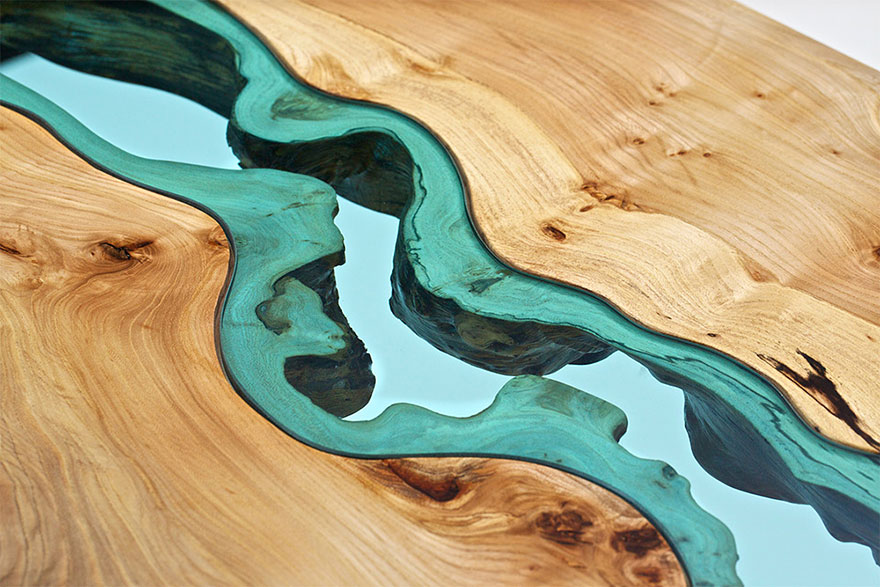
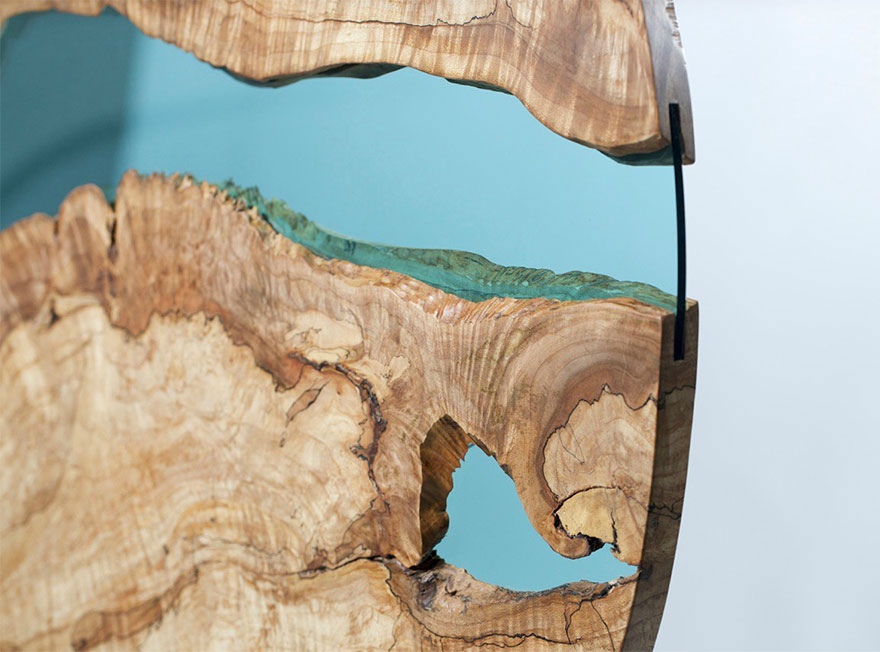
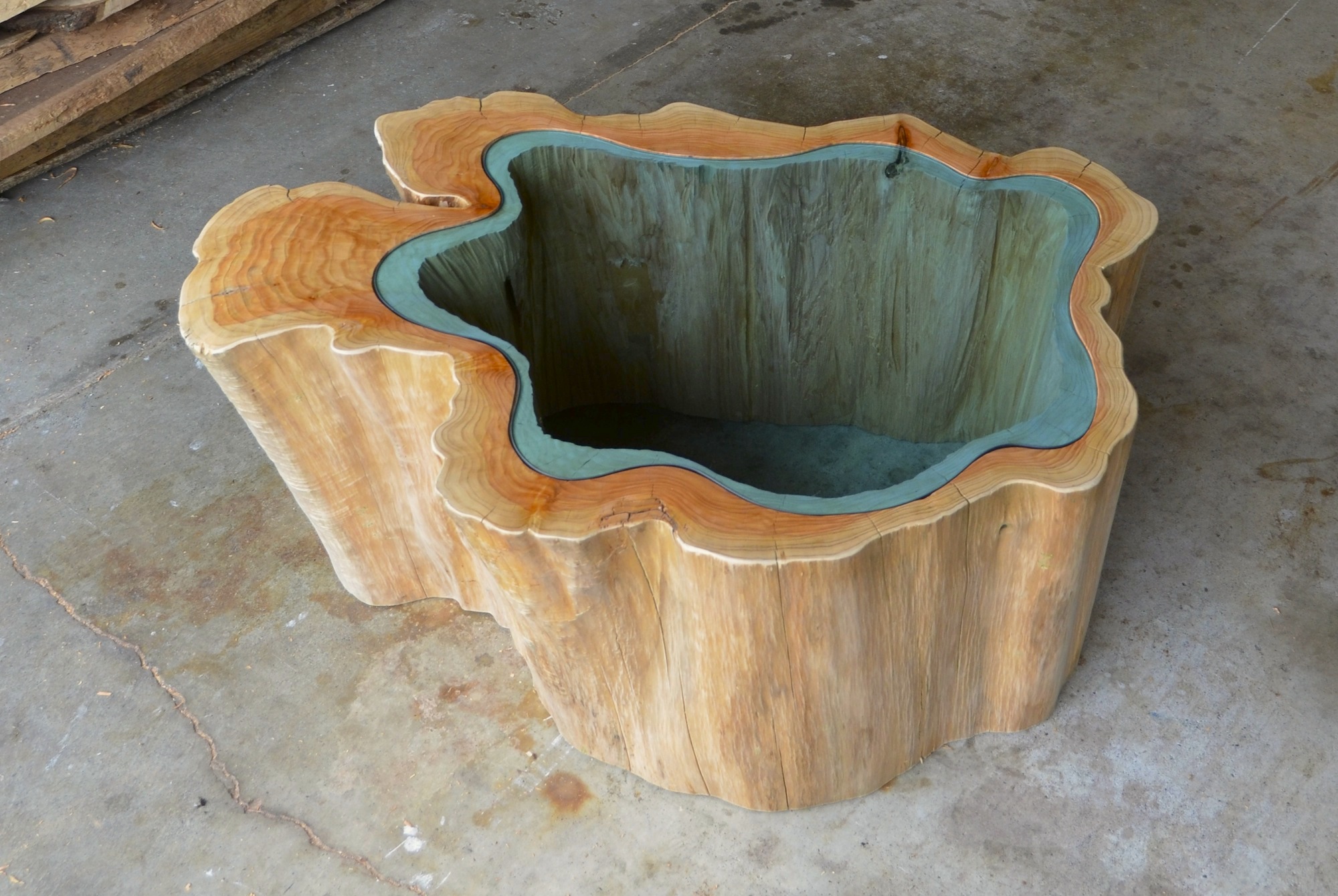
I love wood when it is combined with steel and glass. I have posted other beautiful furniture here on Cool Stuff.  Here is another work of art from Washington-based artist and furniture maker Greg Klassen.

“I try to marry the natural beauty of the wood with the skilled craftsmanship of the maker. When the two come together, a piece can really sing!” Klassen said.

Klassen’s beautiful lake-like features of desks and tables straddle the line between furniture and art. He seeks out wood with defects and unique features from his local sawmill which he exploits to his advantage by turning them into the focus of each piece he makes. He does it so cleverly that the defects become the art.

Klassen 2

Due to his relationship with a local sawmill, Klassen has access to pieces of raw wood, which means that he can make use of its natural forms and beautiful imperfections for his creative furniture. These organic forms lend natural power to the rivers and lakes on his tables, which are completed with custom-cut panes of glass and look much like features on a topographical map.

Klassen


http://gregklassen.bigcartel.com/products

http://boredboard.com/transform-raw-wood-to-art/

Intriguing Wonders of Melanesian People


There is a term I heard when I was growing up. It was “yellow-top”. It was also called “blondie top”. I have heard people from mine and other provinces used this term in Papua New Guinea to refer to East New Britain and New Irelanders. It was not meant to be derogatory in any way; people from these places had natural blonde hair. This ‘look’ is found in many other Melanesian populations across the Pacific. I guess this blonde look on black skin has intrigued other races but to us (Melanesians), it is quite normal.

I accidentally found this video on YouTube and I wanted to share it. I found some of the narration quite amusing, especially in the pronunciation and arguments about the races/genes that could have contributed to the hair colour. The study was interesting.

………………………………………

In the next video, as it is Christmas Eve, I wanted to share some gospel music from the Melanesia. As majority of our people have followed Christianity, these songs are for worshipping. The Melanesian Choirs (Solomon Islands) sung these songs in the movie, The Thin Red Line.

This choir and the songs remind me of Christmas and my childhood memories. I miss those days when I spent Christmas with my mother, grandmother and aunts, and we would sing. It is this time that I remember all these amazing women, some gone and some afar, that love to sing their hearts out. I hope you enjoy the choir.

I wish you all a wonderful Christmas!