I would love to share this video from my friend L.T.Garvin’s blog. It is a short film, called Beautiful People. It is actually a feel-good commercial that lifts and fills us with endless possibilities of what we can do as humans.
I had to re-post this video link. Earlier, when I had re-blogged this story from L.T.Garvin the original link posted may have been faulty. The link did not re-direct to the video as it should have. I apologise for any convenience caused.
I have been painting “Josephine”, the woman from my head in watercolours on paper.
With several layers of pigment on heavy paper, she has taken some time to surface. In almost three weeks, and working with three other artwork at the same time, I took no notice of how she was looking. I knew “Josephine” was due to finish soon.
My sons had been away south. My younger son returned today and wanted to see what I had been up to. I showed him the gardens, told him about the chickens, the paper thief, and how my blog was going. He could see I had been painting. As usual, he went through my paintings, telling me which ones he liked. When he saw “Josephine”, he asked me if I was painting “Bubu”. Bubu is a shortened Motuan (Papua New Guinea) word for grandmother/father. Chris was referring to my mother, Freda.
I laughed. Chris was right. This woman in the painting is what my mother looked like in her younger days. Apart from her hair, most of Freda’s looks have not changed much over the years, so much so, my 16-year-old recognised her. I had not realised Josephine’s resemblance to my mother before.
How did I paint my mother without knowing? (Maybe, I miss her).
This morning, the rain stopped about 9am. I had welcomed the last two weeks of wet weather in Brisbane. My gardens have had a good drink and everything looked green with patches of bright tropical colours all around our property. I walked to one of my gardens, closer to our street and watched our chickens dirt-scratching near the roadside. They had ventured too far out and I was concerned for their safety. Besides, when the big black rooster is leading the pack of four hens, they were capable of doing anything. They could reach the public bus stop metres away and if the rooster decided to have its way, they could all catch the bus to the city. The rooster was very bossy, cocky and unruly. Apart from crowing several times continuously in a minute to annoy, it had a way of nodding its head from side to side and flapping its wings when scolded.
Today, the five were only two metres off the street, leaving their nesting place 100 metres away. The lined gum and acacia trees had shed so many leaves. Given the recent wet weather, the ground before me was covered in a thick layer of brown and black wet, slippery soil. I stayed at a dry spot, away from the road.
A small white Mitsubishi i-MiEV pulled up slowly and parked across the road from our mailbox. It was about 30 metres away from me and about ten metres from the chickens. I could see the car clearly. I was thinking it was a learner driver or a neighbour stopping to make a mobile phone call. As I watched, the car door opened and a large woman, about 150kg struggled to get out. She made it to her feet, straightened her short dark-brown hair and put on her glasses. She was dressed in a dark blue pair of denim and a lacy white blouse; two sizes too small. She wore flat slippers with no jewellery. Her tight clothing did not restrict her walk or her air of confidence. I almost thought, I had a visitor, this woman was coming up to my house.
Then, the chilling truth dawned on me. I recognised her and that car. I remembered her face. She had often sat in the car and sent a child to run across the road to take the paper. I had watched from the distance. I always wondered what they were taking, and then, our newspapers went missing. She must be the newspaper thief!
It has been almost eights months of the paper going missing and I have never been close enough to speak to her. Our gate is quite far from the house. I had suspected, the thief did their deed during my daytime work hours. The paper was gone before I got home in the evenings.
Westside News delivers the Wednesday weekly newspaper on Tuesday mornings. If I were lucky, the paper would still be there when I checked the mailbox area. Most times however, the weekly paper would be gone.
The woman looked around casually, and then crossed the road towards me, unaware I was watching her. She came up to my mailbox and with some difficulty she bent down and picked up the paper that was delivered this morning. When she got back up, her eyes caught me and she stopped, still holding the paper in her right hand. She gave me a wry smile. I stared at her. She reminded me of my black rooster with that look of arrogance and superiority. She looked hard at me, almost as if to say: “Well now that you have caught me, what are you going to do about it?”
In return, I gave her my disgust look with: “Thief, don’t ever let me catch you stealing my paper again, you have no idea what I am capable of”. She turned away. I was not surprised by her behaviour. I thought to myself, she is a pro, she is good at it, but, how many papers has she stolen each week and what did she do with them? In silence and after that ‘exchange’ between us, the woman strutted across the road and got into her little white Mitsubishi, and drove off with my paper.
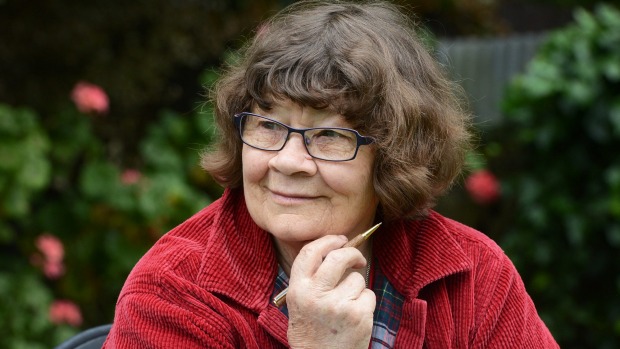
Picture by Loren Dougan/Fairfax NZ. Joy Cowley talks about the 30-day silent retreat she just completed in Wellington.
What do you do to get your creative juices flowing?
I spend time in solitude in my garden. There is something exciting about the rhythm of plants living, rooting, shedding and flowering. I also paint to get my inspiration to write. I was commenting on MilliThom’s blog today and thought, how many times have I spent trying to create stories and even artwork, when my heart was not in it. Sometimes, shutting down and walking away or diverting my mind to something else helps me come back to story-telling and the story gets even better. I have set a goal to blog each day. On top of that, I am writing my memoir and a collection of short stories. I also write magazine articles which I have not done in a while. Daily chores and the day job takes a lot of that time and numbs the brain. My mind has to travel and seek new things to write about all the time so I read too. When my brain slows down and I become forgetful, I go to the garden and start again.
There is a meditation place in Brisbane my cousin and I had once discussed going to for a week of silence and meditation. I cannot imagine how one month of silence would be like, although, I have spent a lot of days on my own when my sons have been away. I do speak with the animals so it is not complete silence. Being in complete silence for one month would be quite an achievement, especially when you are around people, eating and sitting with them and even looking at them. I think people who choose to live alone or live away from others, being in silence for a long time would seem quite normal.
Here is a story about a writer who finds her own way to “sharpen” her brain through silence in an old tradition.
When the word was silence by Nikki MacDonald
In a suburban Wellington dining room 10 people sit silently. Condiments pass across the table at the raising of an eyebrow or flick of a finger. One diner sees a neighbouring table’s empty water jug and rises quietly to fill it.
A mix of religious and non-religious, the group had never met until a month ago. Most of them had never visited this place. Now, 30 days later, they share a close connection but can scarcely remember the sound of each other’s voices.
When their voice boxes are finally awoken after a month of disuse, one man declares “silence has become my friend”. Another calls it the most radical experience of her life.
After a hugely busy year, writer Dame Joy Cowley was feeling “about as sharp as a wet cornflake”. So she switched on her email out-of-office – and disappeared for a month. But her email bounce-back message wasn’t the Rarotonga beach break brag.
“Terry and I will be on a silent retreat from Nov 2 to Dec 7. We will not have internet contact at this time. Joy,” was the message.
For a month Cowley and her husband lived at Island Bay’s Home of Compassion, which functions as an urban monastery. The mission was rest, renewal and reflection, in the oldest tradition of the Catholic Church. The twist was that it all had to be achieved in complete silence, save for a 15-minute daily chat with a spiritual director.
For Cowley, spirituality and creativity are inextricable.
“I wouldn’t know the difference between meditation and writing.”
She already wakes at 4am every day to savour half an hour of quiet before the emails begin and the phone starts ringing. But even for her, spending an entire month in silence was hard work.
“You really have to look at yourself very closely. There are always bits of ourselves that we would like to discard and you have to accept those.”
Cowley and Terry were two of a group of 10 who came from around the country to the retreat. Some were religious, others were not. They had three days of orientation to get to know each other and the home’s glorious garden setting, before stilling their vocal chords and beginning 30 days of exercises in reflection. To read more, click on the link below.
Short Story (original draft JLeahy) The Cab Conversation
I parked on the taxi rank and waited in the queue. It was a warm night and I had started my shift at 6:30pm. It was nearly 2am. This would be my last trip for this shift. The streets were packed with drunks. Many of them were young. The cab ranks were still full. I had my tinted windows up, to cut out glaring lights and the street noise.
There was always action on Friday nights in Brisbane City, Australia. Nothing much has changed in people’s behaviour out here as I could see, after driving cabs for 30 years. The buildings and some of the streets have changed, but the people. Sadly, the drunks were becoming younger. The two cabs in front of me picked up and drove off. I rolled my white taxi sedan forward. Immediately, two drunken young men stepped off the sidewalk and started cursing and pulling the door levers to get in, even before I stopped.
I had been driving for the Turkish cab-owners for five years. They have been good to me. I would love to buy my own cab soon. The cabbie-money was good, but the nights were often scary. With my own cab, I can set the hours. The shorter of the two men, dressed in a white polo and jeans, finally managed to open the front door. He quickly turned back to his friend.
“It’s a big Indian woman”, he said. They laughed and he closed the front door. They got into the back of the cab. His friend, taller, was wearing a red cotton shirt that was tucked into a navy pair of pants. The street was well-lit so I could clearly see both their sweaty, drawn faces. They said something to each other, giggled and fell heavily into the backseat. The cab rocked. I ignored what was said and watched them on the rear-vision mirror.
“Kelvin Grove!” the shorter man said with pretentious authority. He looked barely 20. They seemed very drunk. I checked them again from the rear vision mirror, making sure there was no funny business.
“$30 dollars up front”, I turned to them.
“What? We will pay when we get there”, the short one spoke again.
“No, you pay now”, I insisted, knowing that there may be trouble ahead.
“Are you Indian?” he asked, ignoring what I had said. They laughed.
“You fucking pay now or you get out of my cab,” I said firmly.
“Joe, just pay her, I want to get home”, the one in the red shirt stopped laughing. He peered at me from the corner of the seat.
“Ok! Ok!” his friend Joe said fumbling in his pocket and hands me a $50 note. His expression was more serious.
“Address please”, I said taking the $50 note and placing it on my dashboard.
“We will show you”. Joe said.
“No, tell me the address now”.
The tall one called out the address quickly and I punched it into the GPS.
“I will give you change when we get there”, I said and released the hand-break.
“Ok, now can you tell me if you are Indian?” Joe started again.
“I do not wish to make a conversation, I just want to take you and your friend home safely”, I said, keeping my eyes on the road. I glanced in the rear-vision mirror. Everything seemed fine. They both sat in the back seat but the taller one started leaning to the side. I thought to myself, hope he does not vomit in the seat. The traffic eased as we left CBD.
“You are so rude, why can’t you talk to me?” the short one said raising his voice from the back seat and leaning forward. His friend was now asleep; slumping his tall lean body into the corner of the black leather seat as I could see quickly in the mirror. I could feel the short one closer to me.
“I don’t want to talk to you. I just want to drive”.
“That is bad service, you are rude, I am going to report you to your authorities and they will sack you tomorrow”, he said and leaned back into the seat.
“Please do”, I invited. I stayed calm, and kept my eye on the road and the speed limit. The police were out everywhere.
Joe started to say something else, but I took no notice. The fare had almost reached $20. It had been ten minutes, and we had almost arrived at their destination. I stopped to the red traffic light a few blocks away from their address. I glanced at the rear-vision mirror. I saw the short one shaking his sleeping tall friend roughly.
“Jeff! Jeff! Wake up! We are almost here; I don’t want her to see where we live”.
As his friend woke up, the light turned green and released the brakes and picked up speed. I changed to second gear.
“Stop here!” he ordered as I went through the set of lights.
I rolled the cab towards the left sidewalk and stopped. I turned to them.
The short one was already outside the cab, trying to pull his friend through the opened door.
“‘C’mon Jeff, hurry up man!” he said angrily. His friend reluctantly woke and staggered out.
“Run! Run! We are not paying the bitch, run!” the short one shouted and ran. At first, the tall one called Jeff looked surprised, and then he started running too.
I switched the high beam on and watched them run into the darkness.
I picked up and called control on the radio. I looked down at the total fare ‘blinking’, as I spoke to my supervisor.
“I am reporting a runaway”, I told my supervisor.
“What happened? They didn’t pay?”
“Yes. I got paid”
“What seems to be the problem?”
“I had insisted on a deposit when they got into the cab in the city.”
“Where are you now?”
“Kelvin Grove.”
“How much was the fare?”
“$23”
“And?”
“They gave me a $50 note”, I said, staring at the $50 bill, still sitting on my dashboard.
“Don’t worry about it, we will deal with it when they show up at the office. Have a good night”, the supervisor said and hung up.
……………………………
Note to readers. Taxi stories. My girlfriend nicknamed Mary, drives cabs in Brisbane. She is Papua New Guinean, aged 52. This is a true story.
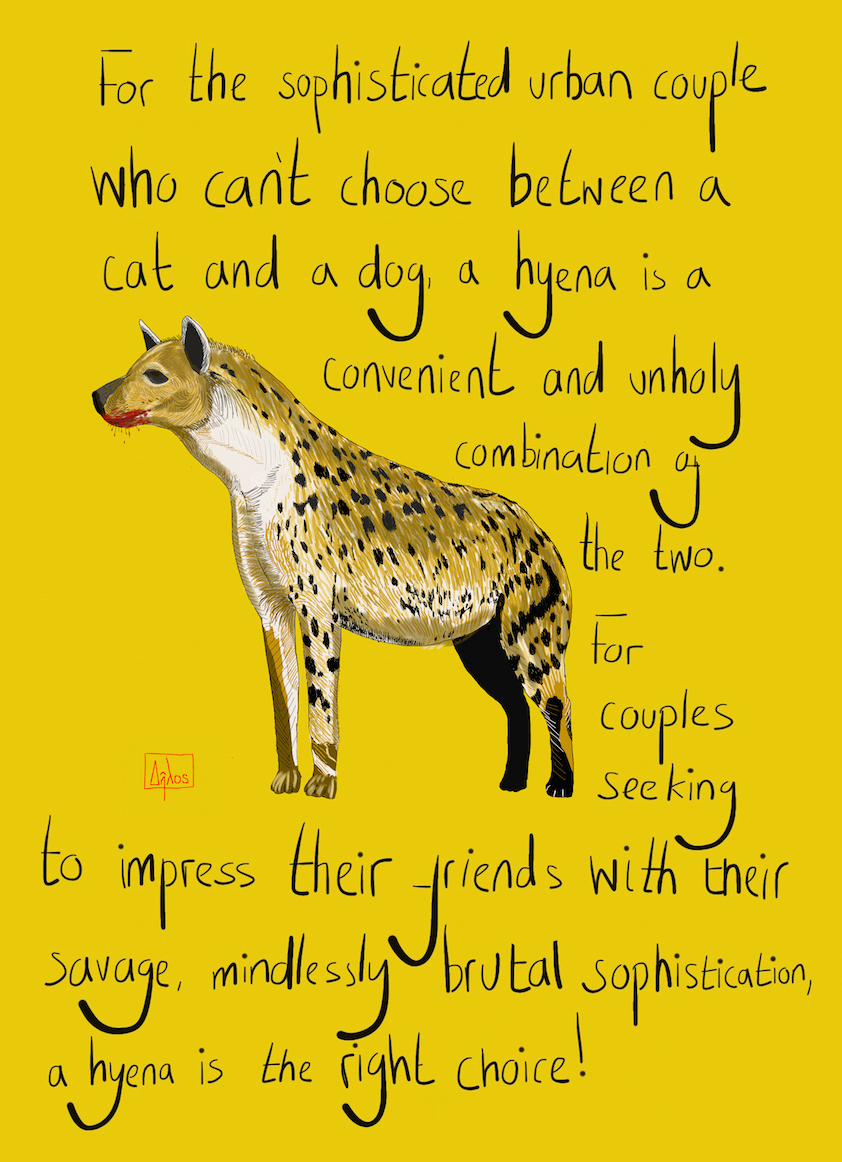
I don’t think I can tell my story in five seconds, but, Robert Clear can. I recently discovered Robert’s stories and pictures. I wanted to show it on Cool Stuff. I think what Robert is doing is amazing and some of his stories are funny. Sometimes, to tell a story, one only needs a few words. I asked Robert how does he do it, and why?
……………………………………
“My name’s Robert Clear and I’m an artist and writer from London. In my work I combine words and images to tell stories, but I impose a special constraint on myself: I aim to tell each story in no more than five seconds. That’s one twelfth of a minute to conjure in the viewer’s mind a world, its characters and a sense of what’s at stake for them. That means a tight economy of words and line and form, a careful balancing of text and image and a sense of rhythm that uses words and pictures as semantic cues and as pure pattern.
Why five seconds? We live in an age where the rest of the world is always at hand, available through the glass screens that connect us to the internet. We have the means to obtain instant gratification, to be entertained always. In this age an artist or writer can expect no more than five seconds of a stranger’s time. Advertisers know this. They craft hooks to sell products that use those precious seconds to leave the viewer wanting more. I decided to use that fragment of time to construe the entire experience; to create something that can be viewed, inwardly digested and (hopefully) enjoyed in five ticks of a clock.
The inspiration for much of my work is London. Perhaps surprisingly, given that it’s a sprawling mass of eight and a half million people, it’s the city’s animals that frequently become my subjects. ‘London Beasts’ is one of my recent series, and animals are the main characters. Each has a particular association with London, whether it be an area, a park or a specific building, and for each I created a story that evoked this connection.
One of the most interesting things about taking my work online has been the chance to interact with others who are interested in art and storytelling. If anyone wants to get in touch, I’d love to hear from you”.
Robert Clear blogs on WordPress. You can click on his name in the first paragraph to reach his blog or click this link:
The Zhangye Danxia is located in the Gansu Province of China. I found these mountains absolutely stunning! Red sandstone and various other mineral deposits ‘paint’ these spectacular series of coloured landscapes, depending on light, and which angle you look from. Watching the video is like watching a series of landscape paintings. Tourist board walks and trails have been built over the land formation, making it easier for visitors to see it up close. The colours of these surreal mountains have been referred to as the Paint Palate of God.
The mountains and surrounding areas covered with red sandstone and conglomerate has intrigued geologists for many years. Six of the Danxia landform sites have been inscribed as part of the World Heritage sites.
Picture by Brian Cassey showing boys fishing in the islands, Manus.
When the Australian government announced it would make Manus Island, Papua New Guinea, as its third island prison for asylum seekers, I was appalled. I had always been on the side of refugees and issues concerning their safety. However, for using this peaceful small group of islands as a prison was something I felt strongly about. The Regional Resettlement Arrangement (RRA) goes further than the Pacific Solution introduced by Julia Gillard in August 2012. It was referred to as the PNG Solution. Mid 2013, Australia announced it will no longer process any refugees arriving by boat.
For me, the Manus decision not only showed a rich and powerful country bailing out of its problems, but using, and forcing a weaker and poorer nation to take on these problems. The decision was against human rights at many levels. I also felt that PNG was still being treated as an Australian state and the PNG government seemed to be too eager and voice-less somewhat, in allowing the asylum seeker policy decision to proceed. The other reason for voicing my concern was that the Manus people were never consulted over accepting the refugees on their land. Given they are tribal people, I was surprised that PNG government had not thoroughly considered this, nor chosen another land, perhaps somewhere on the mainland location for the detention centre. That remains a puzzle – why did PNG government choose Manus? Land is the most important asset in the Melanesian culture. For generations, lives were lost in PNG constantly over land disputes. Further to these concerns, bringing into and pre-settling the refugees would not only have long-term effects on land ownership but it disrupt the Manusians cultural dynamics. I do not mean this in a racist way. Melanesians kill each other over land, regardless of who they are. I believe that Australia is rich enough and has enough place to facilitate genuine refugees seeking asylum.
I had joined demonstrators in Brisbane City. Hundreds of people from all over the world took to Brisbane’s main George street to show their anger and frustrations at the Australian government’s treatment of the refugees and that decision to use Manus as the next prison. As time passed, it seemed that no-one paid any attention to the nation-wide public outcry nor the media reports in both countries. The Australian government’s asylum seeker policy was enforced, with the first group of refugees being moved to Manus Island soon after.
Picture: Wikipedia – The Manus detention centre.
Things have not been going as planned in Manus. Within the confinements, refugees have suffered appalling conditions. Recent media reports showed clashes between refugees and PNG securities resulting in death and now, the latest claims are that the islanders will not accept the refugees to be re-settled in Manus and PNG. Settling into a foreign land is an issue world-wide and there are reasons for people becoming refugees, however, in my opinion, governments have to take more and careful considerations of parties involved, as in the case of Manus Island detention centre. Politicians cannot just sign-off on policies without consultation with the people; the costs are always high for those decisions they make. This part of the post is merely my opinion.
I found two related stories about the Manus asylum-seeker decision which I wish to share. The two articles give different perspectives to this story. There are not too many articles on the views of the Manus people. The Oral history of Manus and the migration of its original people could be another story. The second article shown on a link below was published in the Australian Museum blog a year ago. This story offers a history of the origins of Manus.
Here is the first story. The other is on the link at the end of the post.
A Vlad Sokhin photograph
By Jo Chandler and photographs by Vlad Sokhin on Manus Island
The 60,000 people of Manus province, a remote island outpost of Papua New Guinea, had no say in the decision by Australian and local leaders to detain, process and at least temporarily resettle foreign asylum seekers on their shores.
“We heard about it on the radio,” says Nahau Rooney, a pioneering political leader, former PNG justice minister and Manus’ most famous daughter.
In the 14 months since Australia’s “PNG solution” was brokered, sending asylum seekers trying to reach Australia by boat to Manus for processing and eventual resettlement in PNG, the operation has also sent a tsunami of change crashing through every dimension of island life.
It has delivered a booming economy, jobs and desperately needed services. It has also brought social and environmental damage, deaths, dislocation, disputes and deep anxiety about what will come next. What is certain is that life in Manus will never be the same.
Any day now the first 10 recognised refugees are expected to move out of detention and into the $137m village Australia has built for them in Lorengau, the provincial capital. More refugees are expected to follow each week. Here they will live freely, but many are deeply anxious about how they will be received and fear for their lives.
Manusians are famously welcoming, but some are resentful about the uninvited arrival of these new neighbours; some are nervous and have little information to quell their concerns; and many worry about the strain they will place on the island’s limited jobs and services.
This exclusive investigation for Guardian Australia explores from the ground the consequences, good and ill, of Australia’s asylum seeker policy on the land, sea and people of Manus.
I have been blogging for one year. It was my first blogging birthday today, and I know this because WordPress told me so. Unknowingly, I was also nominated for my fourth blogging award and this time, it was for the Versatile Blogger Award. I was nominated by a versatile blogger herself, the talented and gorgeous Lauren Green. Thank you so much for the nomination Lauren! I am deeply moved that my blog appeals to you and I appreciate the acknowledgment.
The things I like about Lauren’s blog are not only her talents and her creativity, but her openness in conversation, which shows through what she discusses on her blog posts. I immensely enjoyed a recent post which she tales about how she wanted people to remember her, when she had passes on. A very interesting post. Thank you for you nomination Lauren!
I guess I could say that I enjoy being a ‘versatile blogger’ because I can blog about anything, person, object or place, even when my focus is about my culture. My greatest blogging pleasure is in finding a story which I think my readers will enjoy.
The Versatile Blogging Award rules are as follows:
Show the award on your blog.
Thank the person who nominated you.
Share seven facts about yourself.
Nominate 15 blogs (I do read and follow more..)
Link your nominee’s blogs & let them know. You can click on each one mentioned to get to their blogs.
So my seven facts are:
I speak Bukawac as my first language and speak two other languages from Papua New Guinea fluently apart from English, with a little French, Spanish, Cantonese.
My favourite genre of music is World Music. My goal is to go to an international world music festival in the next two years.
I have two sons, 16 and 19 who are amazing people.
I love art, culture and heritage. I am passionate about the Melanesian culture, which I grew up in. I am very lucky and proud to be able to maintain my culture.
I am a Jack of Many Trades and master of most. I am honestly not bragging. When I do something or create something, I can only stop when I have truly mastered it. I have been blamed for being obsessive and I know it works against me sometimes, but I love ‘conquering’ whatever I have set out to do. Isn’t that what life is about?
I have a Bird Of Paradise tattoo on my back. It was a swallow to begin with. The Bird of Paradise is the national pride of Papua New Guinea. The reason I have this tattoo was because, I got sick and tired of being hassled for tattoos in Bali during a trip. One day, I sat down at the shop and said: “DO IT!”. The tattooist was shocked. I showed him a shallow, and told him, “that’s what I want, do it now before I change my mind.” The process hurt like hell as he carved through my flesh. I had to ask for a Gin and tonic or a Scotch to help me through the pain. He thought I had joked so he and his friends laughed and brought me a bottle of coke. The coke did not help, and I don’t drink coke anyway. After two more hours of flesh-carving, he brought a mirror and the Swallow looked like a Bird of Paradise. I was raw and sore but surprised and delighted. I asked him to extend the tail and fixed the wings. It was too late to turn back. The tattoo became the bird I truly wanted, so I guess it was meant to be.
I love being on my own. It helps me create. I enjoy the sound of the birds and I love playing my classical music loudly in the Australian bush. When I get bored with this music, I change it to World Music, mostly African and South American music and I dance.
I also find that with my time alone, nature and meditation, I can focus and ground myself. Then, I am empowered to do the things I love the most.
Betel nut – the fruit of the areca palm, is a nut well-known and used as a cultural practice in Western Pacific Islands.
The green nut. Google Pics.
In Melanesian cultures such as Papua New Guinea and Solomon Islands, betel nut was traditionally shared in gatherings. Betel nut is chewed in India, Vietnam, Thailand and other Asian countries. Vanuatu, Fiji and New Caledonia as well as West Papua and Thursday Islands, are not traditional betel nut chewers or growers. Betel nut is also chewed in Micronesia. In the Melanesian pidgin (PNG Tok Pisin to be exact), betel nut is called buai. The nut is chewed with Daka and Kambang – mustard and lime. Over the years, in PNG, the betel nut has become a commercial product, creating an economic lifeline for many squatter dwellers and low-income earners, including villagers. It has also created havoc and health problems.
My friends having a chew at the opening of my art gallery, Pacific Art Gallery, in Brisbane. Pic: Mari Ellingson, Island Meri Blog
Traditionally, in PNG, the betel nut has a cultural significance and a ritual is followed at gatherings. Perhaps it could be compared to how the Kola nut in used in Africa but in a less formal way.
Both the green and older, orange-skin nuts are chewed when a family receives visitors. They sit together, exchange the nuts and chew the betel nut with mustard and lime. Greetings and stories including family news are exchanged before serious business is discussed. It has been suggested that the origins of chewing betel nut dates back to the Lapita culture when the first Melanesians came to settle.
Like many customs and practices associated with objects, food or places, this buai heritage has changed. Betel nut has become a commercial product in PNG. Medical books record it as a drug and the nut’s commercial trade has even affected the Consumer Price Index. In the last two years, according to the PNG Health Department, diseases associated with chewing has increased in numbers.
Rubbish from betel nut trade, including skin and spit stains created not only health problems but a physical havoc and embarrassment to authorities. Buildings, walk-ways and government property had permanent spat and stained marks all over. These marks often shocked foreign visitors who thought these were blood stains. Controlling sellers and buyers became a nightmare for authorities.
The Port Moresby Governor Powes Parkop declared a ban on the sale of the nuts in Port Moresby City in October 2013. This ban was reinforced in January 2014. The sale and chewing points were re-located to outskirts and villages away from the capital. A task force roamed and confiscated the nuts and arrested sellers and even chewers. The governor said this ban was purely for commercial sellers of betel nut that made the city dirty. The cultural usage was not affected.
The Nut in the Coffin
While the ban had cleaned the city, sellers continued to smuggle the betel nut into the cities to sell. Last year, at a police roadblock, a friend who runs a trucking service recalled a story where betel nut smugglers packed a coffin with the nuts. The smugglers pretended they were a group of mourning highlanders. It was customary for highlanders in PNG to cover in clay or mud when they mourn. The clay-covered smugglers told the police at road-block that they were returning from Gulf Province to Port Moresby City with a body to bury. The police knew this route too well and despite this theatric, the police forced the travellers to open the coffin. Inside the coffin, the ‘dead’ nuts were all confiscated.
Health Effects
Studies have been conducted and doctors have warned excessive use of betel nut causes mouth cancer and even death due to high blood pressure and other related diseases.
Health officials in PNG say 25,000 people die annually from mouth cancer and the figures of oral cancer relating to betel nut chewers is rising amid the controversial ban.
The powerful combo. Lime powder, mustard sticks and betel nut. Google Pics
Chewing the Nut
When you chew the nut with mustard and lime, it creates a chemical reaction which results in a bloody red substance in your mouth. This makes the face and body of the chewer warm and sometimes they would sweat profusely, depending on each individual chewer and how their body reacts to the nut. There are different species of the nut. Some are more bitter and stronger than others. For example, in Markham Valley in Lae, the fleshy meat of the betel nut is quite sweet and you can chew the nut on its own or with lime and mustard without feeling any strong reactions. The Markham nuts are mild compared to other nuts grown in North Solomons Province, the Buka buai as it is known.
Solomon Islands betel nut chewer. Google Pics.
First time chewers have reported being extra alert, a mild feeling of euphoria, quickening heartbeat, high blood pressure and sweating or feeling very warm.
I know betel nut well, having grown up with it all my life – it is part of our culture. Often in large singsing, (cultural dancing) the nuts are strung like beads, coconut oiled and hung like a necklace.
To the nightmare of my mother, who was an educated nurse, I chewed betel nut most of my childhood with my grandmother. It was my late grandmother’s way. My grandmother called it a ‘medicine’. I had my own bag of betel nuts with my lime pot and my mustard supply. My grandmother’s teeth were permanently blackened by betel nut chewing. She believed, it kept the (western) doctor away. I found her words funny because she herself was the traditional doctor. We also planted the trees and grew the mustard to chew. My grandmother and I made lime powder from kina shells. When we had extra, we sold it at the local market. I was lucky to have Colgate and a toothbrush (and my mother) so I have white teeth today. If ever you want to try this, make sure you are with someone who knows how to chew the betel nut very well.








 Tribalmystic Stories