Category Archives: blogging

An Epic Journey of Discovery


Happy Australia Day!

On March 7th, 1979, a week before I turned 14, I heard at school and on the news that a famous explorer named Michael James (Mich) Leahy had died. This man took an epic journey into the undiscovered, and untamed central highlands of British New Guinea in 1930s. I was in year nine at Busu High School, Lae, Papua New Guinea. During that time, I had been searching for my father and I already knew I was a child of the Leahy family. None of the information about the Leahys including those of the famous explorer were told to me. I was a very inquisitive child with many resources available and many people I could ask. However, only very few of my mother’s family members were responsive. At an early age, I knew that in order to find my father, I had to get my own information and do my own research. I became anxious as I grew older and was faced with the charges of other cruel children. They would constantly question who I was, my life, my father, my colour, and why I was ‘different’. Up until that point, all the information to do with my heritage was bundled into one big secret, kept by my mother. To get the information, I conducted a secret investigation of my own.

And, that was how I knew, the famous explorer who died was my father’s father. On that day, reading the news, I knew I would never meet my grandfather. It was a moment of surrealism, one I could not share with anyone. It felt strange to be paralysed by the thought of losing something great, that I never had. I did not speak about the death with anyone. As days went by, my fears were suppressed by my curiosity. Wherever I went and whoever I spoke to, I continued my research for every information I could get about my father. (Read more when I publish my memoir.)

fig19 Mich Leahy
Mich Leahy

My final Australian story tonight is about Australian Michael Leahy, the first white man to enter the central highlands of Papua New Guinea with his three brothers. This is a long story, however, this post will be brief, and I will give you as many links as I can for you to read more about Mick Leahy.

Born in Toowoomba on February 26, 1901, fourth child of nine to Daniel and Ellen Leahy, an Irish migrant family, Mick completed his education at Christian Brothers College, Toowoomba. His first job was as a railway clerk, but, his entrepreneurial spirit drove him to leave and become a freelance wood-cutter. When the news of the gold rush in Eddie Creek, New Guinea, in 1926 reached him, Mick was driving a lorry. He had stopped the truck and the story was that, he jumped on the first ship to Port Moresby. His three brothers, Paddy, James and Dan joined him later. His brother Tom remained in Toowoomba.

In the same year Mich was born, June of 1926 the Permanent Mandates of the League of nation met in Geneva to discuss Australia’s takeover of New Guinea. It was noted that the total area of New Guinea was 16,000 square miles. This was only one sixth of the actual total area and the reason being, the rest of New Guinea was unexplored and unknown.

Mich started his gold prospecting; mostly down along the Bulolo and near and around areas close to the Eddie Creek. During his prospecting years in New Guinea, Mich became ill with Malaria and nearly lost his life. He took a construction job and stayed out of the bush until 1930.
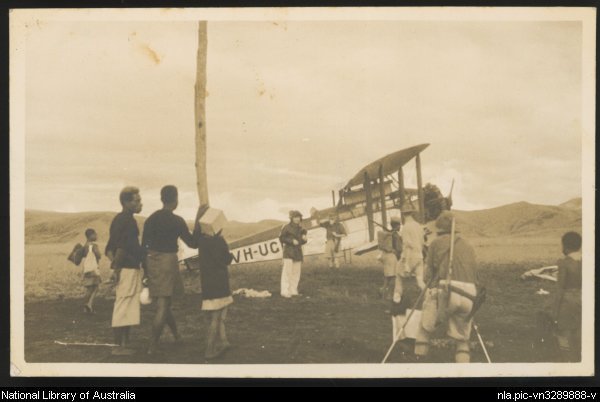
Michael_Lahey_Mt_Hagen_expedition
http://www.nla.gov.au/apps/cdview?pi=nla.pic-vn3289888 Mich with his back to the camera is making a movie of the plane Canberra being prepared for surveying expedition into the highlands. Ken and Irish Spinks collection at National Library of Australia photos.

He returned with Mick Dwyer and walked across parts of interior New Guinea. Their main aim was to prospect for gold. However, as they approached some parts of the interior, they discovered that they were the first white men to be seen by the natives of the area. The natives of the interior could not communicate readily and many reacted as if the Mich and Dywer were ghosts or spirits. They had brought workmen from the coast, and some could speak and translate in pidgin. Mich and Dwyer had  been warned the inland area was unpopulated with no Australian government administration and it was very dangerous. They were told that they could lose their lives. This did not deter Mich’s passion for prospecting and his inquisitiveness to see inland New Guinea. Mich had not wanted to take his brother Dan, the youngest, because he felt, Dan was not ready. Both Mich and Dywer kept personal diaries, notes, and they took photographs of their expedition. In the first part of the Epic journey, Mich and Dywer crossed the Purari/Gulf of Papua which began his taste to return and walk deeper into the highlands of New Guinea.  In his book, The Land That Time Forgot, Mich Leahy wrote that in their first expedition, on the foot of the hills before him and Dwyer entered the highlands, one of the missionary workers tried to scare Ewunga, Mich’s boss-boy in pidgin.  Mich more or less wrote it in his version of Pidgin-English:

“Moun-tain ee big fella more. No got road, Kanaka long hap, man belong fight true. Allee can killum you fella, now kai-kai.”

(Translation – the mountains are bigger, there is no road and the natives are fearful warriors. They can kill and eat you.”)

To which the fearless Ewunga replied: “No can! Kanaka something nothing. Suppose allee like fight, me fella can tryum.”

Translation: (“No, they cannot! Natives are nothing. If they want to fight, we can all try.”) Mich was really glad that Ewunga was fearless.
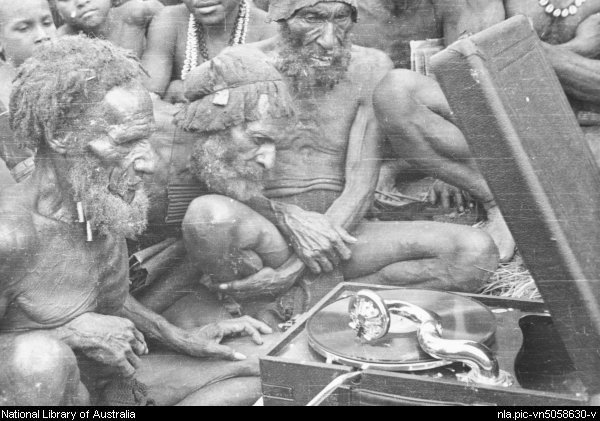
nla.pic-vn5058630-v
Leahy, Michael J., 1901-1979. Papuans looking at first gramaphone, Mount Hagen, Papua New Guinea, 1933 PPIc: National Library of Australia.

Mick and his brother Danny were leaders of the next and the 1933 expedition that opened up the Wahgi Valley of the Western Highlands and this was where Danny would eventually settle. From what he had written, I believe, Mich loved the Waghi Valley and the Western Highlands the most. He admired the architecture of the houses, the adornment and dress of the people. he also thought the people were intelligent and warm.

“The landscaping and the sing sing (dancing) grounds resembled that of the upper Waghi and we were continually admiring their beauty and arrangement. I was invited to enter one of the ceremonial houses and found them to a well-made, circular grass house, with a roof ten feet high, divided into five compartments, one of them being a sort of hallway down the centre.” Leahy, The Land That Time Forgot”, p.218.

Mich’s gold prospecting adventures turned out to be one epic journey which has gone into the history books of both Australia and Papua New Guinea. A trilogy of the Leahys’ story can be purchased from ABC stores. There are previews on YouTube. I have posted a link to the Australian Screen.

http://aso.gov.au/titles/documentaries/first-contact/notes/

http://aso.gov.au/titles/documentaries/first-contact/clip1/

http://www.der.org/films/first-contact.html

The Central Highlands of New Guinea. Royal Geographical Society: London. (pp. 229–262 in the Geographical Journal
A Digital Master Attuned to Healing


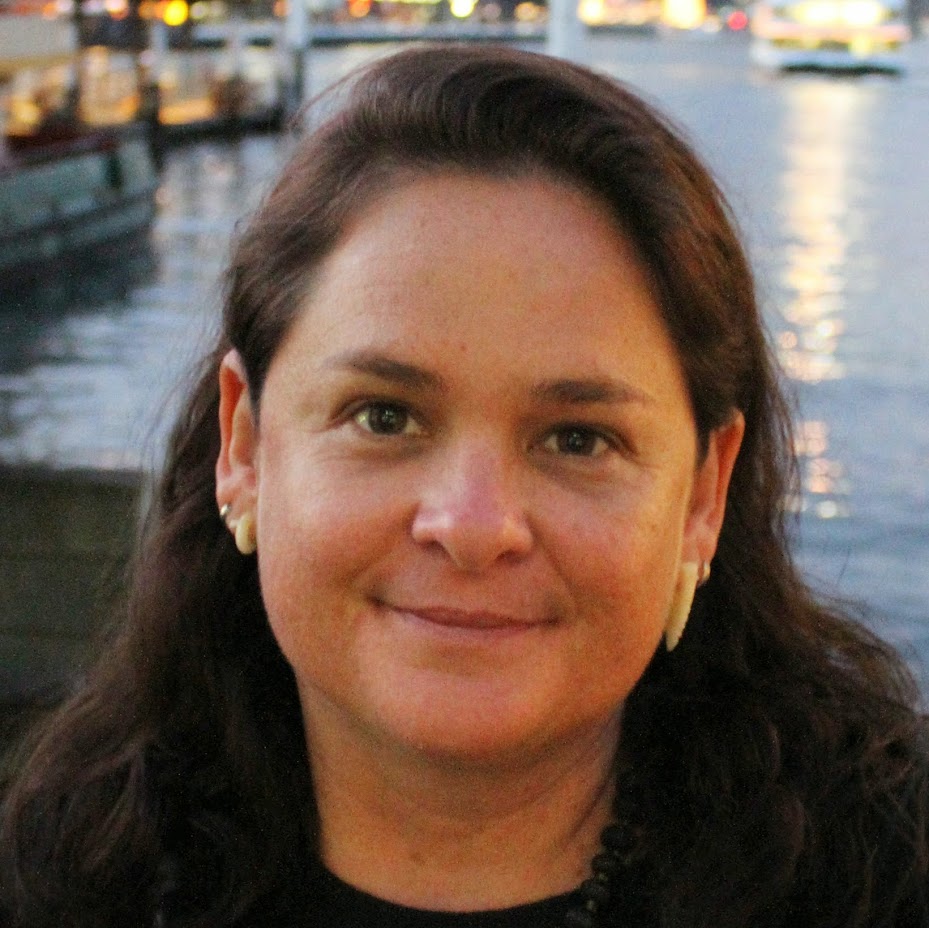
jenny-fraser
Jenny Fraser

My next story to celebrate Australia Day is about an exceptional woman. She is an artist, an advocate for the rights of the aboriginal people and also a very clever curator. Recently, Jenny Fraser has decided to move from making art and digital films into traditional and natural healing.

I first met Jenny in Bundaberg during my curatorial project “Pacific Storms Contemporary Art Exhibition“.

Jenny Fraser is a digital native working within a fluid screen-based practice. Because of the diverse creative media Fraser uses, much of her work defies categorization, taking iconic and everyday symbols of Australian life and places them into a context that questions the values they represent. With a laconic sense of humour she picks away at the fabric of our society, exposing contradictions, absurdities, and denial. Her practice has also been partly defined through a strong commitment to Artist / Curating as an act of sovereignty and emancipation.

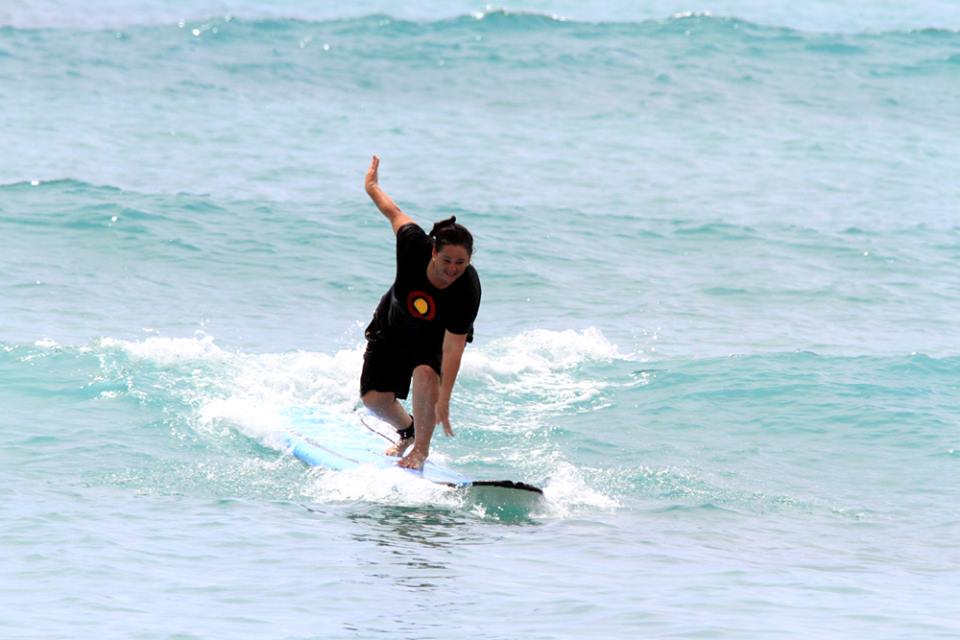
unnamed Jenny on surf board
On the waves, Jenny Fraser

A Murri, she was born in Mareeba, Far North Queensland in 1971 and her old people originally hailed from Yugambeh Country in the Gold Coast Hinterland on the South East Queensland / Northern New South Wales border. She has completed a Master of Indigenous Wellbeing at Southern Cross University in Lismore, New South Wales and is currently completing a PhD in the Art of Aboriginal healing and Decolonisation at Batchelor Institute in the Northern Territory. Jenny is the eldest of three girls.

Jenny spent her early years with one of her sisters, driving across Australia. This is where she learnt to be comfortable with the lifestyle, be that in the Australian bush, city or by the ocean.

“I have always known that I would be an artist. Although I am a trained Art / Film and Media Educator, I resigned from that in 2000. The artists lifestyle suits me much better.”

As a child, Jenny had a keen interest in many cultural approaches towards different lifestyle choices, practising and maintaining traditional knowledges, and relaxation techniques.

The curator’s transition into Natural medicine was a defining moment for her when she was making films and speaking with some of the healers in natural medicine. Jenny felt that was something that greatly interested her, she had only realised it when she spent more time with the people in that natural medicine.

“This awareness became more solid for me, when I worked on some films and witnessed the way people work so hard in that industry, which often drives them to sickness. But some have learnt from the hard work and have opened their own businesses in Natural medicine instead”.

Jenny is also a spearhead for Aboriginal Media Arts, founding cyberTribe online Gallery in 1999 and the Blackout Collective in 2002. More recently she was the first Aboriginal Curator to present a Triennial exhibition in Australia: ‘the other APT’ coinciding and responding to the Asia Pacific Triennial which was then accepted for inclusion into the 2008 Biennale of Sydney.

She has travelled extensively and completed residency programs from remote communities in Queensland and the Northern Territory to the Rocky Mountains in Canada and also Raw Space and New Flames in Brisbane.

The best way to see some of Jenny’s work is to click on some of the links below:

http://www.cybertribe.culture2.org/jennyfraser/

From a Fisherman to a Wallaby


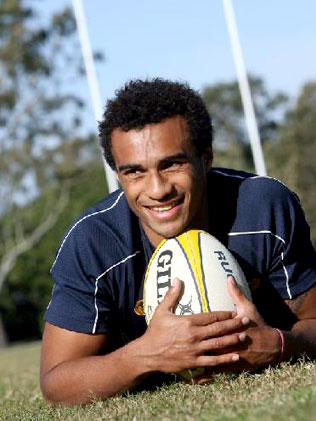
688342-will-genia fishing
Will (right) returning home with a catch in Port Moresby. Pic: Courier Mail.

Australia is known world-wide for its achievements in both rugby league and rugby union. Today, for Australian stories, I would like to share a story about a rugby union legend. This story is also about a fisherman who became a Wallaby. If you don’t know what a wallaby is, it is an Australian marsupial from the same family as a Kangaroo. If you play for the Australian national rugby team, you are also called a wallaby.  This story began in Papua New Guinea and ended in Australia, and  it has now connected the two countries proudly.

The Will of Power

When he was growing up, Sanchez, William Genia (Will) was not driven to play sports nor did he like one particular sport. Like a typical coastal PNG child, Will spent weekends and free time fishing, to catch food. He and his brother and cousins would go to their village down the coast to fish. On Saturdays, Will had told Courier Mail, the family gathered and worshipped in the village church.The children played a little cricket after church in the backyard. Will idolised Australian cricketer, Steve Waugh.

Will’s mother was the assistant governor at the Bank of PNG and his father was a cabinet minister 2011.  At the age of 12, Will’s family decided to send him and his brother down to Brisbane, Australia for schooling and this was when he was introduced to rugby. Will told Courier Mail, he realised for the first time, this was going to be a completely new life and away from his large family, back in Port Moresby. His brother had already spent two years in Canberra so he was happy to be in Brisbane. That first day, Will went to his brother’s room and cried in bed. His brother was not impressed. In Brisbane Boys College, his new sport consumed his new life and soon he went from playing school rugby to being recruited into club rugby by the Queensland Reds in 2006. He played his first Super 14 at 19-years-old. He played in scrum-half position.

440648-will-genia wallaby
New Wallaby … a proud-as-peach Will Genia poses for the cameras. Photograph: Nathan Richter

In 2009 Will was selected to play for Australia and became the second PNG-born Wallaby, at the age of 21. (The first was Graeme Bond). And, on this day, funny enough, he could not ring to tell his parents because his mother Elizabeth was overseas, and his father Kilroy Genia was down the coast fishing.

Will has had many outstanding professional rugby achievements, amongst playing for Junior World Cup, being selected into Wallabies in 2009, Captaining the Reds, winning the player of the year several times, winning People’s Choice, winning the Pilecki Medal twice and was voted the Australian Super Rugby Player of the Year by Australian rugby writers.

073783-will-genia

The All-Blacks half-back Justine Marshall in 2013 described Will as being the best player in the world for his position. Others players, both retired and current players have said Will is currently the best half back rugby union player in the world. Finally, Will was nominated the Ambassador for the Kokoda Track Foundation. The Kokoda Trail is a famous historical site which united Australia and PNG through the history of war. This will be another post.

………………………………………………..

*Here is a piece of an interview from the Melbourne Herald Sun which I found amusing. I do know Will and his family personally and I am very proud of him. Will is a son of both Australia and PNG.

SANCHEZ Genia, best known by his middle name Will, has become one of Queensland sport’s most enchanting success stories. The Papua-New Guinea-raised son of a senior government minister has surged through the rugby ranks to be Wallaby halfback.

Q: Sanchez Genia. Great name, but you have kept it pretty quiet.
A: The boys here are the only ones who call me Sanchez because they are probably the only ones who know about it. When I made my first trip to South Africa they got my passport and said “who’s Sanchez?” It all started from there.

Q: Who were you named after?
A: My dad’s older brother, who was heavily involved in raising us as kids, had a favourite boxer who was Mexican and his name was (Salvador) Sanchez. My dad did not want to call me Sanchez but he had a lot of respect for his older brother so he said “you can name him”. I never really liked Sanchez because as a kid I was teased and they called me Sandshoes. They’d say “you don’t look like a Sanchez” and I’d say “OK, call me Will”.

Q: Sanchez Genia has a real ring to it and great marketing potential, don’t you agree?
A: It is definitely something you would not forget: a little dark kid from Papua New Guinea named Sanchez. The boys reckon I should use it because it is cool, but I am not going back to it.

Will+Genia+Australia+v+New+Zealand+Rugby+Championship+l40vXfRXBwml

http://www.couriermail.com.au/sport/rugby/where-theres-a-will-theres-a-way/story-fn8t7efs-1226274739546

http://www.zimbio.com/pictures/vga_dNAUjvX/Australia+v+New+Zealand+Rugby+Championship/l40vXfRXBwm/Will+Genia

http://www.heraldsun.com.au/news/where-theres-a-will-theres-a-way/story-e6frf7jo-1226274739546

A Diary to Remember


I had kept diaries in the past. Over the years, some have been lost by accident, or the diaries were deliberately destroyed under difficult circumstances. With the digital age, I keep notes on my phone, a tablet or a laptop. Some of these notes often do not make sense after a while but sometimes I find some little gems I could use in my stories or important information I need to keep. There are websites you can write a diary on these days. In my search to find Australian stories to celebrate Australia Day, I found a story about another fascinating historical character. Ethel Turner was an Edwardian woman and writer who kept diaries for 62 years. She later wrote for the Sydney newspaper and eventually published books.  I believe that maintaining a habit of writing consistently, sometimes with meaningless notes, apart from writing for the love of it, has made it natural for Ethel to progress into a published writer. Ethel’s diary entries which seemed vain and meaningless at that time of entry, also later became part of history.  In addition, Ethel’s grand-daughter Philippa Poole was able to bring together and use these valuable entries as threads for all her grandmother’s writings.

Here is a review on The Diaries of Ethel Turner & Seven Little Australians” found on a blog called, Tell Me a Story.

ethel_turner

For 62 years, Ethel Turner kept a diary. Ethel’s diary entries which begin in 1889 at aged 17 were only a simple record of each day of shopping, tennis and picnics, garden parties and balls.

“This morning I made myself a black lace hat. Idled in afternoon. At night went to Articled Clerks dance and wore my white liberty again, this time with crimson flowers and snowdrops. M.Backhouse asked me for a dance and then did not account for it. I shall never notice him again. He was a bit intoxicated last night, I think, it is pity, he might be a very nice boy. I’m awfully sorry for him.”

If the endless round of social gaiety was enough for most girls Ethel and her sister Lilian had other ideas. Having gained experience editing their school magazine, in 1889 they launched their own monthly publication called the Parthenon which would have considerable success during the next three years. Her love of literature and writing becomes more noticeable in the diary entries as she records the books she buys and reads…

” I read the loveliest book or part of it after 11pm last night Not All In Vain by Ada Cambridge – I think I like better than any book I have read.’

She began writing stories, poems and articles for a Sydney newspaper, recognising that she had a talent that could earn her money and help her gain independence.

seven little australians

In 1894 Seven Little Australians was accepted for publication.

Set in Sydney in the 1880’s it tells the story of the seven children of a very authoritarian father and a flighty stepmother. By informing her young readers at the beginning that they are about to hear the tale of ‘very naughty children’ Ethel Turner immediately grasps their interest.

She was also ahead of her time with her writing by capturing a warm relationship between parents and children and by going against the ‘happy ever after’ ending. This is a story of fun, adventure and a tear-jerking tragedy.

Despite warnings that marriage would mean the end of her writing career , in 1896 Ethel married her long-time suitor Herbert Curlewis and bore two children, Jean and Adrian early in the new century.
She continued to write prolifically – more than 40 novels, short stories and poems for children.

In 1928 her beloved daughter was diagnosed with tuberculosis and after a prolonged illness died in 1930. Ethel was heartbroken and never wrote again.

Ethel Turner died in 1958.

http://cat-bookmagic.blogspot.com.au/2014/11/the-diaries-of-ethel-turner-seven.html

The Voice of an Enigma


I have been a fan of my next Australian story for many years. Gurrumul Yunupingu has a magical voice and one that always reduces me to tears. He has a beautiful story as told by the ABC Stories. Please click on the link at the end of the post to watch a documentary about this amazing Australian’s life.

Briefly, Geoffrey Gurrumul Yunupingu has eluded the media since becoming a household name. The enigmatic blind Aboriginal musician first came to attention when he released his eponymous first album in 2008 to international acclaim.

Sung in the Yolnu dialect of Arnhem land, Gurrumul’s music transcends cultural boundaries and touches listeners in the UK and Europe as much as it does in Australia.
Yet despite the accolades and awards, Gurrumul has resolutely refused to do media interviews or provide any clues to journalists about his background or motivations; to both the chagrin and respect of the people responsible for his success.
For the first time, in 2010, Australian Story presented an intimate profile featuring behind the scenes footage of Gurrumul shot by filmmaker Naina Sen, combined with interviews from his family and unofficial spokesperson Michael Hohnen. Watch the film on the link below.

http://www.abc.net.au/austory/specials/yourevoice/default.htm

Thank you ABC Stories.

Nature Inspired Talent


http://youtu.be/Z_IRzKqmj5Q

The Australia Day will be next Monday, January 26, and I would like share a few Australians that have extraordinary stories and make me and the country proud. There many Australians I am proud of. It would even be impossible to fit them all into my blog in the 1000 posts I had promised in September. However, given the limited time between now and the actual day, I will share only a few stories. I would like to start with someone my sons and I admire for his musical talent, his love for his culture and nature. It is a little like me, except, my musical talent appears when there is no audience and I have had a few wines.

On a serious note, please ask Abung (Google) to help find Xavier Rudd and listen to many of his beautiful songs. I am sure many of you will know him. He is a one-man band and plays most of the instruments himself. His life as a nature activist makes me particularly proud and this is his story from The Nature Conservancy

Xavier Rudd
Hometown: Bells Beach, Australia
Day Gig: Environmental Activist, Surfer
Night Gig: Internationally Acclaimed Singer Songwriter and Didgeredoo Master
Environmental Concern: Oceans

Singer-songwriter, musician, activist and surfer Xavier Rudd is considered to be an iconic voice in Australian music. Using a range of instruments, including guitars, yidakis (also known as didgeridoos), stomp box and percussion, Rudd has become known for marrying uplifting music with thought-provoking lyrics.

Since his first studio album, To Let, debuted in 2002, Rudd has earned a reputation as a strong mult-instrumentalist who writes, sings and plays from the heart. Solace, his second album, was recorded in Vancouver with friend and producer Todd Simko. It debuted in 2004 in the top 20 of the ARIA charts and three of its songs were voted into triple j’s annual Hottest 100. It was followed with the ARIA-nominated albums, Food In The Belly and White Moth. In 2008, the gritty, dark and dynamic Dark Shades Of Blue redefined Rudd as a lapsteel player and lyricist. His sixth album, Koonyum Sun, was recorded as “Xavier Rudd And Izintaba,” and featured a collaboration with bassist Tio Moloantoa and percussionist Andile Nqubezelo.

In 2012, Rudd released Spirit Bird. His seventh studio-recorded album, Spirit Bird debuted at #2 on the ARIA album chart, and has earned critical acclaim as well as a 2012 Australian Independent Record Labels Association Awards nomination for Best Independent Blues And Roots Album.

As a review in the Seattle Post Intelligencer notes: “over the course of his career [Rudd] has evolved from being the accompaniment for surfers and late night beach parties (not only were some of his songs featured in the movie Surfer Dude, he wrote parts of the movie’s score) with an environmental conscience to singing about having a spiritual bond with the planet and the compassion required to create it… he gives us his vision of the potential for a better world.”


Cool Stuff: Art Made from Lottery Tickets


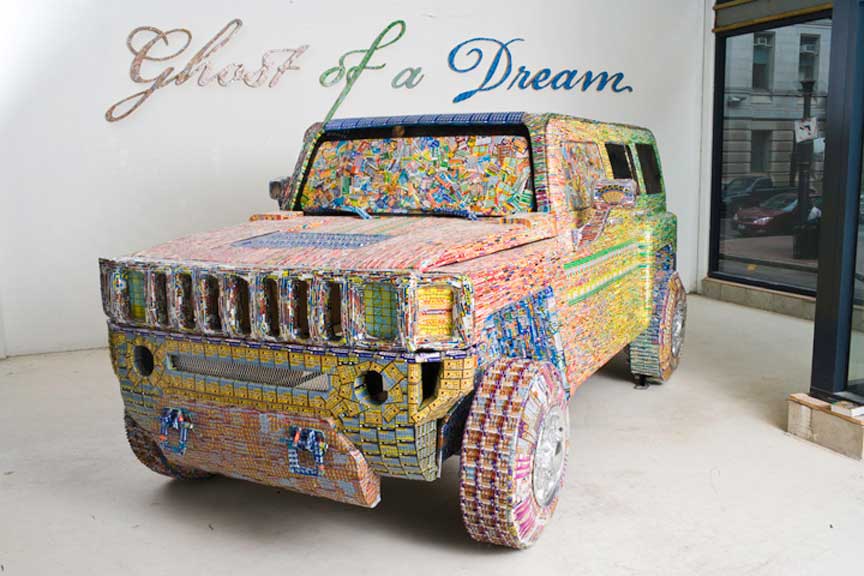
Discarded-Lottery-Tickets-Turned-Into-Extravagant-Items-By-Adam-Eckstrom-and-Lauren-Was-Ghost-Of-A-Dream-44
Dream ride 5,6,7 2010 discarded chinese and us lottery tickets, wood and plexiglass 44″ x 78″ x 190″

Ghost of a Dream

A sculpture and installation dream car

If only I had kept all my lottery tickets that did not win, I could have made myself a car or a piece of art. Please don’t laugh, I’m serious. Look at these babies. They made it into the Cool Stuff on my blog. For those of you that are new to the blog, every now and then, I post something I think is really cool. It can be a piece of furniture or art. These exquisite sculpture and installations were created by Adam Eckstrom and Lauren Was. For more of their work, click on the link at the end of the post.

ghostofadreamback
Rear view of Dream Car
dreamcar
Dream Car 2008 $39,000 worth of discarded lottery tickets, cardboard, cast plastic, wood, steel, and mirror

http://www.ghostofadream.com/info.html

Born to Sing


I love World Music and have always found the South African music very lifting. Recently, I discovered the music of Peki Emelia Nothembi Mkhwebane from South Africa. She is an award-winning Ndebele musician. Her singing, dancing and dressing embraced a multifaceted picture of the culture of the Ndebele in South Africa. The origins of the Ndebele tribe are not known, although they are generally recognised as forming part of the Nguni tribes of Southern Africa. Nothembi has travelled the world with her beautiful music. It is the right moment for me to share a beautiful thing (her music) with you because I have to return to work tomorrow.

Profile of Peki Emelia “Nothembi” Mkhwebane

Peki Emelia “Nothembi” Mkhwebane was born in Carolina in Mpumalanga on 1 January 1953. Orphaned at the age of five, she was raised by her grandparents who could not afford her formal education. Most of her early life was spent looking after her grandfather’s cattle and sheep – their limited means of livelihood at that time. It was no mean task for a girl.

Mkhwebane’s family loved music and nurtured her first love for Ndebele songs. Her grandmother taught her to play a reed flute, while her sister exposed her to isikumero. Her uncle taught her to play a home-made guitar. In this hub of Ndebele music and culture, Mkhwebane learned a lot about the richness of her culture and later started a musical group called “Izelamani zako Nomazilyana”, which performed at cultural gatherings and weddings.

With time, she bought a keyboard and guitar to compose songs, which she recorded. Despite her burgeoning achievements, she still struggled to find a recording company, particularly as one of the major snags was her illiteracy, which proved to be a hindrance in securing proceeds from the recording breakthroughs.

Never one to despair, and propelled by her passion and talent, Mkhwebane subsequently defeated most of these obstacles to become a world-renowned, prolific singer and performer of Ndebele music. She has travelled extensively abroad, performing in countries such as the United States of America (USA), Austria, Germany, Portugal, Australia and France. In 1988, she performed in New York and London and received an award for the Best Ndebele Song.

(Information courtesy of The Presidency)

Life at the top 1%


The One Percent“, a documentary showing the top one percent of wealth owners in United States made by Jamie Johnson.  As Jamie explained, the film aimed to question the equality of wealth sharing and the social class which continues to widen the gap between the rich and the poor. Jamie is the heir of the Johnson & Johnson pharmacy chain.

Thank you Almah Taria for sharing this film with me.

Rate of environmental degradation puts life on Earth at risk, say scientists


While suffering in the heat in Brisbane, Australia, the past 48 hours, I have been re-thinking the whole debate about climate change and how little is being done by our leaders. It seems to me that many of us are just happy in our little pockets of the world, as long as we feel comfortable and climate change issues do not affect us. Scientists are telling us in more studies that things are getting serious. We are seeing more physical destructions such as violent storms, long periods of drought, very high temperatures, all happening right before our eyes. Reuters reported climate migration numbers are increasing at an alarming rate across Asia and India. In the Pacific Islands, people from small, low-lying islands low-lying countries are also migrating.  So, in the big picture, we know MORE about our own destructions to this planet than we have ever before. The media even reminds us what we are doing, daily. Why are we not reacting?

2014 was the hottest year ever recorded. These figures finally challenged the climate skeptics. Is that alone, not scary enough? Does it not mean anything to us? Do we care and as humans, does it matter that we only have ONE planet to live on? I wanted to pick up this topic again and share this Guardian article about how we have accelerated the rate of our destruction to our planet. Please read and share the link below.

Humans are ‘eating away at our own life support systems’ at a rate unseen in the past 10,000 years, two new research papers say.

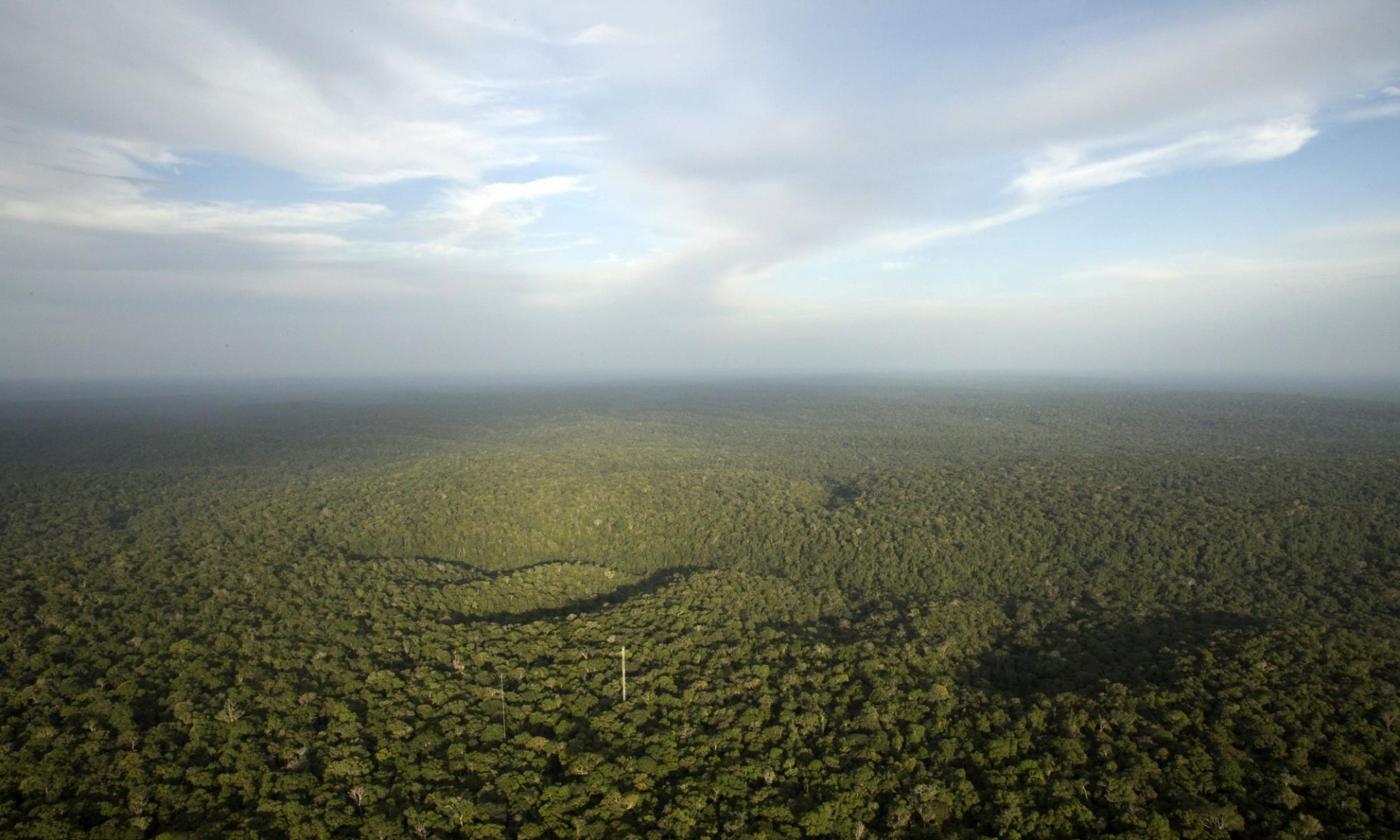
2000
The view from the Amazon Tall Tower Observatory in the middle of the Amazon forest. Researchers say that of the nine processes needed to sustain life on Earth, four have exceeded “safe” levels. Photograph: Reuters

Humans are “eating away at our own life support systems” at a rate unseen in the past 10,000 years by degrading land and freshwater systems, emitting greenhouse gases and releasing vast amounts of agricultural chemicals into the environment, new research has found.

Two major new studies by an international team of researchers have pinpointed the key factors that ensure a livable planet for humans, with stark results.

Of nine worldwide processes that underpin life on Earth, four have exceeded “safe” levels – human-driven climate change, loss of biosphere integrity, land system change and the high level of phosphorus and nitrogen flowing into the oceans due to fertiliser use.

Environmental authorities probe central China pollution
View of aluminium-polluted water, which flows into the Yuanjiang River, in Taoyuan county, Changde city, central China’s Hunan province, 19 November 2014. Photograph: Imaginechina/Corbis

Researchers spent five years identifying these core components of a planet suitable for human life, using the long-term average state of each measure to provide a baseline for the analysis.

They found that the changes of the last 60 years are unprecedented in the previous 10,000 years, a period in which the world has had a relatively stable climate and human civilisation has advanced significantly.

Carbon dioxide levels, at 395.5 parts per million, are at historic highs, while loss of biosphere integrity is resulting in species becoming extinct at a rate more than 100 times faster than the previous norm.

Read more here:

http://www.theguardian.com/environment/2015/jan/15/rate-of-environmental-degradation-puts-life-on-earth-at-risk-say-scientists#img-1