Viola flung the rest of her stale drink into the garden and carelessly dropped her glass on the day table. She turned and watched the remaining yoke of the sun slide away and as quickly, the darkness enveloped her. The evening breeze caressed her, nudging her silk cream blouse under her full breasts. Her navy linen pants hung loosely about her short fat legs. It felt weird but nice. No-one has touched her for so long. She made no attempt to rejoin her guests inside. The time had crawled to 6:30pm, when the automated sprinklers were due to start spitting. She paced the verandah to check if the entire irrigation system had come on to water her beloved garden. Her mind went back to events earlier.
Nora had asked her if she was all right – the stupid girl. Viola felt anger rising in her like bile, but swallowed it, only responding with “good”. For years, she had been telling her friend about how ‘he’ had treated her. Nora knew. Just like she had, Viola gritted her teeth and told Nora everything was good.
To Viola, “good” was a great word. When people ask how she was, she would reply on a reflex, “good”. According to Viola, the word good was so vague and final that anyone who asked could not ask any other questions. They left her alone. The word ‘good’, Viola thought, had protected her all these years. Kept her safe from the pity and concern that exhausted her so. Viola hesitated, as she paused and put the lights back on. They instantly flooded the lush bushes enclosing two carports and her guests’ extra two cars parked next to her black BMW and his silver Nissan 280Z. He would catch the $150 cab ride home tonight. She felt glad, she was not picking him up from Brisbane airport.
Over the years, she had kept all her feelings deep inside her, in the smallest pocket of her heart, layered with obligations and responsibilities as the daughter, mother and wife. But tonight, she was going to tell him everything when he came home. She would tell him she has had enough. She began thinking of her plan. Letting the scenario play out, she strolled back to the front of the house. Viola noticed at the end of the verandah that the sprinkler at her rose garden, nearest to her neighbours was off. Without thinking, she stepped bare feet onto the dying lawn and walked straight across towards the dark shadows to turn the sprinkler on. The light switch was near the tennis courts.
To read part one, see my earlier post and for more – visit my Wattpad:
In the mirror this morning, the stranger looked back at me . It took her one week to take my body. Her hair, smile and the colour of her eyes were familiar. It was the shape of her face that was different, disfigured and daunting, creating her new identity and making her who she was. This woman looked 20 years older. Saggy eye bags, and burning and bulging red patches on her forehead from the illness that had engulfed her body and giving her the extra years on her face.
I stepped away from the mirror, afraid. I took my bag, car keys and left the house. It was 6am.
I got in and took the wheels of the Honda, staring at my swollen, bluish red fingers trying to bend over the steering and grip tight. It was painful. The auto-steering had a mind of its own and often spun back. My joints were not co-operating. Discomfort and unco-operative joints was something I had envisaged later in life, not today. I did not want to look at the rear vision mirror as I reversed. I did not want to face the stranger again. I forced myself to ignore the pain and itch in my deteriorating body. The fever stood tall. I was glad my feet could work at the pedals better than my fingers. This, gave me some comfort and reassured me, I could still drive in my condition. I needed to get to the doctor quickly. The medication my Gp had prescribed seemed to have failed and my health worsen in the past three days. Last night, I thought I would die with the high temperatures of summer, fighting against the rising temperature of my body.
After ten minutes of driving, I had to slow down because the saggy tired eyes wanted so badly to sleep. I stayed on low gears and concentrated until I arrived at the shops. I parked and took a cab into the city to see the doctor. The cab driver looked at me suspiciously. His eyes went from the large red patches on my arm and elbows to my neck and forehead. I wondered what went through his mind. I was too sick to care.
“Can you take me to Wickham Terrace?”
“Yes”. He forced a smile and I tried one, knowing, my smile would have been ugly.
I stepped into the cab and when I gave him the doctor’s address at Wickham Terrace in Brisbane City, he muttered something and drove off. It must have been the face of the stranger from the mirror that got to him. Usually, the cab drivers liked to have a conversation with me during the course of my cab-journeys.
I shut my eyes and slept until the cab stopped. I paid the driver and made my way to the specialist doctor. Everyone at the foot of the lift stared. Could it be that bad? I wondered. This tower houses many doctors. I was sure, I was not the first weirdo to appear on the scene. Several floors upstairs, I saw an opened door and asked the receptionist if I could stay; I had come one hour early to see my doctor. Secretly, I also needed the cool air-conditioning. My skin was burning like fire although it was only 7:15am and the air was cool. The receptionist smiled kindly and said it was OK. I sat down on the comfortable chairs and closed my eyes, relieved. My mind drifted to my girlfriend Marina. Yesterday, Marina heard my voice on the phone and came to get me.
“You don’t sound good, but you have to come with me”.
“OK” I gave in.
When she had arrived at my house, she was shocked at how I looked. I told her that I had been ill, but it seemed to have gone longer than usual. She told me there was more to it and it was best to swim in the ocean. She believed salt water was the cure. So, we packed our change, some food I left the sick-bed I had been in for a few days. We drove an hour away to Bribie Island.I had joked to Marina that once I completely surrender my whole body to the disease, perhaps it would leave me alone. I would get better. The swelling started on my back and everyday, it the symptoms had moved up and over my head. Yesterday, after day six, the burning swells starting coming down on my forehead and neck.
The saltwater was amazing. It was good to feel the force of the waves hitting against me and the salt stinging me. The healing was working. I soon forgot how sick I was as I played with the waves and swam like a fish again.
After our swim, we ate crab, fresh cucumber and drank hot tea with lemon and honey. Then, we spotted two black cockatoos and Marina, who is half Chinese and Papua New Guinean told me it was a good omen. She insisted we drive to a news agency and buy lottery tickets, so we did. At the same time, the Specialist doctor had called me back and said I could come in this morning instead of January 15. It was a good omen.
A knock on the surgery door forced me to open my eyes. My doctor’s receptionist had arrived. She popped her head in next door.
“The lady is not mine, she is yours”, the first receptionist said.
“Oh”, responded in hesitation.
I laughed and said, I had an appointment with the skin allergist.
Soon, she ushered me into the surgery and the allergist arrived. Two patients went in for fifteen minute consultation each and then he called for me. The allergist looked me over and asked me if I was alright.
“No”, I said. He would not know the difference between the stranger and I because this doctor had never seen me before.
He gave me a chair and I quickly told him what was happening to my body and showed him the lumps. I was tempted to show him a pre-hives picture of me and say: “Doctor, this is me”. He asked all the questions and guided me through the history of my hives’ problem. After a 45 minute consultation, he decided my issue was not an allergy as previously diagnosed and the medication given was incorrect. He told me he had never seen such a severe case before but all the symptoms pointed to a viral infection of the immune system – not an allergy. I was surprised. He made a joke about the disease not being something else and specifically said it was not contagious. I then joked if it was puripuri, which was witchcraft. The doctor rolled his eyes. As it turned out, doc had spent his early medical training Madang Hospital, Papua New Guinea.
I asked the doctor if he could cure me, something like giving me an injection because I was sick of being sick and there had to be something to fix me instantly. He laughed.
After examination, he said there was one thing that could knock this “thing” over, but I had to follow a stringent routine with the medication he was to prescribe. I waited for him to write everything out and I repeated his instructions back to him. I needed to get better.
I missed a week’s pay. That was what I paid for the specialist. I took the lift to the ground floor to have breakfast as instructed, and take my first prescribed magic pill. My cousin arrived with her ten-year-old and three-year-old daughters. The girls ran up the footpath to me, giggling, excited and ready to give their aunty a big hug but as they came up to me, they both stopped and looked at me like I was a stranger. It was only then, I realised, how bad I must look. Children are not good at hiding their feelings, I already knew I had become a stranger within my own body. My cousin rang her partner and described me as “unrecognisable”. She bought her daughters chocolate and cream and I spent the next ten minutes trying to convince them; the doctor had said my condition was not contagious.
“I am not contagious. I am your aunty”. They gave each other looks.
There were no hugs and kisses when they dropped me off, just wave-goodbyes. My older son had earlier said: “Mum, I love you, but I am not going to touch you, you look gross”. (He was joking). His brother, on the other hand kept hugging me and telling me, “I’m scared mum and I don’t want to look at you”.
It has been 12 hours and the magic pill has started working. I feel a lot better. I took a walk to my greenhouse and spoke with the birds. The swelling is going down and I hope in the next few days, the pill will help me get rid of the stranger.
The first of December was the day West Papua got its Independence from the Dutch Colony, only to be occupied 12 months later by the Indonesian Army. The struggle for West Papua’s freedom to protect their people, culture and land, continues to this date. Two years ago, British filmmaker Dominic Brown travelled without the knowledge or authority of the Indonesian authorities in order to film Forgotten Bird of Paradise. The documentary (26.5mins) has received acclaim, providing a rare and moving insight into the forgotten struggle for independence that has gripped West Papua for over 50 years. It includes never before seen footage of OPM rebel fighters at their stronghold deep in the Papuan jungle, as well as interviews with human rights victims of the Indonesian regime.
Yusak Pakage Amnesty International ‘prisoner of conscience’
Most startling of all is an interview conducted with Yusak Pakage, a high-profile West Papuan political prisoners recognised by Amnesty International as a ‘prisoner of conscience’. He is currently serving a ten-year prison sentence for peacefully raising the West Papuan flag during a ceremony in 2004. The interview was recorded in secret by Brown during a hospital visit where Pakage was receiving treatment for torture.
The documentary also provides an insight into recent developments on the international arena including the launch of the International Parliamentarians for West Papua. This has seen a number of influential politicians from around the world come together to coordinate international action against the ongoing occupation, and bring about the means whereby the West Papuan people will eventually gain their long-lost right to self-determination.
Frequently breathtaking and thought-provoking, Forgotten Bird of Paradise provides a remarkable insight into a world where ancient traditions and cultures live on into the modern age. Above all it shows the inspiring resilience of a people who have suffered so much under Indonesian occupation, but whose determination for freedom burns stronger now than at any time in history. Finally their cries are starting to be heard.
__
Produced, directed & filmed by Dominic Brown
Friends in creative writing group and I have decided to do a writing challenge within the Wattpad Challenge. The Wattpad challenge requires 2000 words per day to reach 50,000 words. We are writing 200-500 words per day. I hope to post as much as I write so I may miss some days, and post more words other days. This challenge would keep the creative juices flowing and keep us in practice until we resume our workshop next year. It is all in good fun and who knows, a good story or two may come out of it. I have decided to write fiction. I plucked my protagonist, Viola Gregg from one of my old stories and gave her a new life. Let’s see how she survives. I am making her story up as I go, so this story is completely unplanned. You can visit Wattpad for the rest of the story, as I write it. Here, I share with you, part of the opening chapter I posted a few days ago. Please feel free to comment here or on Wattpad and remember, these are drafts.
Pushing Up Daisies
Chapter 1 Casting Shadows
Fiction JKLeahy
Viola rested her gin and tonic on the long wooden ledge. The 90z thick rock glass was placed exactly where the blue paint had stripped off, leaving a naked, grainy, and dull patterning. She noticed, dusk had dawned on her. The ice cubes clinked the glass before the clear liquor and ice stilled. The slice of lemon looked tired and hunched over the ice-cubes. Viola had had enough. The scent of cut lime hovered between the mess behind her and her glass. As she withdrew her cold and wet right hand from the drink, and placed it against herself, warming it in her other hand, she caught a moving blurred white car. The car was driving away from her street towards Moggill Rd. Viola did not know where the car came from. She did not hear it. Her eyes fleeted across the acreage properties and returned to the mess on the glass table near her, on her verandah. There were empty chips, nuts and cheese packets with some half eaten dips. Empty bottles and wine glasses stood discarded. Ants had gathered. Soon, the possums would appear boisterously to help themselves at her Mount Crosby home.
The drinks had started out here, on the verandah at midday today and had stretched the hours, her guests’ behaviors’ and her patience. She was ready for her guests to leave two hours ago. Too drunk and too stupid to notice, her friend Nora Gritty did not pick up Viola’s hints that the party was over. Nora loved parties. To think Nora had the nerve to invite herself and her friends, then not bother to leave after drinking all the alcohol but now Nora is talking about stripping and jumping into the pool. Viola had excused herself, and left the room.
“Where are you going?” Nora noticed her walk outside.
“I need some air”, that was all Viola said.
Viola did not care about the alcohol. She wanted time. Time to herself, and time to think before he got here. Today was the day. Everything had been set. She watched the sweat run off her glass and instantly stained the old timber. Most of the chilled run-off soaked into the timber grains. Her own sweat made her feel clammy.
“What’s happened with your make-up?” Nora had asked her earlier.
“I am not wearing any”.
“What’s wrong?”
“Nothing, I’m good”, Viola lied.
On the verandah, a feeling of despair came over her as darkness loomed and shadows peaked. She wanted to ask the guests to leave but she could not. Nora told Viola, she had kept to herself for too long. Viola felt trapped. She leaned into the ledge and looked over the lawn to the neighbours. In the background, her guests giggled and laughed; she could hear someone switching the lights on, throwing her own shadow forward to join the tall dark house on the lawn. Viola looked at the deserted road, knowing she could not turn back. The giggles and laughter became louder and Viola knew these were performances, fickle and simulated to get her attention, and this angered her. Her thoughts went to what she had planned for her husband and a slight chill ran through her. Viola wished she could dissolve into the grains of the old timber ledge and disappear with the water.
Over the verandah, her eyes, matching the brownie-green of the dying manicured lawn followed the edging of the garden to the leafy bottle tree. By now, the last week of Autumn, the tree should be flowering. It had been three years since she planted the semi-grown tree in 2011, just before the Queensland floods. Now, instead of being completely covered with its fiery, gorgeous red grandeur of flowering, like everything else, the bottle tree did not flower, but kept its deep dark green leaves. The sinking orange sun dusted the dark green leaves. As a slight breeze brushed the day away, the tinged leaves rustled into a dance drawing Viola’s eyes further to her extended creation, a garden bed of crusted rusty bark. Inlaid into this crusted bed neatly, and now flowering, were her pretty large white roses. These light delicate blossoms were blackened by the harsh, dense, lurking shadow. From the rose bed, Viola peeled her eyes away and looked up. She felt cold and she shivered as she gazed into the looming house that casted this thick dark shadow to her. The house was at least 50 metres away, but the shadow of the tall house bounced over the flat brownie-green lawn, visually, and almost touching her own shadow, linking her to her mysterious neighbours. She has not seen a single soul emerge from that house since the neighbours moved in six months ago.
Check here for JKLeahy Pushing Up Daisies updates:
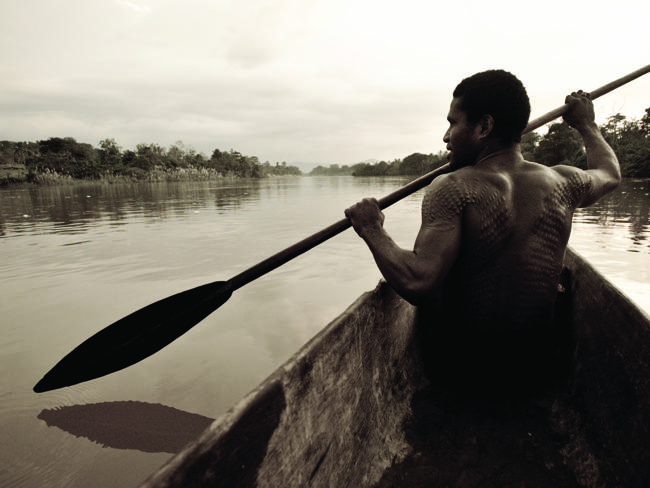
Crocodile scarification is an ancient initiation practised by the Chambri tribe of Papua New Guinea.
The Chambri tribe believe they evolved from the mighty crocodile. Source: Supplied
DEEP within the jungle of Papua New Guinea (PNG), there is an ancient initiation tradition that turns boys not into men, but into crocodiles. The men of the Chambri tribe in the East Sepik province of PNG practise crocodile scarification, an initiation for boys entering manhood during which their skin is cut and scarred to represent the scales of a crocodile.
The Significance of the Crocodile
The crocodile is a significant spiritual and symbolic animal in PNG, and the Chambri tribe believes it descends from the powerful predator. The ancient myth tells the story of how crocodiles migrated from the Sepik River onto land to eventually become humans.
In Papua New Guinea it is thought men evolved from crocodiles. Picture: Nina L. Chang.
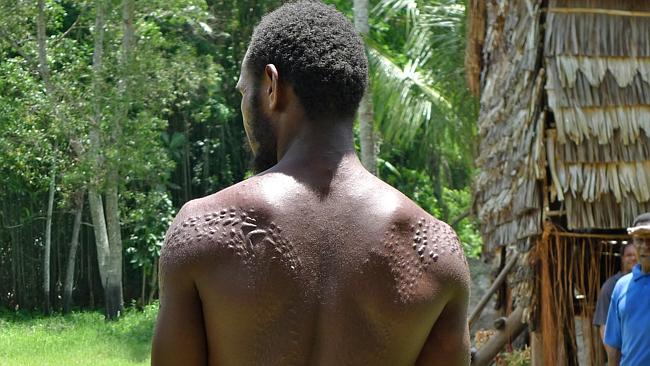
In recognition of this ancestral connection, the young men of the tribe are inflicted with hundreds of deep cuts in cascading patterns down their backs, arms, chest and buttocks to give their skin the look and feel of a crocodile’s body.
The Scarring Procedure
The intensely painful scarring procedure involves discipline, focus and dedication. The young initiate first joins his uncle in a spirit house, where he is held down while tribal leaders make hundreds of slices roughly, two centimetres long, into the boy’s skin with a bamboo sliver.
There is no pain relief other than the chewing of the leaf of a medicinal plant, as the young boy must show enough strength to prove he is a man. The Chambri people believe that by suffering immense pain at a young age, they will be better equipped to withstand pain later in their lives.
Photo: David Kirkland
Once the cuts have been made, the boy lies near a fire where smoke is blown into the wounds and clay and tree oil pushed into the cuts to sculpt the scars so that they remain raised when healed.
Then the initiates are adorned in an ornate headdress and jewellery at a big tribal ceremony, where the boys officially become not men, but crocodiles.
A voyage through hell: One asylum seeker’s epic journey from Eritrea to a new life in Europe.
Zekarias Kebraeb was 17 when he fled Eritrea to escape conscription. Now he has written an extraordinary book describing his epic journey to Europe. In this extract, featured in the Independent on Saturday, December 6th, he describes the most perilous episode of all.
After illegally crossing the border to Sudan, Zekarias Kebraeb stayed in Khartoum for six months. He then crossed the Sahara Desert to Libya, a two-week journey, without food, on which he nearly died of thirst. Finally reaching Tripoli, he and two friends he had made on the journey – Awed and Aki – found a people smuggler to help them to cross the Mediterranean during the night. In the passage below, he relives the desperate crossing, day by day…
8 October 2002
The rain gets lighter as we clamber down to the shore, though the wind whistles around our ears and tears at the sparse foliage that clings to the rocks. We can hear the sound of our panting and the roar of the sea. The pale moonlight is reflected on the waves; there’s an elongated shape, a dark protrusion, on the shore – a rowing boat, lying upside down on the stones.
I’ve never seen a boat like this before. It looks like a coffin. But it can’t be our boat – it’s far too small. The others have seen the boat too and run up to it. “What’s this?” they all ask at once. “What are we supposed to do with it? We might as well swim.”
“Shut your mouths,” growls one of the smugglers and waves a torch over the boat, revealing gaps in the black tar paint. “Just how dumb are you?”
“This boat will take you to the big boat out there on the water!” calls Jasin, the Libyan colonel who organised our passage, and points out to sea with his right arm. Perhaps 200 metres offshore, a fishing vessel is bobbing in the water, circled by nocturnal seagulls.
Feverishly, my gaze sweeps back and forth between the fishing boat and the rowing boat on the shore. I feel queasy – now it’s getting serious. White foam washes over my feet, the wind ruffles my hair and Awed is standing next to me with hunched shoulders. She has wrapped a blue scarf around her head and crossed her arms firmly over her chest.
She must be freezing. She isn’t looking at me but out across the water.
“When will we get to Italy?” she asks suddenly.
“I don’t know, tomorrow evening, maybe,” I reply. I’m agitated and extremely impatient. A few of us go to lift up the boat and turn it over. It’s heavy, saturated with water and stinks of seaweed and rot. And while the waves keep surging forward relentlessly, we push the boat into the water. It’s cold! I stumble back abruptly.
“Women and children first,” yells Jasin.
The boat rocks and sways as the first few people clasp each other’s hands and get in. When it’s full, two strong men take the oars and row out towards the big boat. Aki, Awed and I are on the last boatload to the fishing vessel. The loading process has taken more than two hours; it must be after midnight. I stagger and have to hold on to something. I grab the railings and land hard against the side of the boat. That’s what happens when you lose the ground beneath your feet.
A long way from home: Zekarias Kebraeb has just a few photos of his life in Eritrea (Phil Moore)
9 October 2002
Ragged, dark grey clouds rage across the night sky. Stars appear and then disappear again. Banks of fog drift over the water and seagulls fly up screeching when our captain fires up the engine, which splutters and dies down, causing him to rage. The captain is gaunt, with a piercing gaze. Wearing boots, he has a violent temper; and before we’ve even departed, he’s already lashing out kicks to left and right. People duck out-of-the-way and soon so much water has sloshed on board that we’re completely soaked through.
The boat isn’t big – perhaps seven metres long. Painted blue and white, its sides rise maybe half a metre above the water. There’s a mast and a shelter for the helmsman. I sit on the planks right up against the stern with my friends. Our legs are pulled right in and we’re pressed in, bodies against bodies, almost as tight as on the pick-up truck in the desert. We sit back-to-back so we can hold each other tight, wheeze together, freeze together. Because it’s cold, icy cold.
The engine starts and the boat sets out on the open sea, into the night. The wind lashes water in my face. I look back to where the narrow, rocky shoreline is growing smaller and smaller. From now on, everything will be different: new and wonderful. I’ve overcome borders, hunger and thirst, the fear of death and the shame of being nothing – all that’s behind me. If it weren’t so strange, I would laugh. But there’s a new border in this place where solid ground gives way to water, probably the most daunting of my whole journey. I can’t walk or fly over the sea, and if I fall out of the boat, I’ll have exactly 120 seconds before I drown… I’ve never been this close to the paradise at the other end of the world, but I’ve never been so far away either.
Worried about patrol boats, our captain has turned off the navigation lights. He steers with a compass, heading unwaveringly north. Sleeping is out of the question – it’s too wet. The sky and sea are opaque and black, and we lose all sense of time. I don’t know if we’ve been travelling for two hours or four hours.
The boat is tossed back and forth and I sink into a trance-like state. I recite numbers in my head like litanies: those thrown overboard, drowned, killed by thirst, battered to death or lost. Since 1988, 14,921 immigrants have lost their lives crossing the sea to Europe.
I cling on tightly with my whole body. My freedom is the only thing I have left to live for. I cross my arms over my chest. Or is it fear that shackles me and wraps me up like a parcel? I can’t think any more – only hear, see, smell, feel. I listen to the storm and hear the captain. “Bail out!” he roars. He struggles to bring the boat about, steering across the waves. Mechanically, we start to tip and pour buckets of water over the railings, even though more water keeps sloshing in moments later to replace it.
My mother, I think to myself, would interpret a storm like this as a punishment from God. But why – what did we do wrong?
Aki, Awed and I hold hands again. I can’t imagine us surviving this hell. What is drowning like? Slow or quick? How long does it take until your lungs fill with water? Does it hurt? I hold on tight.
There’s nothing to see except water and mist – no horizon, we’re trapped in a cloud of fog. A continuous grey desert stretching out endlessly – it’s a miracle, but we’re alive. Laid out like sardines, slumped over and against each other, with nothing to eat or drink.
Hunger gnaws uneasily in my stomach. It’s an almost liberating feeling, but only for an instant: I’m alive. Even though my eyes are stinging from salt water, even though my skin is wrinkled and swollen, I’m alive. I try to stand up but don’t manage it, crumpling like an empty sack. Aki and Awed pull each other up, sway and also collapse back down. We hear snatches of barked orders telling us to stay sat down, got it? “Anyone who dares to stand up will be thrown overboard!”
There’s nothing to eat. My friends look for bread in their bags but don’t find anything except damp crumbs. I run my tongue along my salty lips, open my mouth and try to catch raindrops on my outstretched tongue. Salty. I form the water into a thick mixture with my spittle. It’s disgusting – I feel sick. Before I can make it to the railings, a pool of purplish-brown vomit spews on to the planks in front of me, mixing with green brine and seeping between us in trickles. I’m not the only one: almost everyone threw up during the night, either silently or retching noisily. The wind even flung some people’s sour vomit back in their faces. We’re in nature’s hands and can no more escape our filth than we can escape the sea.
The fog has vanished. The sea is endless, there’s nothing but water in the heavens and on the earth. No time, no space – everything flows and undulates. The white foam on the crest of the waves is the only thing our gaze can fix on, for one brief moment at a time. Our fellow refugees pull copies of the Bible and the Koran out of plastic bags and read them silently. Suddenly, a woman throws her Bible to me.
“Read it!” she calls. It doesn’t sound like a request. With numb fingers, I flick through the pages, looking, while drops of water soften the thin pages. “Go on, go on!” she shouts. “What should I read, exactly?” I try to smile. “I’m not a priest, you know.” I can barely feel my body and I’m supposed to read to console the others – as though that will help. I don’t want to, but I begin anyway.
“Saint Paul’s voyage to Rome.” Fitting. “A storm at sea and a shipwreck in the Mediterranean near the island of Malta.” My voice is a sigh against the storm. I shout until I go hoarse, vying with the seagulls who are shrieking as they circle the masts. The unnatural rattle of the engine sets the rhythm as I continue reading: “… After long abstinence Paul stood forth in the midst of them, and said, Sirs…” The wind flings the words back in my face.
Homo erectus engraving could re-write human history, and might show art began 400,000 years earlier than we knew.
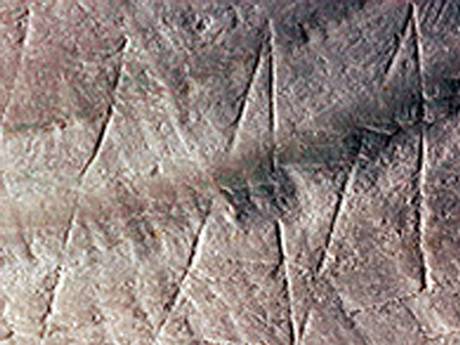
A zig-zag, drawn on a shell, could re-write our entire understanding of human origins and art. The pattern, drawn by a homo erectus as long as 540,000 years ago and found recently by an Australian researcher, could change all understandings of our early ancestors.
The artwork
The engraving is at least 300,000 years older than other markings thought to be the oldest made by humans or Neanderthals. The pattern looks like previous finds, but the oldest known of those dates from 100,000 years ago.
“It rewrites human history,” said Dr Stephen Munro, from Australian National University, who identified the shell and published the research in Nature this week. “This is the first time we have found evidence for Homo erectus behaving this way,” he said.
The age of the rock, and the place it was found, discount earlier theories that the engravings had done by our later ancestors, Neanderthals, or by human beings.
Squatter Pigeon, Endangered species, QLD, Australia. Picture Ralph Anthony
One of the blessings of our home is we live amongst the Queensland wildlife. Three months ago I counted three Squatter pigeons in the low branches of the Brazilian Cherry, a hardy evergreen fruit tree outside our house in Bellbowrie. We have several rows of the trees to give shade and provide privacy. The pigeons were a new addition to the varied birdlife on our property. Two of these birds were small parcels of light brown, white and grey feathers. The third bird had black, white and grey feathers. They had dainty little, pale, pink feet which seemed odd for their size. I thought these three may have been a family. I was not sure. The birds were extremely shy, and they took their walks in my garden when they thought no-one was home. I watched them from the large windows of our old semi-modern Queenslander. Most of their time was spent in the thick growth of the Brazilian Cherry trees, in the back part of our property. Occasionally, when returning home from work or the shop, the pigeons were at the front of the property. They would try to run as fast as their little feet carried them, across the driveway, before they lifted into the Wattle trees on the driveway. I preferred to stop metres away to let them cross the driveway gently on foot, but sometimes if I did not see them first, and disturbed them, they would run for a few metres and fly into the low branches. Their feet never seemed to be much use.
Today, a feathered mess in the bush. Picture: Chris Harris.
Three weeks ago, on a Tuesday evening about 6:45pm, I saw a blue station wagon stopped in the middle of the road with its high beam on. The car was on our street, near my gate, and a middle-aged caucasian woman waved at me. I thought she had car-trouble and I slowed. As I approached, I also noticed ‘him’ crossing the road casually. Using its beautifully patterned full body length in a sleepy manner, the young male python slowly took up a third of the width of the road as its slithering trunk headed towards the nearby catchment.
“Hi!” the woman in the blue car called out and waved.
“Hi”, I said.
“I am letting him pass; he is one of the good guys”, the woman said, smiling. I nodded.
I knew the snake was crossing into the catchment to get to the main river. This pocket of land was full of wild life and un-farmed land. We let a two-metre Eastern Brown off into these woods and it had disappeared in seconds. The place was part of the Brisbane City Council’s declared gateway for wildlife. Sometimes it felt like having a small wild-life sanctuary in our front yard.
The woman in the blue car and I both waited in our cars, engines running, while we let the snake cross. When the snake had passed, I drove to my night class, turning up 15 minutes late. I made a joke about stopping at the ‘Python Crossing”.
After my class, I returned home and warned my family, we had another specie addition to the wild life. I wanted everyone to be extra careful with our chickens. We all had been through and scarred from The Duck War. Every night since the python crossed, the chickens were counted and locked in their pen safely.
This morning I noticed, two chicken eggs had gone missing from the nest I discovered the last week. Click Here. The slithering one that crossed the road three weeks ago, became my Number One suspect. But I did not want to alarm anyone in my family. I made a mental note to do some investigative work later.
After my day in the office, five hours ago, I returned home and parked the car. I walked around my gardens as I usually do after work. Everything looked good. Rain from the storm that wrecked Brisbane City homes a few days ago, had put some life back into my dying garden beds. The flowers and vegetables thrived. The poinciana tree was majestic with her red crown of flowers. All my frangipani trees were blooming in various shades of colour and the lawn started to green again. I crossed our front yard into a small section of the property, under the Brazilian Cherry trees where the pigeons lived. I had a few orchids and ferns in the tree branches and I was slowly creating a sitting place inside the treed spot by planting. I watered the rock orchid. My eyes caught two small, short, beautiful, black and white feathers lying in awkward positions. The feathers stood out amongst the dead ground cover. I took the next step and stopped. More feathers. Alarmed, I looked down and checked every inch of leaves and dead branches around my feet. My eyes went back to the pile of feathers, all shapes and sizes, scattered, yet familiar. In seconds, I recognised them. My heart sank. Most of the delicate light grey down feathers were caught in the small tree branches where moss, and the pale green lichen called Usnea grew. Some grey feathers hung off my golden-yellow orchid stems at the low branches. I felt sick and very teary at the same time. The bird must have put up a good fight to throw its feathers this far.
Tomorrow I hope, I will see two pigeons. The young python won’t be crossing to the river tonight. It knows, there is more food.
A few days ago, I posted a story about our chickens and their laying habits. My son found this interesting couch or bed, and it seemed an appropriate piece to post for my Cool Stuff for the week. Cool Stuff is a piece of furniture or design or even artwork that I feel is very interesting and I share it with the readers of this blog. This ‘nest’ is really a playful piece of furniture created Merav (Salush) Eitan and Gaston Zahr, OGE CreativeGroup. You have to jump into it to enjoy it.
The Giant Birdsnest aka “Giant Birdsnest for creating new ideas” was conceived and created as a prototype for new and inspiring socializing space: a fusion of furniture and playground: A comfortable informal and sensual soft space.
The wooden nest is filled with highly comfortable egg-shaped sitting poofs which allow ergonomic sitting positions and various configurations for informal meetings and social exchange.
The nest comes in various sizes, from a small and intimate nest for one, to 2-3 people up to a 4.50 m diameter big version which can host up to 16 people at once – the soft space is perfect, comfortable and inspiring place for resting, browsing the web, reading, relaxing, loving, talking, briefing, discussing (…)
Its powerful, yet simple concept and intriguing character needs no explanation or user manual: Ready to be used, ready for playing or working in.
According to a Sydney Morning Herald article published in March on International Women’s Day, one woman dies every week from domestic violence in Australia in 2014. In NSW, 24 women were killed last year in domestic-related incidents. Of all homicides in NSW, 42 per cent are domestic. One woman is hospitalised every three hours across the country.
Access Economics has estimated about 1.6 million Australian women have experienced domestic violence in some form.
That’s just the official toll. Less than half the abuse is reported.
As NSW Police Commissioner Andrew Scipione says: “These are mothers, your daughters, your sisters, wives, girlfriends, these are the people who work at the desk next to you at work. These are real people and they are horrifying numbers.”
Behind the veneer of social respectability across all demographics, women are suffering from physical, psychological, manipulative and controlling behaviour by culprits. It emanates from a mindset that blames the victim and tolerates disrespect for those who are of another gender, background, lifestyle or simply powerless.
Children are being assaulted, traumatised and used as weapons.
Change will require challenging the culture of saying nothing.
For so long the fear of social ostracism or economic desolation prompted women in particular not to report their dire situations. Witnesses felt it was a private matter or feared retribution.
There must be must be more protection of whistleblowers who lift the veil of secrecy.
True, more women today are economically independent and most know there are services out there to help if partners become abusive. Some take the risk of speaking out and refuse to be demeaned. But fewer still make the flight to safety or use the support of courts and the police to remain in their own homes.
Most live in fear of being tracked down by their abuser. Men have to help us fight this fight.
One such group is the White Ribbon. Last week, November 25th was the White Ribbon Day in Australia. White Ribbon is Australia’s only national, male led Campaign to end men’s violence against women. Already, there are over 150,000 people in and supporting the cause of White Ribbon Australia.
Vision
All women live in safety, free from all forms of men’s violence.
Mission
Making women’s safety a man’s issue too.
The campaign works through primary prevention initiatives involving awareness raising and education, and programs with youth, schools, workplaces and across the broader community.
Globally, White Ribbon is the world’s largest male-led movement to end men’s violence against women. Originating in Canada in 1991, White Ribbon is now active in more than 60 countries.
White Ribbon began in Australia in 2003 as part of UNIFEM (now UN Women), formally becoming a Foundation in 2007.
White Ribbon Australia observes the International Day of the Elimination of Violence against Women, also known as White Ribbon Day, annually on November 25. White Ribbon Day signals the start of the 16 Days of Activism to Stop Violence against Women, which ends on Human Rights Day (December 10).
However the campaign runs all year and is evident across the community through, for example, advertising and marketing campaigns such as Uncover Secrets, social media, community events






 Tribalmystic Stories