How Whales Change Climate

I am not quite sure where any stories or short stories were in or out of fashion but I had to share this post from The Independent. Perhaps this point was made based on the literary publications’ responses to short stories in the past. All I could think of was, things must be looking better for short story writers.
Short stories revived: They are back in fashion, as established, and fledging, writers return to the form
Aesthetica magazine writing competition
ARIFA AKBAR Author Biography Thursday 18 December 2014
Raymond Carver, in a Paris Review interview, spoke of seeing his first short story, “Pastoral”, published in a literary magazine as “A terrific day! Maybe one of the best days ever.”
When he reached another landmark moment in the 1960s and his story, Will you Please Be Quiet, Please? was printed in The Best American Short Stories Annual, he took the book to bed with him.
This year, I helped to judge a short story writing competition for the Aesthetica Creative Writing Annual – a collection of new writing in poetry and short fiction. The writers in the annual, plucked from a longlist of over a thousand entries, should feel the same sense of reward and validation as Carver. These are stories that the reader can take to bed and there, encounter the joyous flexibility of a form that can present an entire fictional world in just 2,000 words, or the entirety of a single, crystallised moment in the same word count.
It is particularly satisfying to see the fortunes of the short story revived in recent times. Following Alice Munro’s crowning last year as Nobel Prize winner for literature, some of our most revered writers – Margaret Atwood, George Saunders, Lorrie Moore, Graham Swift – have since proved with their latest collections that the short story is to be taken seriously and not merely a transitional form for fledging novelists-in-training.
I found a refreshing breadth of style and subject matter in competition entries. What makes them so diverse is not just the internationalism of their entrants but their imaginative scope. Themes range from family dysfunction, love and loss to the hard-edged social realities of dementia, domestic violence and public acts of terror, though there is playfulness too. Several dramatise the fragile, polar states of old age and of childhood in original ways.
Corinne Demas’s Thanksgiving, a subtle story of sibling bonds and betrayals, stood out for judges as this year’s winner. It is an unshowy piece of writing – nothing more, it would seem, than a brother and sister taking a car-ride together after a festive family dinner. Yet, emotional undercurrents swirl beneath the surface to give it heft and complexity, and there is a quiet, controlled confidence in its telling.
Each selected story was marked by its distinctive voice, from the lyrical to the spare to the loud and large-hearted. These are the tales that wriggled their way beneath the skin, working a groove in the mind to surprise, impress, or merely to remain memorable. We hope that readers will be as moved, unsettled, and dazzled, as we found ourselves in their reading.
*The Aesthetica Creative Writing Award, now in its eighth year, s an annual prize hosted by Aesthetica Magazine. It is as an opportunity for emerging and established writers to showcase their work to an international audience, and the winners and finalists are published in the Aesthetica Creative Writing Annual – a collection of new writing in poetry and short fiction.
For more information visit, http://www.aestheticamagazine.com/creativewriting
I am sharing this post for friends and writers in Australia and others who follow the work of the ABC. The article was posted by the Australian Society of Authors today.
The Government and the ABC – A Christmas Special
In the ricochet of the Abbott government’s $254 million, 5% cut to the ABC over five years, it has been announced that more than 300 ABC staff would lose their jobs over the next period.
Impacts on Australian writers.
This will have a serious impact on writers. Among the departures will be people who create scripts, intros, narrative, jokes, segues, back-announces and such other incidentals that radio and television production need. Producers, program makers, presenters, commissioning editors – many of whom wield precious word skills to produce ‘content’ – will also be eliminated.
We express sympathy and solidarity with salaried or contract staff who will find themselves terminated – but equal sympathy must go to the freelance writers who have relied on the meagre copyright or broadcast fees payable for use of their work.
The proposed closure of Poetica, Mike Ladd and Krystyna Kubiak’s long-standing program celebrating and supporting poetry in Australian life, is a further betrayal of the national broadcaster’s Charter, which includes: “… programs that contribute to a sense of national identity and inform and entertain, and reflect the cultural diversity of the Australian community …”
Poetica
Poetica has run every week since February 1997 bringing poetry to a mainstream audience on ABC Radio National. From this program alone it appears that 9 out of 18 producers – i.e. writers – are to be sacked. At its peak Poetica reached 90,000 listeners per week, with many more via the internet.
Poetica made 900 programs, 60% of which featured contemporary Australian poets. It brought their work to a wide audience and provided the poets with some much-needed income through the fees paid for broadcast. Their publishers benefitted through some exposure. And booksellers reported a rise in enquiries and sales of the poetry titles featured.
In the absence of a dedicated poetry program with its own timeslot and separate website, assurances that poetry will continue to be featured on Radio National are merely a sop.
Poetica is one of many culturally valuable writing-centred programs to have been axed in recent years; others include The Book Reading and Short Story. It appears that this latest is a ‘specialist’ program of a kind that no longer lies within the brief of the broadcaster – or if it does, is not worth paying for.
Despite the ABC Charter, ABC programmers more and more ignore the need to respond to and facilitate ‘special interests’. If the ABC does not actively and vigorously support such an interest as literary creativity – something that is central to education and the nation’s intellectual life and arts – what exactly does it support?
The ABC’s efforts to ape the styles and motives of commercial media and internet organisations are meanwhile risible. 100 people are to go from News and Current Affairs to fund a $20 million digital investment program and 70 new digital jobs, suggesting it will now seek new space in a highly competitive online environment, with no guarantee of further reach or loyal audiences.
The ASA accuses the ABC of ill-informed, uncaring behaviour and helping to send writers broke. Shame on ABC management and shame on its political masters.
Copyright © 2014 Australian Society of Authors, All rights reserved.
I found this beautiful story on Jonnathan Dunnemann blog.
I come from Papua New Guinea where traditional bamboo flutes are played in most of our regions. My mother plays the flute. It was a beautiful sound I grew up with. The Shakuhachi is a Japanese bamboo end-blown flute, which has a rich culture and history associated with it. It is believed the Chinese brought Shakuhachi to Japan in 6th Century.
Blind New Zealander Kevin Falconer has made the sound of bamboo his own by developing his own relationship with bamboo, the craft and the Shakuhachi music. I found his story very moving and at the same time very inspiring. We are only limited by what we set for ourselves.
Kelvin Falconer walks through his bamboo groves, with tall shoots of bamboo towering over him. The bamboo littered with beautiful hand-made terracotta tags that Kelvin has made for knowing how long each culm has been growing for.
Once he finds a suitable shoot he proceeds to patiently craft the bamboo using only his senses of touch and hearing. At a glance Shakuhachi appear to be simple instruments but the understanding and skill in shaping even a basic flute is something which requires Kelvin to have an acute knowledge of the physics of sound and a finesse to fine tune each unique culm of bamboo.
Through playing the Shakuhachi, Kelvin is able to develop a calmness which he describes as ‘Meditation through Sound and Breath’. Through watching him craft a flute from beginning to end we are witness also to a craftsman putting his all into every detail.
Kelvin shows us that the Shakuhachi is a tool that can bring calm and focus to distracted and stressed Minds. His flute becomes a metaphor for what we ‘make’ in our own lives and through his craft he transcends his perceived disability and the limitations of Blindness.
Type: Documentary
Country: New Zealand
Year: 2012
Filmmaker: Michael Hobbs
Format: Digital 1080
Language: English
Subtitles: N/A
Colour: Colour
Film Ratio: 16:9
Sound Type: Stereo
Running Time: 11m38s
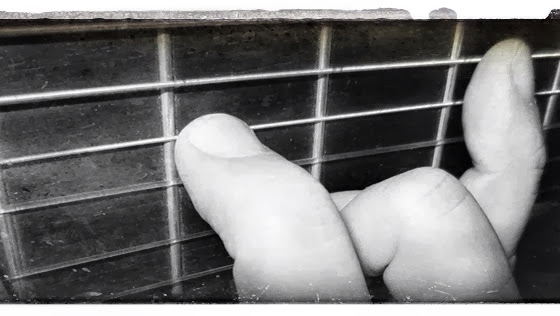
“The music of the “2 Days and a Year” album tells stories of the world of daydreaming, falling snow, sunlight glimmering on the water, night skies, and not least, the value of the fragile moment,” said Jens Felder.
Imagine taking all those complexities and depths of nature, seasons, feelings and thoughts then combining it all into music. No wonder the music sounded so good. I guess that is what all artists strive for when creating something wonderful.
When I first heard Jens Felder play 2 Days and a Year, a few weeks ago, I let this melody steal me. I wanted it to. It was a piece of music that I could go places with. I love music and I have a large collection. hen’s is a combination of many types of music from many parts of the world. I played Jen’s music over several times, just to see if I could get tired of it. I didn’t. I don’t mean this in a negative way. Part of me wanted to play it again, but the other part kept wondering why I wanted more. I do not know how to explain it in words. I am sure every once in a while, we find something beautiful and it affects us. Life is beautiful and mysterious. I could not imagine life without music.
Like everything we do in life, there is a story. In Jen’s story, his music is his life story. I could not write his story better, therefore, I left my interview follow in Jen’s own words:
I am playing guitar for over 30 years now. I can’t remember the first time I had a guitar under my fingers. The feeling is still very present. When I held the guitar, I knew immediately that it was exactly what I was missing in my life. Playing music feels like a meditative experience, like “being in the moment“. The silence is expectation and excitement, and gets filled with sound. The silence returns images and echoes back, what gives me great joy and peace. My goal was and is, to communicate the emotions I experience in the music through my instrument.
My heroes were the old masters and so I studied classical music for many years. I completed a postgraduate study with Andreas Higi at the music college in Trossingen and attended various master-classes by i.e. Frank Bungarten, Carlo Marcione and the amazing Aniello Desiderio.
The learning was followed by many solo concerts with classical programs. I was fortunate to play in chamber music ensembles with violin and vocals and also worked as a soloist with orchestras.
I now live with my family in southern Germany and work as a freelance artist and music teacher. The old masters are still my good friends, but now I play my own music. In my pieces melds classical music with elements of world music. You can hear African or Asian modes and even some nods to rock music all within the context of solo classical guitar playing. It feels like a trip around the world with the language of classical music.
As a composer, I have worked with various artists from different regions of the world, including also music for short films.
In early December, I published my first solo guitar album “2 days and a year”, available on iTunes and Amazon as a download.
The title piece “2 Days and a Year” is a story about time perception in music. I have written this piece in 2 days, but the emotional experiences have accompanied and influenced my music all year thereafter. So this piece has become the title track of my album. I’ve written a text, which describes the emotions of this time (also in the booklet of my album):
“Time is different in music. Close and friendly it is
drifting by – sometimes flying, sometimes even
standing still, but never passing. Nothing gets lost –
the first tone is not older than the last one.
All music is a child of its time, but not bound by time.
It arises from moments and lives in people. Musicians
capture that moment in time and listeners make
the music their own. These moments are present, and alive.
iTunes link to “2 days and a year” album: https://itunes.apple.com/de/album/2-days-and-a-year/id946450529?uo=4
Soundcloud link to the “2 days and a year” piece: https://soundcloud.com/jens-felger/2-days-and-a-year
This is the story of a house which escapes from its suburban foundations and sets off on an epic journey.
A short movie by Pierre Clenet, Alejandro Diaz, Romain Mazevet and Stéphane Paccolat, made in Supinfocom Arles during our last year in 2013. Original music by Valentin Lafort.
// Synopsis //
Sorcery in Papua New Guinea
I grew up in Papua New Guinea, and the people of my country are fearful of sorcery. Although my family members were devout christians (Kauckesa, Tamang, my grandfather was a teacher and clergyman for the Lutheran Church) there are other traditional beliefs and practices that culturally and spiritually linked our people to the nature and the environment. These beliefs and customs have helped us survive for many years. Sanguma (sorcery) was not one of these beliefs.
In my own life, I have seen and written some stories, recalling incidents and events that have been directly associated with sorcery and the beliefs of our people. I know of many killings that were alleged to be sorcery related. I have seen family members wasted to their last days, and buried because they refuse modern medicine. They suffered immensely, but believed witchcraft and sorcery was causing their illness for some reason or punishment and their ailment was incurable.
On the other hand, a different kind of societal treachery occurs in a community fearful of the occult, where the accused is judged and attacked or killed. No courts. No help. Often the community or village would stand back, hands held up with reluctance, letting the crime take place.
My grandfather used to call it Satan’s work. Evil striking on a whim, and prayer was the only thing to offer in efforts to rescue or heal. It has never been clear to me – I have felt each one of us have spirits deep within us. These spirits are so powerful and they create the characters and the people within ourselves. We choose the spirit, the one or the ones that become us. What clearly stands out in the sorcery violence is, the accused are mostly women and children. I wonder, is sorcery merely offering another avenue for blood-thirsty, violent men in PNG?
Rampant Fear
Sanguma and the fear of it, is rampant in Papua New Guinea. Education makes little difference. The deep-seated, hysterical terror of sorcery and its consequences is unfathomable, to the extent that it is so easy for anyone to pick up an axe, knife, or spear to hurt the next person based purely on the suspicion. An uncle can kill a nephew. A husband can kill a wife or daughter. Anyone could be a witch. Our culture allows violence and our culture allows the beliefs to exist because we allow it to.
A friend, Almah Tararia shared an article which led me to a website. http://www.stopsorceryviolence.org
“Stop Sorcery Violence” wants to highlight the work of local women and men bravely taking a stand against sorcery and witchcraft accusations, providing assistance to victims and survivors and advocating for a positive change.
I wanted to share one of the organisation’s success stories tonight. Please be warned, you may not like what you see or read on the website. Some of the stories are horrific.

A boy is accused
A nine-year-old boy from Simbu Province is happy in his new home after surviving terrible torture because of sanguma accusations.
In July this year Peter was admitted to the Kundiawa hospital with severe cuts to his head and body, and with the loss of blood, there was a slim chance of survival. Peter’s own uncle attacked the boy with an axe after accusing him of practising sanguma (being a witch).
When taken to Kundiawa Hospital, quick action by the doctors, miraculously pieced Peter’s body back together, even some of the severely damaged tissues.
In over two months, Peter made a remarkable recovery. It was not what the doctors had expected. He regained most of his movements and ability as a normal person.
Then, came the daunting questions, now that he had survived, where would Peter go? The boy’s parents were both dead. His own home and extended family were not safe for Peter to return to. No relatives had visited him in hospital, and the option of him returning back to his village was too dangerous.
Several members of the Catholic Church: Archbishop Douglas Young, Bishop Don Lippert, Father Philip Gibbs and Father Jan Jaworski worked on finding a place where Peter could go and be with other children, to continue his education and develop a normal life. The public responded very positively, and after identifying some places in the Highlands, he was relocated to a safe place to start a new life. Peter was one of the lucky ones.
Sanguma Accusations
Regarding Sanguma accusations and their related violence, women and children are the targeted victims. For each woman or child that has been saved, another is tortured, banned from her family and village or murdered. There are many people standing up against sorcery related violence. Many are working hard to prevent violence and assist victims. Human Rights Defenders, the Catholic Church, Community-Based Organisations, International NGOs and some government bodies including police are realising the extent of the this specific kind of violence and have started to develop strategies to save lives. For the PNG people, every person is encouraged to take a personal action by joining the fight to stop the violence.
http://theconversation.com/au (Dec 11, 2014)
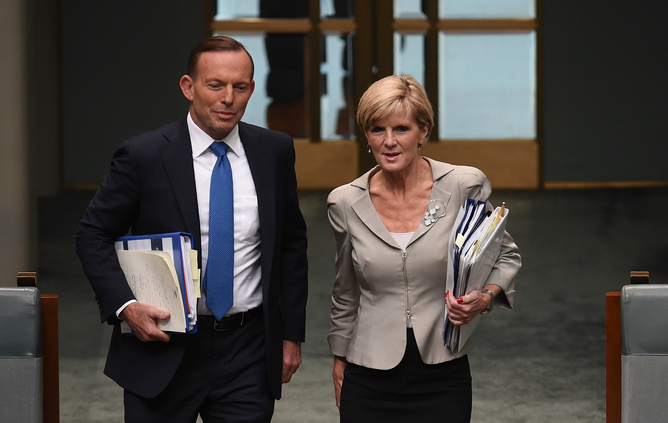
At the United Nations Lima climate summit, Australia’s foreign minister Julie Bishop has pledged A$200 million over four years to the Green Climate Fund, which seeks to raise US$100 billion (A$120 billion) per year by 2020 to help developing countries deal with climate change.
The announcement is good PR and plays readily into the narrative that the Abbott government will “reboot” and “re-engage” with voters in 2015. It also directs attention to the cabinet’s “star performer” Julie Bishop, and provides an alternative framing to Australia’s embarrassing isolation on climate action.
Scratch beneath the surface, however, and an alternative picture emerges. Put simply, the size of Australia’s contribution to the fund does not suggest that the government accepts the moral argument of “climate debt”, or that it is willing to put its neighbours’ well-being ahead of its own short-term political gain.
Climate debt is financially complex but morally simple. It is the idea that rich countries should pay reparations to poor countries for damage suffered as a result of climate change. Justin Lin, former chief economist at the World Bank, summed up the moral argument succinctly back in 2009:
“Developing countries, which have historically contributed little to global warming, are now, ironically, faced with 75 to 80 percent of the potential damage from it. They need help to cope with climate change, as they are preoccupied with existing challenges such as reducing poverty and hunger and providing access to energy and water.
The share of responsibility for fossil fuel-derived greenhouse emissions since 1750 can also be broken down by country. James Hansen, former director of the NASA Goddard Institute for Space Studies, provided estimates in an open letter to Australia’s former Prime Minister Kevin Rudd. Hansen estimated that the historical carbon debt of the United States was 27.5% of the total.
Australia has much lower cumulative emissions (1.5%) but is the worst greenhouse emitter per capita among major western nations. Using this figure, groups like the Climate Institute have suggested that A$350 million is the minimum fair contribution to climate financing that Australia should make.
Read more here:
http://theconversation.com/australias-200-million-climate-pledge-falls-short-of-its-true-debt-35318
The song titled “Oceania – a Hymn for the Pacific”, features Pacific island artists. Set in a series of images from across the Pacific islands region, the song was a fitting symbol of the growing recognition of the need for collaborative partnerships and journeying together on “one vaka” – one canoe.
 Tribalmystic Stories