This is a flash fiction challenge where Barbara W. Beacham offers a picture and the first sentence of the story. Based on the photograph and the first sentence, one must come up with a 100-150 word short story.
The crew of the Angel Flame received orders to head out. When Yakov and Marishka reach the secluded Russian base, most men had already boarded.
Marishka wiped her tired eyes as her husband walked to the submarine, leaving her, their newborn Polinka and their sick two-year-old, Boris. It was a dreary Friday at 5am; three lost seagulls skirted past Yakov, fleeing the brooding storm.
After Yakov’s head vanished into the submarine, Marishka left – four hours later the snowstorm hit. The radio announced that nobody was hurt. Marishka medicated and monitored Boris’s temperature.
The next day at 7am she heard a knock. It was persistent. Unwrapping herself from Polinka, she reached for her gown.
Marishka caught a glimpse of a man in uniform through the winter-frosted glass and threw open the door with a grin. Expecting to fall into Yakov’s arms, her stomach sank when instead she met the gaze of a stone-faced man carrying Yakov’s personal effects.
In partnership with Commonwealth Writers, Granta is publishing the 2015 winning stories for Africa and the Pacific: ‘Light’ by Lesley Nneka Arimah (Nigeria) and ‘Famished Eels’ by Mary Rokonadravu (Fiji). To listen to podcasts by all the regional winners and read the regional winning stories for Asia, Canada & Europe and the Caribbean, please visit the Commonwealth Writers website.
I have read and wish to share the Pacific winner’s short-story. It is one of the most beautifully told short-story I have read. I would recommend you read the whole story from the link I have provided at the end of this passage.
Famished Eels
After one hundred years, this is what I have: a daguerreotype of her in bridal finery; a few stories told and retold in plantations, kitchens, hospitals, airport lounges. Scattered recollections argued over expensive telephone conversations across centuries and continents by half-asleep men and women in pyjamas. Arguments over mango pickle recipes on email and private messages on Facebook. A copper cooking pot at the Fiji Museum. Immigration passes at the National Archives of Fiji. It is 2011.
Fiji, with Guyana, Suriname and Trinidad and Tobago, had just registered the ‘Records of the Indian Indentured Labourers’ into the UNESCO Memory of the World Register, when my father, the keeper and teller of stories, suffered a stroke. Fate rendered his tongue silent. He cannot read or write – he first set foot in a classroom at fifteen, and was told by a nun he was too old. He ignores my journalist and doctor siblings to select me, the marine biologist, to finish his task. I am off the coast of Lifou in New Caledonia counting sea urchins when the call is relayed.
He hates me for not becoming a journalist, I say to myself.
I will be on the Thursday flight, I tell my older sister.
She meets me at the airport and drives me down to Suva. It is past midnight. We pass eleven trucks overloaded with mahogany logs between Nadi and Sigatoka. A DHL courier truck. A quiet ambulance. She smokes at the wheel, flicking ash into the cold highway wind. We pass a dim lamp-lit wooden shack before Navua. Someone is frying fish. We both know it is fresh cod. We remain silent as we are flung into the kitchen of our childhood at Brown Street in Toorak. We stop to sip sweet black tea from enamel pialas in Navua.
Come on tell me, she blurts. Who you seeing now? Is it a dark-skinned Kanak? Is that what’s keeping you in Lifou? Do you speak French now?
Screw you, I say from the back seat.
He wants you to do this because you won’t lie to him, she says. The rest of us may. Just to make him happy. Just give him what he wants to hear. But you won’t. You will find out and you will tell him.
Screw you, I say again, more to myself than her.
All his life, my father has sought one thing only – to know the woman in the photograph. To know the name of her city or town in India. To know that at some juncture in history, there was a piece of earth he could call his own. All he had had was a lifetime of being told he was boci. Baku. Taga vesu. Uncircumcised.
A hundred years was not enough. Another five hundred would not be either. In a land where its first peoples arrived a couple of thousand years before the first white man, the descendants of indenture would forever remain weeds on a forsaken landscape. A blight.
He had stubbornly remained in Fiji through three military coups and one civilian takeover. Everyone had left. He remained the one who rented out flats until his brothers’ houses were sold. He supervised brush-cutting boys on hot Saturday mornings. He was the one to call the plumber to change faucets in grimy, unscrubbed shower recesses. He was the one who kept receipts for oil-based butternut paint, bolts and drill bits; photocopied them faithfully at the municipal library and mailed them to Australia, Canada or New Zealand. Each envelope had a paper-clipped note: OK. It was the only word he learned to write. I received Christmas cards from him saying the same thing: OK. The handwriting on the envelope changed depending on who the postmaster was at the time.
His younger brothers send out family newsletters on email. There is only one photograph of my father they use, a blurred profile of him holding a beer. They use the same caption – ‘Still refuses to use email.’ I wish to click Reply All and say ‘fuck you’ but there is a distant niece in Saskatchewan on the list – she writes me regularly for shark postcards and she knows the scientific names of eleven types of nudibranch. She recorded herself reciting it like bad poetry and put it on YouTube. I am the only one who knows this. She insists I use real handwriting, real stamps. She hates pancakes, frogs, flatlands. Her handwriting yearns for water. Salt water. Sea. In her milk tooth grin I see the next storyteller – the one to replace the man who has gone silent. She is ten and wants three pet octopi.
I was born to be a bridge. All I see are connections. I bridge between time, people and places. I study migratory species. Tuna fish stocks. Whales. Sea urchins in between. Cephalopods. I was nine when I picked up my first cuttlefish bones on a tidal flat in Pacific Harbour. For years I thought it was a whistle. I wrote out the names of the world’s oceans, seas, currents and fish in longhand, unaware the lead scrawlings were placing miles between my father and me. He watched me from across the kitchen table. My mother had died bringing me into the world. He washed okra with patient fingers. Boiled rice. Warned me he was going to slice red onions.
Make sure you buy land, he whispers. When you grow up, buy a small piece of land. Build a house just for you. Promise me.
Promise. But my eyes were already on the Kuroshio Current. I was already reading the voyage of Captain James Cook and the transit of the planet Venus. Hearing the howl of winds at Tierra del Fuego. No one told me that as recently as one hundred years before, ships had cut through the rough straits with people carrying the makings of my teeth in their genes. They almost never happened. Almost.
Keep writing, he says in our old kitchen. As long as someone remembers, we live.
My sister drops me off at the Colonial War Memorial Hospital.
I won’t come in now, she says. I still smell of cigarettes.
My father is asleep when I reach out to hold his hand.
I am not quite sure where any stories or short stories were in or out of fashion but I had to share this post from The Independent. Perhaps this point was made based on the literary publications’ responses to short stories in the past. All I could think of was, things must be looking better for short story writers.
Short stories revived: They are back in fashion, as established, and fledging, writers return to the form
Aesthetica magazine writing competition
ARIFA AKBAR Author Biography Thursday 18 December 2014
Raymond Carver, in a Paris Review interview, spoke of seeing his first short story, “Pastoral”, published in a literary magazine as “A terrific day! Maybe one of the best days ever.”
When he reached another landmark moment in the 1960s and his story, Will you Please Be Quiet, Please? was printed in The Best American Short Stories Annual, he took the book to bed with him.
This year, I helped to judge a short story writing competition for the Aesthetica Creative Writing Annual – a collection of new writing in poetry and short fiction. The writers in the annual, plucked from a longlist of over a thousand entries, should feel the same sense of reward and validation as Carver. These are stories that the reader can take to bed and there, encounter the joyous flexibility of a form that can present an entire fictional world in just 2,000 words, or the entirety of a single, crystallised moment in the same word count.
It is particularly satisfying to see the fortunes of the short story revived in recent times. Following Alice Munro’s crowning last year as Nobel Prize winner for literature, some of our most revered writers – Margaret Atwood, George Saunders, Lorrie Moore, Graham Swift – have since proved with their latest collections that the short story is to be taken seriously and not merely a transitional form for fledging novelists-in-training.
I found a refreshing breadth of style and subject matter in competition entries. What makes them so diverse is not just the internationalism of their entrants but their imaginative scope. Themes range from family dysfunction, love and loss to the hard-edged social realities of dementia, domestic violence and public acts of terror, though there is playfulness too. Several dramatise the fragile, polar states of old age and of childhood in original ways.
Corinne Demas’s Thanksgiving, a subtle story of sibling bonds and betrayals, stood out for judges as this year’s winner. It is an unshowy piece of writing – nothing more, it would seem, than a brother and sister taking a car-ride together after a festive family dinner. Yet, emotional undercurrents swirl beneath the surface to give it heft and complexity, and there is a quiet, controlled confidence in its telling.
Each selected story was marked by its distinctive voice, from the lyrical to the spare to the loud and large-hearted. These are the tales that wriggled their way beneath the skin, working a groove in the mind to surprise, impress, or merely to remain memorable. We hope that readers will be as moved, unsettled, and dazzled, as we found ourselves in their reading.
*The Aesthetica Creative Writing Award, now in its eighth year, s an annual prize hosted by Aesthetica Magazine. It is as an opportunity for emerging and established writers to showcase their work to an international audience, and the winners and finalists are published in the Aesthetica Creative Writing Annual – a collection of new writing in poetry and short fiction.
Viola flung the rest of her stale drink into the garden and carelessly dropped her glass on the day table. She turned and watched the remaining yoke of the sun slide away and as quickly, the darkness enveloped her. The evening breeze caressed her, nudging her silk cream blouse under her full breasts. Her navy linen pants hung loosely about her short fat legs. It felt weird but nice. No-one has touched her for so long. She made no attempt to rejoin her guests inside. The time had crawled to 6:30pm, when the automated sprinklers were due to start spitting. She paced the verandah to check if the entire irrigation system had come on to water her beloved garden. Her mind went back to events earlier.
Nora had asked her if she was all right – the stupid girl. Viola felt anger rising in her like bile, but swallowed it, only responding with “good”. For years, she had been telling her friend about how ‘he’ had treated her. Nora knew. Just like she had, Viola gritted her teeth and told Nora everything was good.
To Viola, “good” was a great word. When people ask how she was, she would reply on a reflex, “good”. According to Viola, the word good was so vague and final that anyone who asked could not ask any other questions. They left her alone. The word ‘good’, Viola thought, had protected her all these years. Kept her safe from the pity and concern that exhausted her so. Viola hesitated, as she paused and put the lights back on. They instantly flooded the lush bushes enclosing two carports and her guests’ extra two cars parked next to her black BMW and his silver Nissan 280Z. He would catch the $150 cab ride home tonight. She felt glad, she was not picking him up from Brisbane airport.
Over the years, she had kept all her feelings deep inside her, in the smallest pocket of her heart, layered with obligations and responsibilities as the daughter, mother and wife. But tonight, she was going to tell him everything when he came home. She would tell him she has had enough. She began thinking of her plan. Letting the scenario play out, she strolled back to the front of the house. Viola noticed at the end of the verandah that the sprinkler at her rose garden, nearest to her neighbours was off. Without thinking, she stepped bare feet onto the dying lawn and walked straight across towards the dark shadows to turn the sprinkler on. The light switch was near the tennis courts.
To read part one, see my earlier post and for more – visit my Wattpad:
A voyage through hell: One asylum seeker’s epic journey from Eritrea to a new life in Europe.
Zekarias Kebraeb was 17 when he fled Eritrea to escape conscription. Now he has written an extraordinary book describing his epic journey to Europe. In this extract, featured in the Independent on Saturday, December 6th, he describes the most perilous episode of all.
After illegally crossing the border to Sudan, Zekarias Kebraeb stayed in Khartoum for six months. He then crossed the Sahara Desert to Libya, a two-week journey, without food, on which he nearly died of thirst. Finally reaching Tripoli, he and two friends he had made on the journey – Awed and Aki – found a people smuggler to help them to cross the Mediterranean during the night. In the passage below, he relives the desperate crossing, day by day…
8 October 2002
The rain gets lighter as we clamber down to the shore, though the wind whistles around our ears and tears at the sparse foliage that clings to the rocks. We can hear the sound of our panting and the roar of the sea. The pale moonlight is reflected on the waves; there’s an elongated shape, a dark protrusion, on the shore – a rowing boat, lying upside down on the stones.
I’ve never seen a boat like this before. It looks like a coffin. But it can’t be our boat – it’s far too small. The others have seen the boat too and run up to it. “What’s this?” they all ask at once. “What are we supposed to do with it? We might as well swim.”
“Shut your mouths,” growls one of the smugglers and waves a torch over the boat, revealing gaps in the black tar paint. “Just how dumb are you?”
“This boat will take you to the big boat out there on the water!” calls Jasin, the Libyan colonel who organised our passage, and points out to sea with his right arm. Perhaps 200 metres offshore, a fishing vessel is bobbing in the water, circled by nocturnal seagulls.
Feverishly, my gaze sweeps back and forth between the fishing boat and the rowing boat on the shore. I feel queasy – now it’s getting serious. White foam washes over my feet, the wind ruffles my hair and Awed is standing next to me with hunched shoulders. She has wrapped a blue scarf around her head and crossed her arms firmly over her chest.
She must be freezing. She isn’t looking at me but out across the water.
“When will we get to Italy?” she asks suddenly.
“I don’t know, tomorrow evening, maybe,” I reply. I’m agitated and extremely impatient. A few of us go to lift up the boat and turn it over. It’s heavy, saturated with water and stinks of seaweed and rot. And while the waves keep surging forward relentlessly, we push the boat into the water. It’s cold! I stumble back abruptly.
“Women and children first,” yells Jasin.
The boat rocks and sways as the first few people clasp each other’s hands and get in. When it’s full, two strong men take the oars and row out towards the big boat. Aki, Awed and I are on the last boatload to the fishing vessel. The loading process has taken more than two hours; it must be after midnight. I stagger and have to hold on to something. I grab the railings and land hard against the side of the boat. That’s what happens when you lose the ground beneath your feet.
A long way from home: Zekarias Kebraeb has just a few photos of his life in Eritrea (Phil Moore)
9 October 2002
Ragged, dark grey clouds rage across the night sky. Stars appear and then disappear again. Banks of fog drift over the water and seagulls fly up screeching when our captain fires up the engine, which splutters and dies down, causing him to rage. The captain is gaunt, with a piercing gaze. Wearing boots, he has a violent temper; and before we’ve even departed, he’s already lashing out kicks to left and right. People duck out-of-the-way and soon so much water has sloshed on board that we’re completely soaked through.
The boat isn’t big – perhaps seven metres long. Painted blue and white, its sides rise maybe half a metre above the water. There’s a mast and a shelter for the helmsman. I sit on the planks right up against the stern with my friends. Our legs are pulled right in and we’re pressed in, bodies against bodies, almost as tight as on the pick-up truck in the desert. We sit back-to-back so we can hold each other tight, wheeze together, freeze together. Because it’s cold, icy cold.
The engine starts and the boat sets out on the open sea, into the night. The wind lashes water in my face. I look back to where the narrow, rocky shoreline is growing smaller and smaller. From now on, everything will be different: new and wonderful. I’ve overcome borders, hunger and thirst, the fear of death and the shame of being nothing – all that’s behind me. If it weren’t so strange, I would laugh. But there’s a new border in this place where solid ground gives way to water, probably the most daunting of my whole journey. I can’t walk or fly over the sea, and if I fall out of the boat, I’ll have exactly 120 seconds before I drown… I’ve never been this close to the paradise at the other end of the world, but I’ve never been so far away either.
Worried about patrol boats, our captain has turned off the navigation lights. He steers with a compass, heading unwaveringly north. Sleeping is out of the question – it’s too wet. The sky and sea are opaque and black, and we lose all sense of time. I don’t know if we’ve been travelling for two hours or four hours.
The boat is tossed back and forth and I sink into a trance-like state. I recite numbers in my head like litanies: those thrown overboard, drowned, killed by thirst, battered to death or lost. Since 1988, 14,921 immigrants have lost their lives crossing the sea to Europe.
I cling on tightly with my whole body. My freedom is the only thing I have left to live for. I cross my arms over my chest. Or is it fear that shackles me and wraps me up like a parcel? I can’t think any more – only hear, see, smell, feel. I listen to the storm and hear the captain. “Bail out!” he roars. He struggles to bring the boat about, steering across the waves. Mechanically, we start to tip and pour buckets of water over the railings, even though more water keeps sloshing in moments later to replace it.
My mother, I think to myself, would interpret a storm like this as a punishment from God. But why – what did we do wrong?
Aki, Awed and I hold hands again. I can’t imagine us surviving this hell. What is drowning like? Slow or quick? How long does it take until your lungs fill with water? Does it hurt? I hold on tight.
There’s nothing to see except water and mist – no horizon, we’re trapped in a cloud of fog. A continuous grey desert stretching out endlessly – it’s a miracle, but we’re alive. Laid out like sardines, slumped over and against each other, with nothing to eat or drink.
Hunger gnaws uneasily in my stomach. It’s an almost liberating feeling, but only for an instant: I’m alive. Even though my eyes are stinging from salt water, even though my skin is wrinkled and swollen, I’m alive. I try to stand up but don’t manage it, crumpling like an empty sack. Aki and Awed pull each other up, sway and also collapse back down. We hear snatches of barked orders telling us to stay sat down, got it? “Anyone who dares to stand up will be thrown overboard!”
There’s nothing to eat. My friends look for bread in their bags but don’t find anything except damp crumbs. I run my tongue along my salty lips, open my mouth and try to catch raindrops on my outstretched tongue. Salty. I form the water into a thick mixture with my spittle. It’s disgusting – I feel sick. Before I can make it to the railings, a pool of purplish-brown vomit spews on to the planks in front of me, mixing with green brine and seeping between us in trickles. I’m not the only one: almost everyone threw up during the night, either silently or retching noisily. The wind even flung some people’s sour vomit back in their faces. We’re in nature’s hands and can no more escape our filth than we can escape the sea.
The fog has vanished. The sea is endless, there’s nothing but water in the heavens and on the earth. No time, no space – everything flows and undulates. The white foam on the crest of the waves is the only thing our gaze can fix on, for one brief moment at a time. Our fellow refugees pull copies of the Bible and the Koran out of plastic bags and read them silently. Suddenly, a woman throws her Bible to me.
“Read it!” she calls. It doesn’t sound like a request. With numb fingers, I flick through the pages, looking, while drops of water soften the thin pages. “Go on, go on!” she shouts. “What should I read, exactly?” I try to smile. “I’m not a priest, you know.” I can barely feel my body and I’m supposed to read to console the others – as though that will help. I don’t want to, but I begin anyway.
“Saint Paul’s voyage to Rome.” Fitting. “A storm at sea and a shipwreck in the Mediterranean near the island of Malta.” My voice is a sigh against the storm. I shout until I go hoarse, vying with the seagulls who are shrieking as they circle the masts. The unnatural rattle of the engine sets the rhythm as I continue reading: “… After long abstinence Paul stood forth in the midst of them, and said, Sirs…” The wind flings the words back in my face.
I attended a talk at our local library last Saturday in Kenmore, near Brisbane City, Australia. I was with six others from our Creative Writing group. We had all been reading and writing fiercely, and were excited about learning to E-Publish.
As it turned out, the Kenmore Library talk, given by the Queensland Writers Centre was valuable and inspired all of us. Although we were all ‘pumped’ by the talk, some members were not too comfortable with self-promotion and general socialising on the internet and E-publishing. Some of course (all total of three of us) raced home and signed up with Wattpad to begin writing our stories.
I was working through my drafts and trying to choose what I would like to write or publish on Wattpad. I also looked up general information on Wattpad and read other stories written by various writers. It is too early for me to know whether this step would assist me with my plans to publish some of my work but I will share more later.
Amongst all the information I read and saw, I came across this short video – which made me laugh. This video is not only about what a writer does in Wattpad. This is what we all do in Wattpad or WordPress or even other social networks – we are eager to get some response, feedback or praise when general advice is ‘write for yourself’, or ‘don’t expect’ anything or ‘believe in what you are doing’….. after all, writers are human.
It was pitch black. The day had gone. Heat and humidity parted swiftly and everything was swallowed by the early evening darkness. By touch, I placed my towel on a nearby tree branch and stripped for my bush wash. My skin woke to the cool breeze. My right foot carefully searched on the large, rough and wet stones to the small piece of plywood. I stepped up, trying to keep it balanced under my weight. The ‘ply’ was held up by other stones. The underneath was muddy water. I stared into darkness and caught very faint glimpses of trees.
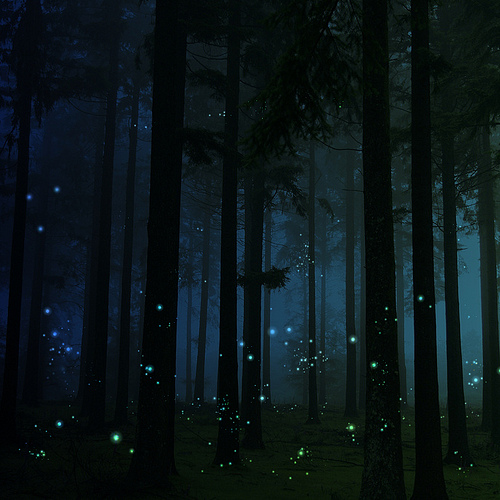
Already pulled out of the well with a rope and bucket, I reached it. The water felt cold. Today was an especially hot day. My mind went over how sticky it was. As I filled the saucepan, the steel cooled to the temperature of the water. I raised the saucepan and saw them coming. The ‘light’ visitors. They came in a fanfare of glows seemingly in rhythm, yet, their presence was soundless. I realised I had missed the fireflies in Port Moresby’s city life.
The fireflies came closer as if curious. They scribbled bright disappearing lines in the ‘black’ all around me. Their light made the darkness even darker.
I poured quickly. The water was cold.
“Ohhh nice!” half-shivering, I yelled out to my family, wanting to connect us through the depth of darkness between us. The chattering of my mother, my sons and, nieces and nephews were a few metres away.
This well water must have come from the centre of the earth. Untouched by the 36 degrees heat of Lae, Morobe Province. It was so cold.
After pouring three saucepans of water on myself I looked up again. By now the fireflies gathered just above me. They synchronised in an orbit-like dance. I looked up at the fireflies, entrenched, and the soft mushy Lux bathing soap slipped out of my hand. The soap’s creamy white oval-shape slithered away under the old plywood with a soft plonk in the muddy water.
“Shit!”
I am not about to put my hands in there I thought. I stared at the ‘nothing’. It was still pitch black. I bent my knees but half-way, I decided, it was not a good idea. I am not going to find that soap unless I am prepared to feel through snakes, centipede, spiders, worms, and God knows what else is in there.
An owl startled me back to reality. I listened to the owl speak to another softly. I was dripping, half-soaped and cooling down fast. The fireflies lost their rhythm and separated. They flew away. I reached for another saucepan of the cool rinse and grabbed my towel.
“I’m finished!” I called and picked up my clothes.
Through the bush, I could hear my mother bringing my sons towards me to wash them. They were nine and six. She had the lamp and the boys had their torches. Suddenly, everything looked different.
In the background, my nieces and nephews were waiting their turn to the waterhole. My cousin Sam Newton dug this well before he even built his house. The water feeds and quenches the thirst of hundreds in our community. Because of where Sam had dug the well, the water remained cool all day and night. We used the water for cooking, drinking and washing.
“Where is the soap?” I heard my mother ask.
“Forget the soap Ma, just wash them in the water”.
I smiled and dried myself.
I found this article by Jane Sullivan interesting because the argument she has discussed is the same used for other creative professions. Are institutions ‘killing’ the creative mind? How so I ask? And if creativity (in writing) cannot be nurtured through mentoring, writers’ grants nor creative writing workshops – what are we suppose to do?..Quit?
Having said that, aren’t we (bloggers) all lucky that we could write stories here on WordPress for free in our own genres, languages etc and build our own readership without worrying about whether someone reads the stories or not?
Turning Pages: Is criticism of creative-writing courses justified?
There’s a scene in the Simon Pegg TV sitcom Spaced when a writer is kicked off the dole and has to get a job washing dishes. She complains to the manager: “But this isn’t me. I’m a writer.” The manager replies: “Oh, everyone who works here is a writer, dear.”
They used to make that joke about actors. Now it’s writers. Not that it’s new, exactly. Writers have always taken pride in listing menial and bizarre jobs on their book cover bios, and have taken comfort in the thought they were following in the footsteps of Hemingway and Beckett. A full-time writer is still quite a rare beast, and is usually a writer of books for children, or of books in a highly commercial genre.
So why is a Nobel Prize for Literature judge, no less, complaining about the rather meagre and intermittent help writers can get from institutions? You’d think Horace Engdahl would be totally in favour of writers’ grants and creative-writing programs to nurture talent and to supplement what are usually very modest incomes.
Nobel judge: Horace Endgdahl.
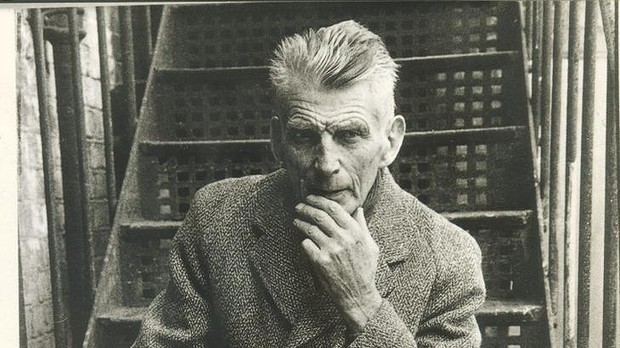
But no, he thinks they are impoverishing Western literature. Just before the Nobel team announced that the 2014 prize had gone to the French author Patrick Modiano, Engdahl told the French newspaper La Croix that “professionalisation” of the writer’s career is having a negative effect: “Even though I understand the temptation, I think it cuts writers off from society, and creates an unhealthy link with institutions.” He cited writers including Samuel Beckett, who had to work as taxi drivers, clerks, secretaries and waiters to make a living.
Engdahl’s comments were reported in The Guardian, which drew some miffed responses from writers (one of them mentioned the Spaced scene). They just don’t view their lives as he does.
Most writers still take the Beckett route, combining paid work with writing in their spare time, and most don’t get any other income until they are published. Grants are still few and far between, last for a few months at most, are always under threat of cutbacks, and the competition for them is intense.
There’s always someone ready to rail against literary grants as a waste of taxpayers’ money. Creative-writing programs are similarly under siege. Although they have grown at a huge rate, they are as vulnerable as any section of academia to cutbacks, and they regularly get attacked.
Writers and teachers themselves have joined the offensive. The British novelist Hanif Kureishi has denounced creative-writing courses as a waste of time, even though he teaches one himself, at Kingston University. He complained “99.9 per cent” of his students were not talented, and many of them couldn’t tell a story. Lucy Ellman has agreed with him, calling creative-writing courses “the biggest con-job in academia”.
It’s true most creative-writing students will not end up in full-time careers as published writers (though they might well end up working in the publishing industry). They may not have the talent; they may not have the right teachers; almost certainly they won’t have the fanatical determination that is necessary. But it’s a huge jump from there to assert that all courses are a waste of time, or a con-job, or part of a “professionalisation” that diminishes literature.
Writing is a vocation that attracts a huge number of beginners; very few stay the course. Those who stay need all the help they can get. And the charge that a bit of intermittent assistance from a creative-writing course or a grant will put them out of touch with society seems out of touch with reality.
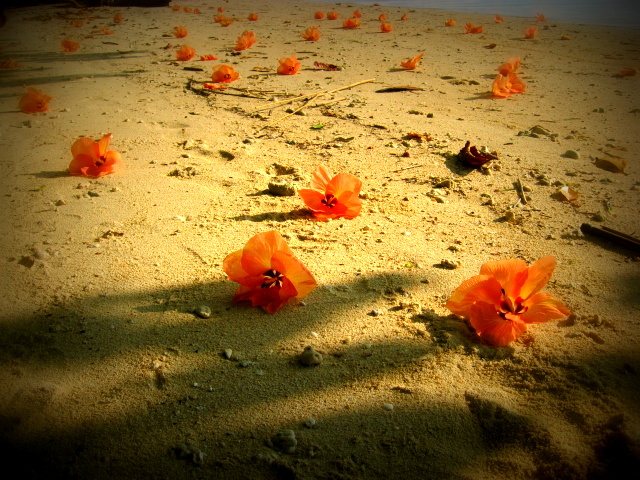
I took this photo on Tami islands, Wanam Village(PNG) 2009 while on my field trip. I have been asked about this picture a lot so I wanted talk about it. This scene you see at low tide every morning.
I have made a mental goal to write 1000 stories on this blog. This may take me five to ten years. I have written almost 100 for this blog in less than a year – so I feel it is achievable. Some of the written stories have not been published yet. I also feel good about this goal because I am getting stories from my readers – thank you!
Backstory
It had been suggested to me to blog a few years ago but I did not feel comfortable about it. I think it was because I had no idea about what to do. I made a dare to blog on Facebook with friends and family. I said, if I got over 2000 Friends, I would blog. This was only last year. I had over 1000 Friends then. Many people read and enjoyed stories and other information and pictures that I shared. Before long, I found myself reaching 2000 Friends on Facebook and I had to keep my word to blog.
At first it was scary to become a blogger. I wondered who would read my stories. I wondered what I would write about. I read other blogs and got more confused. Mind you, some were very interesting. I was not technology-savvy and I had not done my market-research on readers and even on content. There were many other anxieties associated with blogging. I had assumed my followers would come from Facebook and I could continue to churn out what I had posted on that platform. So, that thought gave me some confidence.
In January, I started blogging. I did bring over 2,800 or so followers from Facebook. It seemed too easy. In that same month, my personal relationship fell apart and I was emotional. It must have been through these emotions that I showed who I was in my writing. At that point, surprisingly I had an average of 100 readers per day. This may not be much for other “pro” bloggers here but I was really happy and grateful. I had 149 hit one day and that meant a lot.
In June 2014, I was bullied and threatened and blackmailed on Facebook. Tracing fake Facebook accounts must be a normal thing because no-one really cared about it. I wrote to Facebook and tried to follow up through various contact, support and links offered by Facebook. All these channels led to nothing – just the computer talking – no humans, no response nor help. The pages/links for Help Facebook maintains on their site must be standard requirement. I decided for my safety and peace of mind, I would leave Facebook. I did. I sought legal advice and got some help from caring friends and some really good people.
Why do I Blog?
For two months I was depressed and I did not blog. I also became suspicious of everyone and everything – even people I knew. It felt safe to live in myself. The time away served its purpose. I felt better. There have been worse things that have happened and I could not let this one get me. I returned to blogging in August this year. I was again thrilled to see people were reading my stories – even when I was not writing. That motivated me more. Then, in September, I lost all the followers who came through Facebook. I asked WordPress for help. I blogged about it. No response came. And so I accepted that loss and kept writing.
Last week, I made a comment about the New look on WordPress. Duvall (from WordPress) responded to my comments this week. I was grateful. Duvall then identified and confirmed that the loss of my 2800+ followers was because of my disconnection with Facebook. I accepted that.
However, this got me thinking…if the social media is your main “audience” and it is not safe – then what is really the point of writing to an audience? That was the question I asked myself. Should I question everything I write about? Can you possibly write safely? As bloggers – you all probably have your own answers. For readers – all I can say is, it is really in your hands once the fingers leave the keyboard. You can choose not to read.
I have been offered SEO help almost weekly and I get tons of spam from various companies or individuals here – of course they have been cleverly stopped by WordPress and I appreciate that – but it makes you wonder, why? There are stories about trollers I read from other bloggers.. Is it all worth it? And who really does care?
About My Blog
Anyway, the point of this long “re-cap” about my blog is that after everything that happened to break my blogging-spirit I decided, to hell with everything, I will personally re-build my readers. Write more. Increase my followers. I will use everything I’ve got IN my stories. My son told me – “mum, you write about everything and anything that catches your attention”, he is right. The main purpose of this blog (Tribalmystic) is to ultimately promote my culture. But I also wanted to blog about everything that is related to me, what I believe in and what I think is right. I also share things that do not make headline news, but I personally think they are beautiful and interesting. If one person sees or read a post – that is worth it.
Flowers on Wanam Village, Tami Is, PNG. Tide coming in. J Leahy picture. 2009.
October Goal
My goal for October was to post one story every day. So far I have. I was thinking if I can keep this up, I could go for a goal to write 1000 stories. (I think I can). Since posting daily, my readership has now increased to an average of 50 per day and I had 103 one day this week. I had 20-30 in August. So, thank you to those who take the time to read my blog and comment or “like” and share.
Because of you/readers, all the hours of research and writing has been worthwhile. I will keep staying awake at night, thinking up new stories. Please email or let me know in the comments if there are any specific things you would like me to write about. And thank you Pauline Stegman for letting me know – you would like more re-cycled material stories.
Thank you all for your comments and encouragement for my very first post yesterday. As promised here is one of my short stories. I belong to a Creative Writing workshop group at Kenmore School in the Western Suburbs of Brisbane City, QLD Australia. We meet once a week during school term to workshop our stories under the master story-teller and author Isabel D’ Avila Winter. Here is a story I wrote under the category short-story fiction. It was based on events of a real situation but characters and scenes have been changed. I hope that it would be published later in my short story book. Please click on the highlighted link below to download or read the story.
The Price of a Small Change – JK.Leahy short story
“Any small change?”
Dit held out his right palm as he expectantly traced the bus queue at Kelvin Grove, Brisbane. It was Thursday, almost seven. For Late Night Shopping in the suburbs, not too many people were around. The wind was cold.
Visitors to the Royal Brisbane Hospital were leaving; visiting hours ended at 8pm.
“Excuse me, any small change?”, he asked the fifth person, a pale-faced peroxide blonde woman, in her fifties. Standing nearly as tall as him in a black three inch high heel and, wrapped warmly in a red coat, her heavily made-up face took a long stare at Dit’s ripped blue poly-cotton long-sleeve shirt. Clearly, Dit’s appearance did not fit. She scoffed and looked away.
Dit pressed forward without a flinch or loss of courage.
His left shirt pocket had ripped to its base and flew about like a kite in the wind. He was barefooted. His dirty blonde strands flapped in the same direction the wind took his pocket.
“Small change?” he asked the next three people. No-one gave him a thing. No-one said anything.
I could hear him coming towards my sister and I as the crust on his trouser hem swept the floor as he walked. I started to feel around for coins in my pockets, my bag and my purse, my eyes on him. Being a pensioner, I had only spent my last $20 for that week on a bus ticket and dropped the change somewhere in my bag. I had not planned for this situation. I could identify with this man’s desperation and I wanted to help.
In a few seconds, I could see his dirty brown denims sweep into view and two very dirty feet peeked at me. His toe nails, soiled, uncut and ugly. My eyes followed the awkwardly hung trouser legs up his thin frame to his face.
“Any lose coins”, he asked, standing tall and looking down at me with steel blue eyes. Nothing could be piercing and clearer than those eyes, set in a ruffle of stringy long hair. The bus terminal overhanging casted a shadow over his face but I could see less than half a dozen teeth and a wide smile outlined by a scanty moustache.
I held up our lose change, both my sister’s and mine and he grabbed it, touching my hand. I pulled away.
“Hi, I’m Dit” he said as he pocketed our coins.
I smiled at him. He stood there, smiled back and then asked: “Don’t I know you?”
My sister stared at him, alarmed.
“No, I don’t think so”, I said.
“Oh… I KNOW YOU’, he insisted. “You helped me before”.
I was embarrassed that I could not remember. I hoped he did not think I pretended to not know him.
“Ah, maybe I did help you in the city or the Valley”, I said.
He flashed a big toothy grin and coughed. “Oh well, I better get going”.
“Alright, you take care now” I said and watched him disappear into the dimly lit street.
At that moment, Bus 333 arrived and everyone piled into it. My sister and I took the seats at the back door. We had the view of the front but we could get off quickly to catch Bus 444 to Moggill at the city stop.
As the bus drew out, a man in a long black coat ran and jumped on just before the bus door slammed shut. He carried something.
Stopping briefly to check the main road traffic, the driver eased Bus 333 onto the road and headed for Brisbane City.
Every passenger was sitting with their heads pointing down engrossed on their smart phones, tablets and other electronic devices. A woman in the seat near us read the paper. At the front of the bus, my eye caught that last passenger. He leaned against the metal post near the driver and there was something about his stance and his face was familiar but he was covered and his coat had a hood.
As I watched, the passenger approached the driver; we were only five minutes away from Adelaide Street Central Bus Terminal. The man leaned over and the bus driver suddenly stepped on his brakes two stops before the city and a few metres short of the next stop.
All the passengers’ eyes came up briefly and then they returned to their phones and what they were doing before. I felt something strange was about to happen.
I kept looking at the passenger. Then he stood stand up again. I saw him drop a piece of cloth revealing a gun, which he pointed at the driver. The driver slammed the brakes and everybody swayed forward and some even screamed. We had stopped in a quiet dark street.
Some passengers started crying and many tried to get up, but the stranger cocked the gun and said in a firm voice as he walked towards us: “Everyone, please stay where you are, do not move and do not try to scream, I have a loaded gun”. His voice was familiar.
The man stopped in front of my sister and me; I was shocked.
It was the same toothless smile I had only seen earlier this evening. “You two can leave”, he said, nodding his head towards the door.
Trembling and holding on to each other, we stepped down and just as we got out, he leaned over and said: “You take care now”.




 Tribalmystic Stories