Category Archives: Poetry

The Song in Gwen’s Sonnet


I was recently asked by my younger son Chris to read with him some Australian poetry. Chris wrote a critique for two of the poems for his Year 12 English studies. Chris and I found Critically Acclaimed Gwen Harwood’s words and her life fascinating so I wanted to share her story.  Gwen Harwood also grew up in our neighbourhood in Brisbane’s western suburbs. Below is part of Chris’s critique.
1367157941403
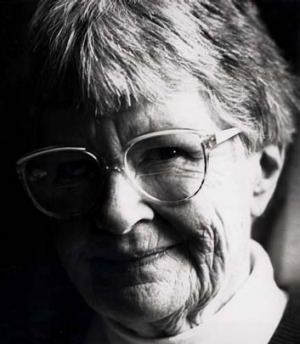
Sydney Morning Herald image: Gwen Harwood

Gwen Harwood was born in 1942 and grew up in Taringa, in Western Suburbs Brisbane. She went to Brisbane Girls Grammar School and All Saint High. Harwood had studied music and completed a Diploma to teach music but found herself in a typist job at the War Damage Commission. Although early in her life she had developed an interest in literature, philosophy and music, she was limited to what the society enabled her to do in her career. She would later be described in our time as brilliant but was understated.

Harwood’s father taught her music and her grandmother introduced her to poetry. For years, Harwood could not publish her work under her own name because she was a woman. The society, male editors mostly, thought a woman should not be a writer or get published. As a woman poet in a largely male dominated place, Harwood used Pseudonyms to be allowed or belong to the publishing world. A local Brisbane publisher, Minjiin first published her poem in 1944. From 1960s, Harwood started to publish more of her writings in journals and books. Her discreet life in the literary world reflected the place expected of a woman during that time (from 1940s). Poems such as the Suburban Sonnet reflected Harwood’s strong views about how the society’s view of women was.
Generally in a sonnet, the poem is about a beautiful woman in love. In this case, Harwood depicts a woman in a chaotic household in contrast to the traditional rule of a sonnet.
Drawing from her own experiences, she wrote poems that question the status of women and the right to be whatever a woman aspired to be. She portrayed the suburbia woman to boring and ordinary. In the Suburban Sonnet, Harwood showed the restricted society she and other women belonged to by challenging the norm of the social and cultural ideologies on suburban women, especially mothers.
The dead mouse could be interpreted as her dream of teaching music being dead. In her society, a woman’s artistic ambitions may as well be dead, because her society expected her to do things in certain ways. “The Stale bread” could refer to a woman’s domestic life, which she saw as boring. Harwood was accepted as belonging to the male dominated publishing world only after she made a startling publication. 1961, The Bulletin accepted a sonnet from Walter Lehmann, and after it was published it was brought to the editor Donald Horne that the initial of each line formed the phrase “Fuck All Editors”.

The Suburban Sonnet : Boxing Day (Gwen Harwood)

She practices fugue, though it can matter

to no one now if she plays well or not.

Beside her on the floor two children chatter,

then scream and fight. She hushes them. A pot

boils over. As she rushes to the stove

too late, a wave of nausea overpowers subject and counter subject

drain out with soapy water as she scours

the crusted milk. Her veins ache.

Once she played for Rubinstein, who yawned. The children caper round a sprung mousetrap where a mouse lies dead.

When the soft corpse won’t move they seem afraid.

She comforts them; and wraps it in a paper

featuring: Tasty dishes from stale bread.
The Nude Book Was a Flop!


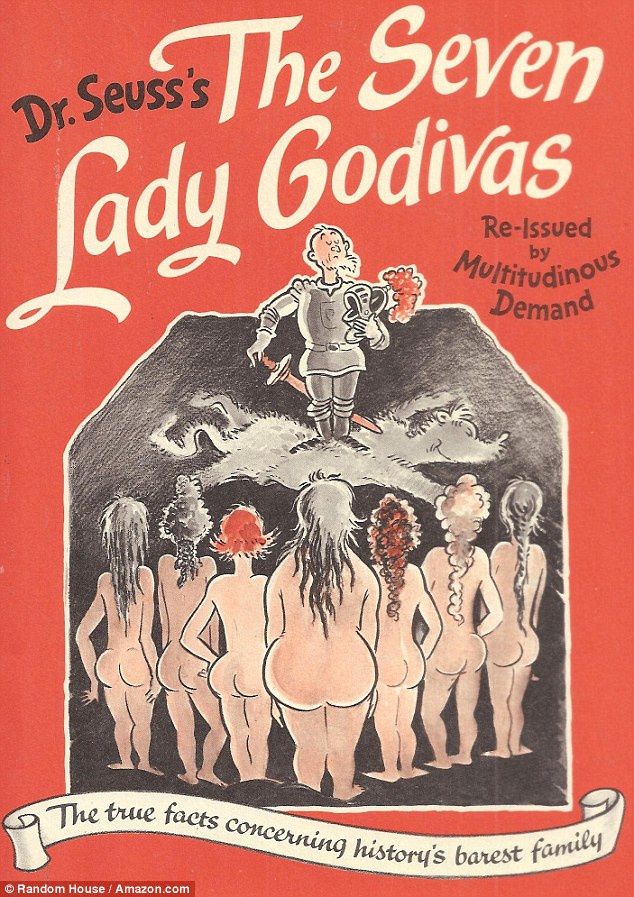
The story of how Dr Seuss wrote a little-known adult book about seven medieval sisters who never wore clothes. The book was a flop.

26493C9100000578-0-image-m-26_1425414782659
Not the usual: Dr Seuss penned this saucy book in 1939 – but it never gained much popularity despite featuring pages of cartoon nudity

I love Dr Seuss’s Children’s books and found this story very funny. In fact my 19-year-old who grew up on Dr Seuss children’s stories and learnt a lot of his first words from the rhymes was quick to point out, he knew about the Seven Lady Godivas when I shared my discovery today.

As a writer, I think that sometimes you have to try writing in more than one genre before you know where your strength lies. It was how Dr Seuss did it – trying his writing and drawing talents at adult cartoons before he discovered his true calling was in children’s books. I often see writers going from general genres to adult/erotic books but not the opposite as Dr Seuss who celebrated his birthday yesterday did. He wrote the failed exhibitionist tome in 1939.

In this Daily Mirror article Seuss, also known as Theodor Geisel only sold 2500 copies of The Seven Lady Godiva. He wrote that he was in fact telling ‘a beautiful story of love, honor and scientific achievement’. His best-known characters are famous for their clothes. But the Cat in the Hat and the Fox in Socks have little in common with the stars of another The Seven Lady Godiva.

The gang of naked sisters who star in The Seven Lady Godivas: The True Facts Concerning History’s Barest Family, are famous for wearing no clothes at all.

Publishing the book was allegedly a condition for Random House, Seuss’s new publisher, when he jumped ship to them. However, it seems few agreed with his own high opinion of the bawdy tale. While 10,000 copies were printed, only 2,500 were ever bought.

He later accepted that the book was no good. According to The Atlantic, he said: ‘I attempted to draw the sexiest babes I could, but they came out looking absurd.

26493C9A00000578-0-image-m-28_1425414989715

The famed author’s birthday, March 3rd is now celebrated as a national reading festival. The Dr Seuss’s children’s books were the favourites of both my two boys when they were growing up.

26493C9500000578-0-image-m-24_1425414586182
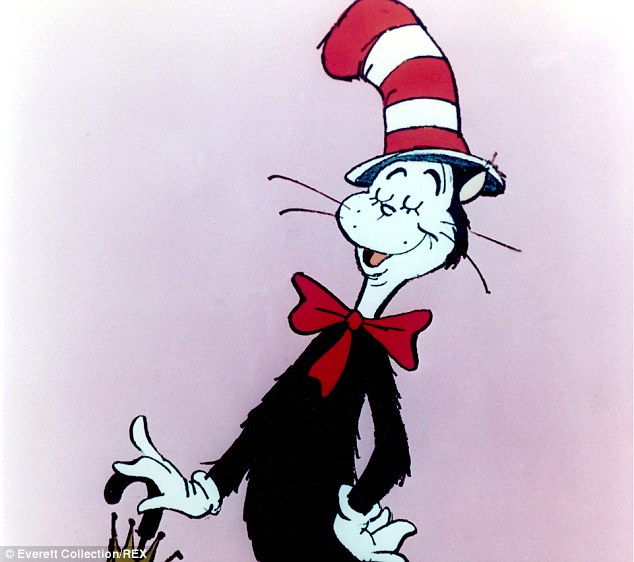
One of Seuss’s better known characters, the Cat in the Hat


The Daily Mirror 


Can you tell a story in five seconds?


I don’t think I can tell my story in five seconds, but, Robert Clear can. I recently discovered Robert’s stories and pictures. I wanted to show it on Cool Stuff. I think what Robert is doing is amazing and some of his stories are funny.  Sometimes, to tell a story, one only needs a few words. I asked Robert how does he do it, and why?

……………………………………

MIddle Class Aspiration by Robert Clear

“My name’s Robert Clear and I’m an artist and writer from London. In my work I combine words and images to tell stories, but I impose a special constraint on myself: I aim to tell each story in no more than five seconds. That’s one twelfth of a minute to conjure in the viewer’s mind a world, its characters and a sense of what’s at stake for them. That means a tight economy of words and line and form, a careful balancing of text and image and a sense of rhythm that uses words and pictures as semantic cues and as pure pattern.

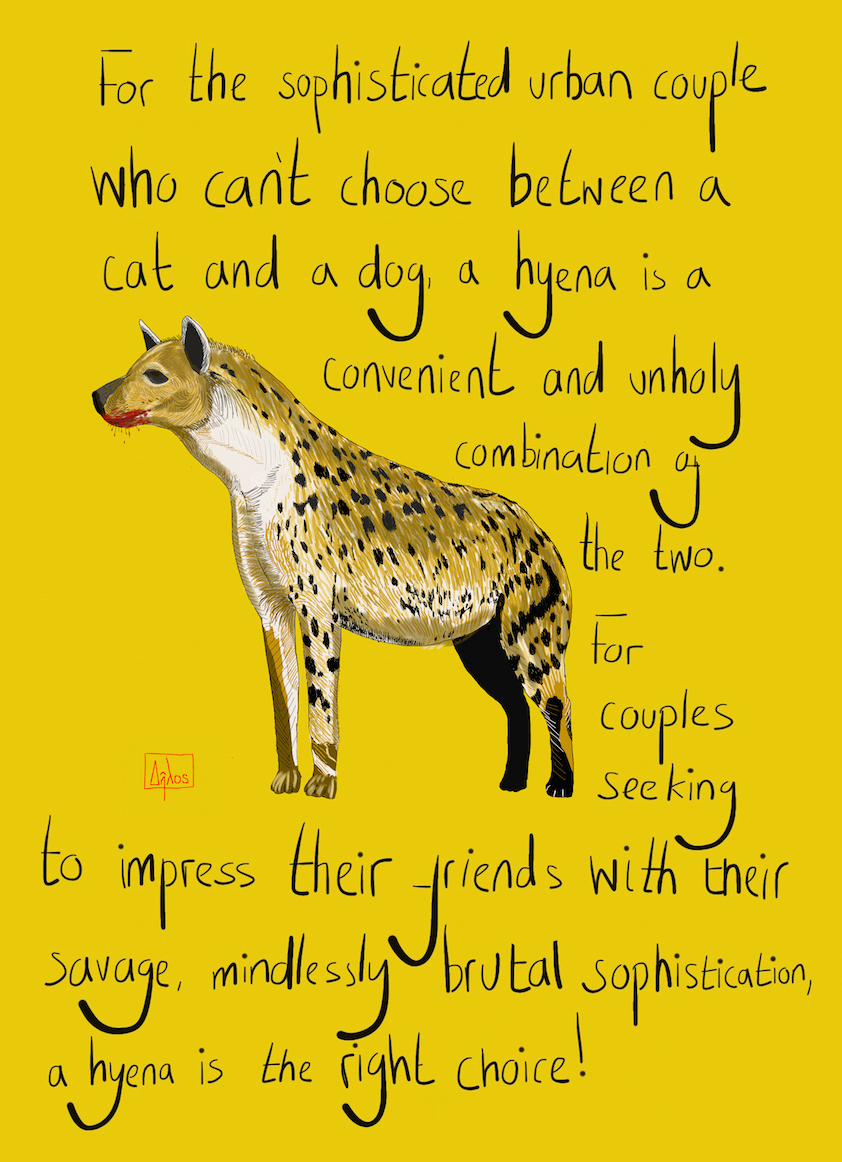
Hyena by Robert Clear

Why five seconds? We live in an age where the rest of the world is always at hand, available through the glass screens that connect us to the internet. We have the means to obtain instant gratification, to be entertained always. In this age an artist or writer can expect no more than five seconds of a stranger’s time. Advertisers know this. They craft hooks to sell products that use those precious seconds to leave the viewer wanting more. I decided to use that fragment of time to construe the entire experience; to create something that can be viewed, inwardly digested and (hopefully) enjoyed in five ticks of a clock.

Robert Clear on George

The inspiration for much of my work is London. Perhaps surprisingly, given that it’s a sprawling mass of eight and a half million people, it’s the city’s animals that frequently become my subjects. ‘London Beasts’ is one of my recent series, and animals are the main characters. Each has a particular association with London, whether it be an area, a park or a specific building, and for each I created a story that evoked this connection.

One of the most interesting things about taking my work online has been the chance to interact with others who are interested in art and storytelling. If anyone wants to get in touch, I’d love to hear from you”.

Robert Clear blogs on WordPress. You can click on his name in the first paragraph to reach his blog or click this link:

http://fivesecondstories.com/about-me/

The Angels’ Trail – for Robert


JKLeahy (I wrote this poem yesterday for my cousin Robert) 

The Angels’ Trail

In your journey, after the earth

at distant shore, you will berth

The end of Angels’ Trail you will see

Lifeless as dust in the wind, we will be

Vibrant and free as a bird, you will soar

In Godspeed your wings find you sooner

No blood, pain, or will you suffer

Here, bounded in grief from tragedy, earth life quiver

Trapped in naked depth of sorrow, we linger

Cloth, wood, soil and stones enfold remains

In earth, we buried with your shell are our souls

In wind, as a dandelion you will lift higher

Earth’s gravity draws darkness, we see death

Hold back tears, your brothers’ will

Hear their songs, when the wind is still

In dirge and tears, sisters call you fond epithets

Where you, dandelion rests, is where Angels’ Trail begins

Follow beside where the lights glow

for darkness, as deep dark wine bestow

swallows where the shadows go

Seek your mother, for she seeks you

Your brother, aunts, uncles, your sister too

In patience, expect they will be for you

at a place where they had once passed Angels’ Trail

Gaze ahead; leave earth with your memories

Be light on your feet for them you will meet

Drowned in sorrow, our heart bleats

Softness is your voice, abound to share among our kin

Rejoice will be, the angels in triumphant

and kin spirits who had long passed The Angels’ Trail


Robert was a handsome, healthy, living young man in his mid twenties. He was buried today in my village, Wagang. His life was taken tragically last week in a car accident, leaving behind his two young children – aged 14 months and 4 years old, and a young wife. Robert went for a ride with our other cousins. They were all sober and picking up another cousin sister at Nadzab Airport, 40 minutes from Lae City, Papua New Guinea where he met his death in the tragic accident. The details of the accident are not known to me nor my brother who made the call to me. Four others are in  critical condition at Angau General Hospital, Lae. Those of you that follow my blog, Robert was the third son of my Aunty Yellow (Yang Yang) who died last year. She was instrumental in my upbringing and specifically, my traditional fishing and dancing skills. Robert was a little brother.